

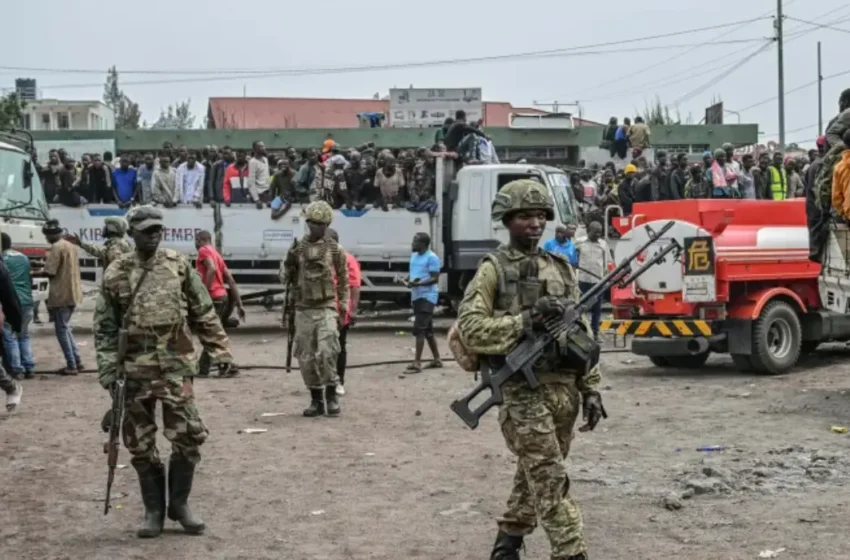
DRC Takes Rwanda to ICJ Over Decades of Conflict
DRC has dragged Rwanda into the International Court of Justice, bringing about another legal battle in one of the longest-lasting and most destabilizing conflicts in Africa. According to Kinshasa, Rwanda is responsible for the violence witnessed in eastern Congo for several decades, ranging from massacres, sexual assaults, displacements and other human rights abuses that, according to the Congolese government, have been taking place since 1996. However, this case goes beyond just another legal proceeding; it is a move by the DRC government to escalate its diplomatic row with Rwanda to the international level by having the issue judged at the highest court in the world.
A conflict stretching back three decades
The legal filing is rooted in the long and violent history of eastern Congo, a region where armed groups, cross-border security tensions and mineral-rich territory have kept violence alive for generations. Reporting on the case says the allegations cover a period from 1996 to the present day, tying the complaint to the First and Second Congo Wars as well as the more recent resurgence of instability.
According to Kinshasa, the trend is neither random nor occasional but is a result of a long-term cycle in which Rwanda has used military force and armed proxies to create chaos in the eastern provinces of Congo. For this reason, the case has attracted interest well beyond the realm of law because it lies at the crossroads of security, sovereignty, politics, and accountability and brings back into play some of the most haunting issues that were left in the wake of the wars that have redrawn the political geography of central Africa.
What Congo alleges against Rwanda
In its application, the DRC accuses Rwanda of breaching several international conventions, including those relating to genocide, racial discrimination and torture. The filing also references treaty obligations protecting women and children, while alleging conduct that includes massacres, extrajudicial killings, torture, sexual violence and forced displacement.
The government of Congo claims that these abuses not only occurred on civilians but that they were conducted under wider sponsorship of armed formations who operated in eastern DRC. According to news reports, the government of Kinshasa has accused Rwanda of sponsoring proxy forces as well as carrying out military activities either inside the country or across its border. This supports the argument put forward by the government regarding the systematic nature of the violations. The aim here is to prove that there was state responsibility and not criminal responsibility of individuals. This is important because in an ICJ case, a judge is asked to make a decision about a state’s violation of international law obligations.
What Congo wants from the court
Kinshasa is asking the ICJ to force Rwanda to stop the alleged violations and to pay reparations to the Congolese state and the victims of the violence. That request turns the case into both a legal accountability effort and a compensation claim, with Congo presenting the court as a forum for redress after years of failed regional stabilization efforts.
The remedies pursued by Congo in its case are important since they suggest that the court may go beyond acknowledging wrongdoing and give orders for conduct and compensation. Though the final decision may take years to be reached, the very process of lodging a complaint subjects Rwanda to rigorous legal and diplomatic investigation in a time when there are still many tensions in the region. Another remarkable aspect of Congo’s complaint is that it covers a wide range of issues. Through connecting the ongoing conflict in eastern Congo to the decades-long struggle, the Congo authorities request the court to see eastern Congo in terms of an ongoing violation based on the same responsibilities.
Why the timing matters now
The filing comes amid renewed alarm over violence in eastern Congo, including renewed advances by the M23 rebel movement and wider fears of regional escalation. Reporting on the case says these more recent developments are part of the backdrop to the legal action and helped intensify pressure on Kinshasa to act.
Timing is significant for Congo because it internationalizes an issue that has always been considered from the perspectives of security and humanitarianism and moves it partially into the realm of law. This is important in a situation where military attempts to find a peaceful resolution to the conflict have always failed. For Rwanda, the application will open up a new channel of pressure against a country which has been accused of meddling in eastern Congo on numerous occasions. Even before making a judgment, this particular issue could have a bearing on how the two countries’ arguments are judged by other countries.
Rwanda’s likely response
At the time of the initial reports, Rwanda had not yet publicly provided a full legal rebuttal in the coverage reviewed, but Kigali has historically denied direct responsibility for rebel activity in eastern Congo and has framed its actions as necessary for national security. That position is likely to remain central if the case proceeds through the ICJ’s written and oral stages.
Another legal issue likely to be addressed by Rwanda will be the issue of how the complaint is legally framed. When such cases arise, the states will often contest jurisdiction and the admissibility of the case, and they will challenge the treaties on which the complaint is based, all the while dismissing the claims made by the other state as politically motivated. This implies that the dispute within the courtroom will commence on procedural grounds before tackling the actual claims of the dispute. The political response can be just as significant as the legal response.
What the case means for the ICJ process
The ICJ has formally received the case, and the next steps will involve procedural review, notification to Rwanda and the exchange of legal pleadings. If Congo requests urgent provisional measures, the court could also consider whether interim orders are necessary to prevent further harm while the case is pending.
This phase will be very closely monitored since provisional measures may have an impact on the development of the case even prior to the final ruling. In politically sensitive cases, provisional measures serve as an indication of the seriousness with which the Court treats the allegations and the likelihood of irreparable damage. However, the road from complaint to a decision is a lengthy one. Cases relating to genocide, cross-border disputes and the interpretation of treaties may drag on for years due to the amount of research that needs to be done.
A regional dispute with global stakes
The Congo-Rwanda conflict has never been only a bilateral issue. It has drawn in neighboring states, the African Union, the United Nations and multiple humanitarian agencies because the violence in eastern Congo has caused displacement, insecurity and repeated civilian suffering across the region.
It is one of the reasons why this case has relevance beyond national borders. The fact that the matter was brought before the International Court of Justice shows that Kinshasa wishes for it to be considered not only as a security dilemma or a problem of the borders but also as an international legal issue. Even if the court decides to act conservatively or it takes years for it to make a final decision on the matter, it has already altered the political discourse of the situation.
The most important developments now are Rwanda’s formal response, any request for provisional measures and the publication of the full legal filing. Those documents will show how Congo structures its case, what evidence it says supports the claims and how far it is prepared to push its allegations.

