

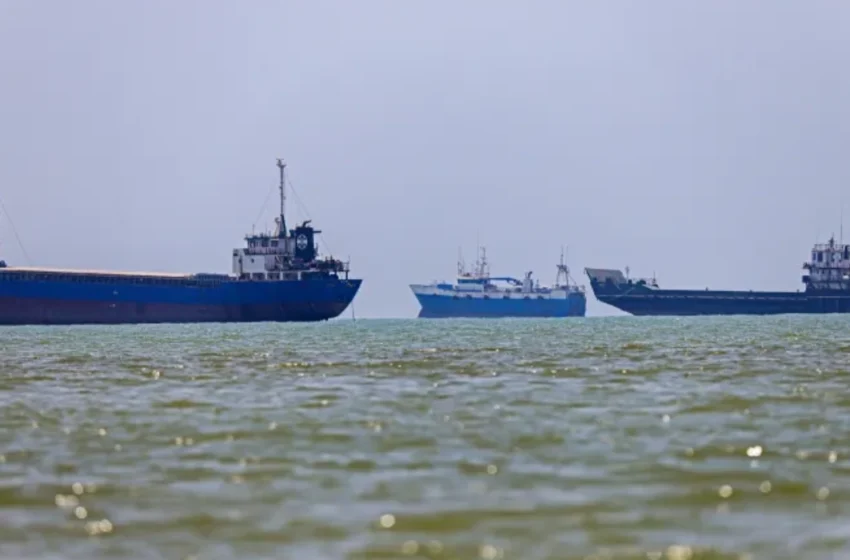
UN maritime agency evacuates stranded sailors from Strait of Hormuz
The UN maritime agency has begun a major evacuation effort for about 11,000 stranded sailors caught in the Strait of Hormuz, a move that underscores how deeply the Middle East war has disrupted one of the world’s most strategic shipping corridors. The operation, led by the International Maritime Organization (IMO), reflects both a humanitarian emergency and a rare moment of international coordination in a zone where commercial shipping has been trapped by conflict conditions.
Noteworthy about this event is not only the number of people evacuated, but the fact that it follows many months of escalating risk faced by crew members who cannot rotate, depart, or move safely within the area. What started as a labor and safety challenge has become one of the worst in modern times, according to the IMO, which calls the situation unprecedented since World War II.
A crisis at sea
Strait of Hormuz is no ordinary channel because a significant amount of oil and commercial shipping from across the world typically flows through it. After things got really intense and made it either unsafe or difficult for vessels to pass, there were effectively left stuck, with crew members trapped in ships where they could not disembark or be replaced. This evacuation was a consequence of all of this.
It is claimed that the current mission has been created to evacuate about 11,000 seafarers from the region; however, previous statistics showed that the number of seafarers trapped by the crisis had reached up to 20,000. This means that the situation has changed in the process of time, as some of the crews have been evacuated while others were still stuck.
Why the numbers matter
The figure of 11,000 is no mere symbol but the lives, earnings, safety, and well-being of thousands of seafarers directly impacted by the shipping crisis resulting from the war. The inability of many of the seamen to shift crews, go home, or even get around normally at ports transformed a maritime security matter into a human welfare issue. It was further reported that there were up to 500 to 600 ships involved in the wider disruption, an indication that the evacuation exercise was more than just a routine rescue operation but a coordinated effort involving several vessels, nationalities, and crew members. This scale of action is not common in contemporary shipping operations and explains why the IMO has seen fit to handle the matter as a special case.
IMO’s role
This is being spearheaded by the International Maritime Organization, the United Nations specialized organization dealing with maritime affairs. The importance of the role played by this agency stems from the fact that unlike other agencies which have fleets of their own to control, IMO is capable of coordinating different governments, shipping firms, and port authorities in a manner that assists in facilitating movements where diplomacy and safety guarantees are necessary. In this particular instance, the organization has become the focal point for organizing what appears to be a difficult evacuation process. The role played by the organization is significant since it will provide legitimacy of the mission in the eyes of ship owners, insurers, shipping companies, and governments since the action of this agency means that the crisis has gone beyond a local security matter to a situation that affects global shipping.
Security guarantees
It is one of the vital components in the evacuation process for it to take place, as reported, that of security guarantees being made before the evacuation could commence. This particular information indicates the involvement of diplomacy and navigation safety guarantees other than just the logistics involved in the evacuation process for there were risks involved otherwise.
As reported, the IMO said it had obtained the necessary safety guarantees and verified conditions for safe navigation before proceeding.
“Secured the necessary safety guarantees”,
said IMO Secretary-General Arsenio Dominguez, in a statement reflecting the agency’s cautious approach to the mission. That language is notable because it suggests the evacuation was not rushed, but carefully prepared after negotiation with relevant parties.
Regional cooperation
The evacuation has reportedly been arranged in close cooperation with Iran, Oman, other coastal states in the region, the United States, and the maritime industry. That broad involvement is important because the Strait of Hormuz sits in a highly sensitive geopolitical environment, where even humanitarian or commercial movement can become entangled in strategic rivalry.
Oman’s Defence Ministry has also been cited as confirming that the evacuation would proceed in stages, reinforcing the idea that the operation is being managed gradually rather than in a single large transfer.
“Taking place in stages”,
said Oman’s Defence Ministry, describing the practical approach being used to move sailors out of the affected area safely. This staged model likely reflects the need to manage port capacity, vessel movement, and security coordination.
Human cost of the blockade
Behind the news headline, there is a more complicated issue about the conditions that seamen are forced to live under. Seafaring personnel stranded at sea may suffer from stress, exhaustion, salary concerns, medical issues, as well as the inability to get back home or switch to less dangerous positions. Things only become worse when the onset of war prevents regular ports of call and disrupts international waterways. It is because of this aspect that such issues have been taken seriously not only as a logistical problem by the IMO and other organizations dealing with the sea. This is an issue of regular people whose livelihood relies on safe passage around the globe, but who ended up in the middle of the conflict they had nothing to do with.
War’s wider impact
The trigger for the evacuation is the broader Middle East war, which has disrupted shipping patterns and made the Strait of Hormuz far more dangerous than usual. Once Tehran effectively closed off the waterway, commercial vessels could no longer move through it normally, and sailors were left stranded on ships waiting for a solution that took months to organize.
This is one reason the story has drawn so much international attention. The Strait of Hormuz is not only a regional passage; it is central to the global energy system. Any interruption there can affect oil prices, shipping insurance, freight rates, and supply chains far beyond the Gulf. As a result, the evacuation is being watched as both a humanitarian action and a test of maritime resilience under wartime pressure.
What the statement means
The IMO’s public framing of the mission matters because it emphasizes neutrality, coordination, and safety rather than political blame. That is a standard but important approach for a UN body dealing with a conflict zone. By focusing on evacuation and verified safe passage, the agency is positioning itself as a practical coordinator rather than a political actor.
This language also helps explain why the operation could proceed only after diplomatic alignment. Shipping crises in contested waters are rarely solved by one government alone. Instead, they usually require a combination of assurances from coastal states, cooperation from shipping interests, and confirmation that crews can move without becoming targets or collateral victims.
Why this is unprecedented
There is no exaggeration in the statement of the IMO that the crisis is unprecedented since the Second World War. It is true that there have been pirate attacks, regional wars, blockades, and ports being closed to ships in the past; however, it is rare for such a disruption to be prolonged in one of the busiest chokepoints in the world.
What is also unusual is the number of actors now involved in fixing the problem. The evacuation reportedly draws in the UN maritime agency, regional governments, coastal authorities, the United States, and the private shipping industry. That level of coordination reflects just how fragile the situation became and how difficult it was to restore even basic movement.
What happens next
The next stage of the mission may be contingent on weather conditions, security, the capacity of the port, scheduling of vessels, and the speed at which safety measures can be put in place aboard different ships. Considering that the evacuation is done in stages, there will be a probability that it will take some time to complete instead of just one event.
For the shipping industry, the mission may also become a benchmark for how the international community responds when war closes a critical maritime artery. If the operation succeeds, it could be seen as a rare example of diplomacy and logistics working together under extreme pressure. If it stalls, the crisis could deepen further, with broader consequences for trade and regional stability.
Broader significance
This news is not only about sailors; it is about the vulnerability of global trade to conflict in narrow sea lanes. A single strategic passage can hold hundreds of ships and thousands of workers hostage when security collapses. The evacuation of 11,000 stranded sailors therefore carries significance far beyond the Gulf, because it exposes how quickly war can disrupt the maritime systems that support the global economy.
It is indicative of the continuing influence that international organizations wield in times of crisis. The IMO cannot end wars, but it can assist in pushing governments and businesses towards more pragmatic resolutions to situations where crews find themselves trapped. Here, the involvement of the organization has changed a long standoff into an organized humanitarian evacuation mission, perhaps one of the major maritime headlines for the year.

