

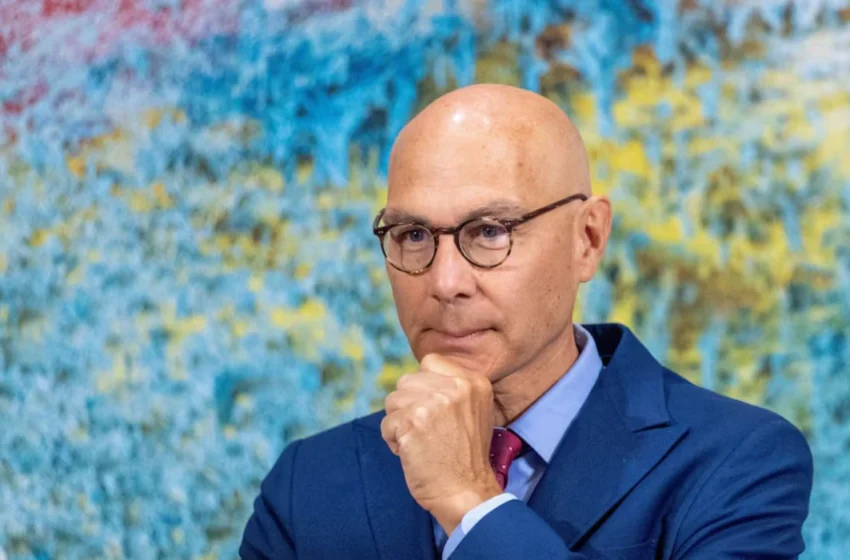
UN Human Rights Chief Welcomes US-Iran Deal: A Critical Step Toward Regional Stability
In an unexpected twist to events in the geopolitics arena, the UN’s human rights chief has formally praised the new peace treaty signed between the United States of America and Iran, signaling a very crucial step towards bringing to an end a conflict that had lasted for decades between the two nations. This development was made public on June 13, 2026, when both governments announced their intention to settle their differences and move forward in peace.
The UN Secretary General, Mr. António Guterres, was amongst one of the earliest individuals to express his appreciation for the deal, stating that it was a “significant step” towards ending the war. The expression of approval at such high levels within the UN system will definitely pave way for even more support from around the world, starting off with the statement made by the human rights chief on Monday, June 15, 2026.
The Human Rights Chief’s Formal Position
The United Nations’ human rights chief, speaking from Geneva on Monday, articulated a nuanced position that celebrates the diplomatic achievement while simultaneously raising critical concerns about implementation and humanitarian protection.
“The United Nations’ human rights chief on Monday welcomed the announcement of a peace deal between the United States and Iran, and urged for maximum restraint in the region”.
This dual message—celebration combined with caution—reflects the complex reality that while peace agreements offer hope, their success depends entirely on faithful implementation and adherence to international law.
The fact that the statement was made two days after the first announcement of the deal, and as the markets were reacting to fluctuations due to the pricing in the likelihood of fewer hostilities, makes its timing even more noteworthy. On one hand, it is an act of diplomacy on behalf of the negotiating sides, while on the other hand, it acts as a safeguard against any parties in the region that would try to sabotage the peace process.
Immediate Regional Implications and Market Reactions
The effects of the US-Iran agreement have already become apparent in different spheres of activity, including the oil market and the regional security situation. Oil prices have already shown some volatility after the release of the news of such an agreement, with the market already looking forward to the resumption of sea lines of communication that include the Strait of Hormuz, which is considered one of the key oil transport corridors in the world.
In addition to the financial aspects, the agreement also deals with humanitarian issues, which the region has struggled with for years. In particular, the head of UN human rights pointed out that there are continuing dangers facing civilians and civilian infrastructures, with any relaxation of tensions coming hand in hand with real measures to safeguard civilians. Focusing on this aspect is part of long-standing UN experience in observing human rights in conflict areas, where the real victims are always the civilians and never the political players.
The importance of the maritime aspect of the deal cannot be overstated. Sources state that the deal is said to stop all hostilities and unblock key choke points, with the oil market responding to this first deal. The Strait of Hormuz, where almost 20% of the world’s oil consumption flows through, has been an area of contention for the US and Iran, among others. The reopening of this strategic strait might well mark one of the most concrete results of the peace deal.
Long-Term Human Rights Concerns and Implementation Challenges
While the diplomatic breakthrough offers immediate hope, the UN human rights chief emphasized that the success of the agreement depends on sustained commitment to international legal standards.
“The rights chief underscored that any easing of tensions must be matched with independent investigations where there are credible accusations of violations, and with adherence to international humanitarian and human rights law by all sides”.
This statement reflects the UN’s longstanding position that peace agreements cannot serve as cover for past or future violations of human rights standards.
An appeal for an investigation of this sort is an extremely important part of the transitional justice processes that have been crucial in other cases of post-conflict resolution. Without effective methods of bringing violators to justice, peace treaties can merely serve as temporary respites from conflict. The emphasis placed on the issue by the human rights head means that there will be strict supervision over the course of the implementation process, especially regarding violations by either the U.S., Iran, or their regional counterparts.
Implementation challenges remain substantial. The deal reportedly addresses immediate hostilities while leaving unresolved questions about Iran’s nuclear program and broader regional security concerns under future negotiation. This phased approach, while diplomatically pragmatic, creates uncertainty about the long-term sustainability of the peace. Critics argue that without comprehensive resolution of underlying security concerns, the agreement may merely represent a temporary ceasefire rather than a durable peace framework.
Regional Stakeholders and Broader Middle East Dynamics
The agreement between the US and Iran cannot be considered without looking at the larger picture in the Middle East region, where various parties have complicated relations with both countries. In terms of the United Nations human rights setting, there has been a history of tensions in Lebanon, Gaza, and other places, and there is ongoing United Nations involvement in human rights monitoring and respect for civilian safety under international law. This means that the outcome of the agreement between the two countries will depend largely on its impact on others in the region as well.
It is important to note that Iran’s regional proxies have always posed a great challenge to the Western bloc, and their nuclear deal is considered as only the bedrock of a much broader approach aimed at dealing with such behaviors as the development of ballistic missiles and the engagement in proxy wars. This means that the new peace deal should be analyzed not only in terms of the impact it will have on relations between the USA and Iran but also how it will influence Iran’s regional policy and alliances.
Similarly, the United States faces its own implementation challenges, balancing the peace agreement with continued security commitments to regional allies including Israel, Saudi Arabia, and other Gulf states. The human rights chief’s call for restraint across all regional actors suggests concerns that third parties might attempt to undermine the peace process through continued aggression or support for militant groups.
The Path Forward: Verification, Accountability, and Sustained Diplomacy
There is a clear set of directions laid out in the statement by the human rights chief regarding how things are supposed to proceed further for the peace deal to live up to expectations. The quick and sincere implementation of this peace deal speaks volumes about the urgency with which this needs to be done to lower the level of tension in the region.
Demanding an in-depth inquiry on possible violations on both sides makes accountability one of the cornerstones of the peace implementation process. This methodology follows global examples from post-conflict processes elsewhere, which have shown that failing to deal with past violations is a major reason why long-term peace sustainability was not achieved. It would require an independent mechanism for investigating violations, possibly with the involvement of UN agencies or international human rights NGOs.
Continued regional diplomacy remains equally critical. The ongoing disclosure requirements about humanitarian access and investigation timelines, including practical governance of the Strait of Hormuz and related corridors, will test whether the agreement can move beyond diplomatic rhetoric to operational reality. The UN Secretary-General’s continued engagement suggests that multilateral support will remain available to facilitate implementation and address emerging challenges.
A Moment of Hope Tempered by Realistic Caution
The greeting of the deal between the United States and Iran by the UN human rights chief presents a landmark step in the diplomatic relations within the Middle East region, bringing along positive expectations of less animosity in the future alongside a sobering understanding of how tough it might be to put the accord into action. This two-fold approach is representative of the complexity of the situation that peace accords are not only vital, but are never enough alone to create the desired effect.
Watching how the whole thing unfolds, there are three main points to pay attention to: protecting civilians, being accountable, and following international laws and norms. This way, human rights organizations’ diligence in observing how the agreement unfolds will prove crucial in making sure that the deal yields results rather than just media headlines.
The path forward remains uncertain, but the UN’s clear framework for implementation provides a roadmap for what must happen if this critical step toward ending the conflict can become a lasting foundation for regional peace and stability.

