

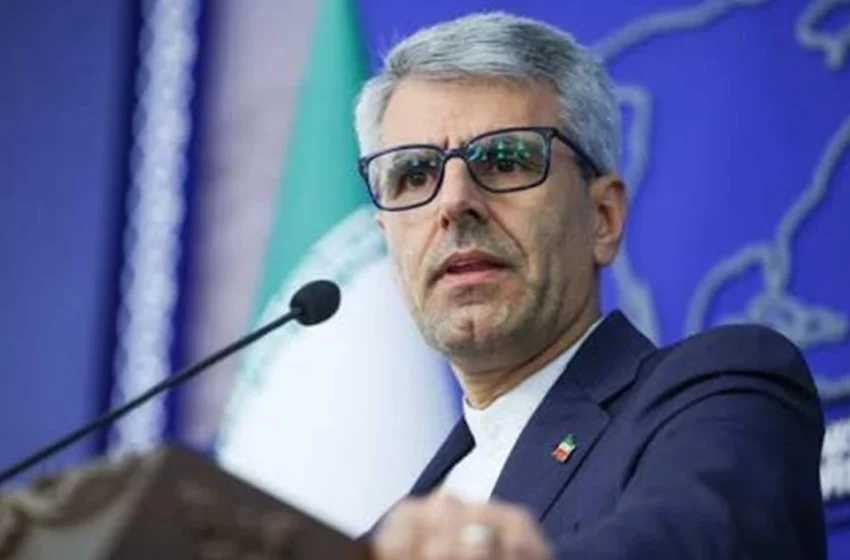
Iran to Seek UN Security Council Ratification After Final Deal With US
In the Middle East, history seems to be repeating itself as the country of Iran has officially stated that it would pursue UN Security Council endorsement after the conclusion of a total agreement with the United States. This declaration was made by the country’s Foreign Ministry via its official spokesperson, Ismail Bagai, on June 15, 2026. Diplomatic experts claim that this move marks one of the greatest achievements of the US and Iran ever since their historic nuclear accord of 2015. After an exhausting three-month battle that started on February 28, 2026, the memorandum of understanding between the two nations will now be put into ink during a signing ceremony on June 19, 2026 in Geneva, Switzerland.
The significance of this announcement extends far beyond regional stability into the realms of global energy and international law. While other diplomatic efforts were limited by their bilateral nature, what sets this agreement apart is its inclusion of an endorsement from the UN Security Council, thus making it international law.
“The final agreement is expected to be endorsed by a United Nations Security Council resolution after a period of 60 days,”
said Iran’s foreign ministry representative, underscoring the legal framework that will govern implementation.
The 14-Point Framework: Content and Legal Architecture
The fourteen-point memorandum of understanding issued by Iran’s Mehr News Agency addresses issues such as ceasefire measures, sanctions, asset release, nuclear negotiations, and regional security. The format of the memorandum indicates the result of diplomatic deliberations in which every subsequent point is dependent on the one before it. Point One calls for a permanent ceasefire to be established in all arenas, including Lebanon, whereas Point Two requires the US not to interfere in Iran’s domestic affairs.
The maritime aspects of the deal carry much weight in relation to global trade. According to point 3, the full lift of the maritime blockade against Iran will be achieved within 30 days, whereas point 5 stipulates that the Strait of Hormuz should be opened up under Iran’s control within the same period of time. This is necessary given the vital need to ensure that there are no disruptions in relation to the oil transport routes of the world. The Strait of Hormuz alone supplies around 20 percent of the oil used by the world on a daily basis.
Financial commitments represent another cornerstone of the agreement. Point 7 requires the United States and its allies to provide at least $300 billion in reconstruction funding for Iran, while Point 11 specifies that $24 billion in frozen Iranian funds will be released during the 60-day negotiation period, with half deposited before negotiations commence. These figures exceed previous diplomatic proposals and demonstrate unprecedented US financial engagement with the Iranian economy.
Nuclear Negotiations and the UNSC Ratification Process
Nuclear part of the accord as indicated in point 8 indicates that 60 days will be taken after signing the deal to finalize a comprehensive accord on the issue. It is however possible to extend the timeline depending on how long the negotiations take. The nuclear part requires lifting of all US sanctions including the primary and secondary sanctions along with the resolutions of the UN Security Council and IAEA on Iran’s nuclear program.
Point 9 contains Iran’s reaffirmation of commitment under the Nuclear Non-Proliferation Treaty regarding not developing nuclear weapons, a crucial assurance for international stakeholders. However, significant discrepancies remain between US and Iranian positions on uranium enrichment. The United States maintains that Iran will give up its uranium stockpile, while Iran has explicitly stated it will not surrender its uranium reserves. This fundamental disagreement represents the most challenging obstacle to finalizing the comprehensive agreement.
Ratification process as outlined by the UN Security Council in Point 13 serves as the legal foundation of the whole agreement. Such point guarantees that the final agreement will be ratified by international law and thus, will bind all the signing states under the provisions of the UN Charter. Conditional implementation of the agreement as provided by Point 14 involves starting of final negotiations following partial unfreezing of assets, lifting the oil embargo, and termination of the naval blockade.
Iran’s Official Stances and Strategic Calculations
Iran’s Supreme National Security Council provided the first official confirmation on June 13, announcing that the text was finalized on the evening of that date and that all military operations would end immediately and permanently starting from the night of June 14. The council’s statement framed the agreement as a victory achieved through both diplomatic negotiation and military achievements during the three-month conflict.
“The enemy that launched the attack failed in all malicious objectives, and the Islamic Republic achieved major victories in the war,”
declared Iran’s Deputy Foreign Minister Kazem Gharibabadi, reflecting Tehran’s assessment that the deal emerged from Iran’s strengthened position rather than weakness.
The foreign minister further clarified the timeframe for negotiations by noting that conditions regarding the Iranian nuclear program will be agreed upon in the 60 days following the signing of the first agreement. Araghchi noted the flexibility in the timeframe, which may be extended if need be. He made this assertion as reports surfaced regarding US plans to destroy or remove highly enriched uranium from Tehran. The Iranians have rejected such a demand since it does not align with their positions.
It should also be noted that the Foreign Ministry also clarified the limits of the UNSC resolution with regard to the guarantee of the agreement. In the words of Ismail Bagai, although there is a clause in the draft agreement calling for the formalization of the agreement via a resolution at the UN Security Council, the Iranians do not view such a resolution as a guarantee.
US Position and Trump Administration’s Strategic Vision
With President Donald Trump declaring, “The deal is done,” it can be said that the deal received official confirmation from the United States with an order to rescind the naval blockade of the US imposed on Iran and open the Strait of Hormuz. President Trump declared the deal after Pakistani Prime Minister Shehbaz Sharif declared that the agreement was finalized with military actions stopping immediately in all fronts, including Lebanon. The US President’s statement signifies the comprehensiveness of the deal, not only on nuclear aspects but other factors as well.
The Trump administration’s approach reflects a significant departure from previous US-Iran diplomatic strategies. Rather than demanding unilateral Iranian concessions, the agreement incorporates reciprocal commitments, including US non-interference in Iran’s internal affairs and troop withdrawal from around Iranian territory. Point 10 explicitly prohibits the United States from deploying new troops or imposing new sanctions during the 60-day negotiation period, creating a stabilization mechanism that protects both parties.
According to a senior United States’ diplomat who spoke on condition of anonymity, the deal was going to mark the beginning of the process whereby the stockpile of Tehran’s highly-enriched uranium would be destroyed or shipped elsewhere. This is clearly contrary to Iran’s stated stance that it will not give up its stockpile of uranium, showing that there might be more negotiations involved before arriving at a comprehensive agreement.
Regional and Global Implications
The agreement’s impact on regional security extends far beyond US-Iran relations. The immediate and permanent ceasefire provision, including Lebanon, addresses one of the most volatile fronts in Middle East conflict. However, implementation challenges remain significant. Israel’s Defense Minister Israel Katz has warned that Israel could act independently if necessary and will not withdraw from occupied zones in Lebanon, Syria, and Gaza, potentially undermining the ceasefire’s effectiveness.
Reopening of the strait of Hormuz constitutes an essential milestone for the energy sector in the world economy. As roughly twenty percent of the oil consumed globally passes through this crucial route every day, reopening of the strait is bound to lead to lower prices in oil markets. Under the provision, the obligation to ensure reopening of the strait rests on Iran, an indication of Tehran’s control over this strategically important channel.
The $300 billion economic aid package constitutes the largest peace-time reconstruction package in modern history. The money pledged will help Iran recover from its economic downturns and possibly engage in business with other countries. This huge amount far surpasses any previous offer made in other peace treaties by American administrations or diplomats.
Implementation Challenges and Future Outlook
Despite having such an extensive framework for this agreement, there are still major obstacles that stand in the way of successful implementation. The most important issue to overcome concerns the difference of opinions when it comes to uranium enrichment. America demands that Iran gives up its uranium stockpile; however, Iran is unwilling to do so, which is a diplomatic hurdle. Moreover, the lack of discussion on Iran’s missile program and the activity of their resistance groups in the region remains unresolved.
The sequencing requirements in Point 14 create verification dependencies that could complicate implementation. The United States must unfreeze half of the frozen assets, suspend oil sanctions, and lift the maritime blockade before final negotiations commence. Any delay in meeting these prerequisites could stall the entire process, creating political pressure on both administrations to fulfill their commitments promptly.
The UN Security Council ratification process introduces additional complexity. While Point 13 mandates UNSC endorsement, the political dynamics of Security Council voting could affect implementation timing. The 60-day negotiation window provides flexibility, but extended negotiations could delay the final ratification, potentially affecting market expectations and regional stability calculations.
Historical Context and Diplomatic Significance
This accord is thus far the greatest diplomatic achievement in US-Iranian relations since the signing of the 2015 JCPOA, which had lapsed on October 18, 2025, after being made invalid by Iran. While the JCPOA was still a bilateral agreement, the current one becomes an international agreement through its provision for UNSC ratification. This accord came after three months of conflict, starting with US/Israeli military action on February 28, 2026, illustrating how military action can lead to diplomatic breakthrough if there is an understanding of the costs of conflict.
The agreement’s comprehensive nature, addressing nuclear concerns, regional security, economic sanctions, and maritime access simultaneously, reflects evolved diplomatic understanding that isolated issues cannot be resolved independently. This holistic approach may establish a precedent for future multinational diplomatic negotiations involving complex regional conflicts.

