

Syria Displacement Crisis: Women Bear Brunt of Northern Turf Wars
The Syria Displacement Crisis has entered a renewed phase of instability following intensified clashes in northern Syria. Between January 6 and 11, 2026, fighting in Aleppo’s Ash Sheikh Maqsoud and Ashrafiyeh neighborhoods displaced approximately 148,000 people. These developments add to nearly 890,000 newly displaced individuals recorded by late 2025, compounding an already vast internal displacement landscape shaped by 14 years of conflict.
Syria now hosts millions of internally displaced persons, many residing in informal settlements or overcrowded camps. Women and girls constitute a majority in several camp environments, including facilities such as Al-Hol, where security and service disruptions intersect with humanitarian strain. As hostilities fluctuate between government forces, Kurdish-led units, and Turkish-backed groups, displacement patterns continue to shift rapidly across northern governorates.
Territorial Rivalries and Fragile Truces
Northern Syria remains a complex patchwork of control, where competing forces seek strategic advantage. Turkish-backed factions, the Syrian Democratic Forces, and transitional government units operate within overlapping zones of influence. Periodic ceasefires established in 2025 have proven unstable, collapsing under renewed military pressure.
These territorial dynamics have direct consequences for civilians. Each flare-up generates sudden population movements, often with little warning. Infrastructure damage and movement restrictions limit humanitarian access, creating secondary displacement even after active hostilities subside.
Post-Transition Governance and Security Gaps
Following the political transition that began in late 2024, interim authorities have faced difficulty consolidating control in the northeast. Localized confrontations continue to produce casualties and civilian flight, particularly in contested urban districts. Governance gaps leave humanitarian corridors vulnerable to interruption.
Security uncertainty discourages sustained returns, even as some displaced families attempt to resettle in areas perceived as stable. Without consistent protection guarantees, many households adopt a strategy of temporary movement, cycling between locations in response to security developments.
Women and Girls Face Disproportionate Risks
Within the broader crisis, women and girls experience heightened vulnerability due to mobility restrictions, caregiving responsibilities, and limited access to services. In several northern camps, women represent a significant share of residents, particularly in environments housing families linked to past conflict actors. This demographic concentration amplifies exposure to protection risks.
Reports from aid agencies indicate increasing incidents of gender-based violence in displacement settings. Crowded conditions, reduced oversight, and diminished community structures contribute to unsafe environments. Women heading households, which now account for a large proportion of newly displaced families, frequently navigate these risks while managing children and elderly relatives.
Maternal Health Under Severe Strain
Healthcare access in northern Syria has deteriorated sharply amid recurring hostilities and funding cuts. Many hospitals operate below capacity, while a substantial portion of primary health centers remain closed or partially functional. This service gap leaves hundreds of thousands of pregnant women without reliable prenatal or emergency obstetric care.
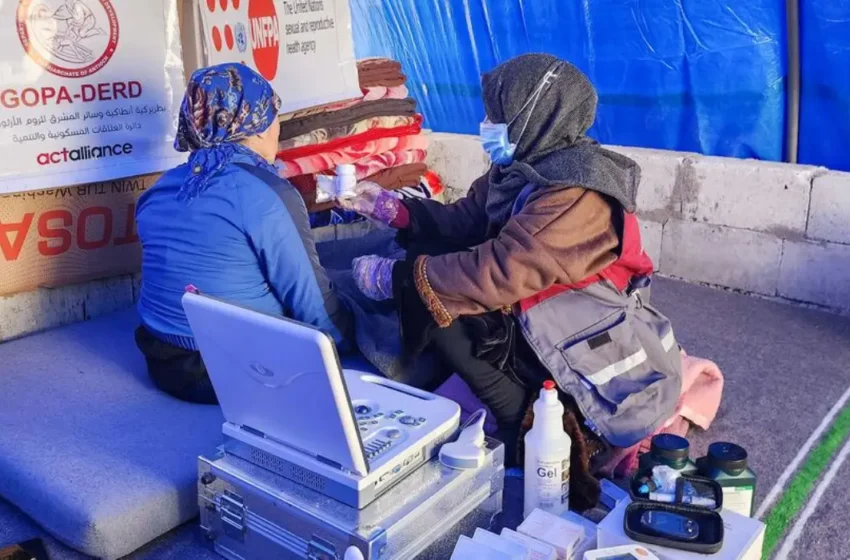
Humanitarian health teams attempt to fill these gaps through mobile clinics and temporary service points. However, winter conditions, transport disruptions, and insecurity constrain outreach. For women in advanced stages of pregnancy, even short travel distances can become hazardous.
Camp Conditions and Protection Concerns
In major camps such as Al-Hol, security dynamics have evolved alongside internal enforcement measures. Lockdowns and heightened monitoring aim to prevent violent incidents, yet they also limit movement and access to services. Protection reports document ongoing incidents of harassment, forced marriages, and exploitation along transit routes.
Aid agencies emphasize that the combination of overcrowding and resource shortages increases psychological stress. Women and girls often report loss of privacy, restricted autonomy, and limited access to reproductive health supplies. These pressures accumulate over time, reinforcing cycles of vulnerability.
Humanitarian Response Faces Resource Constraints
International agencies continue to respond to escalating needs, but operational constraints have intensified in 2025 and 2026. Funding reductions have affected service coverage, reducing the number of active distribution points and limiting program reach. As displacement figures rise, the gap between need and available resources widens.
Humanitarian actors estimate that more than 16 million people across Syria require assistance in 2026. Climate shocks, economic contraction, and infrastructure damage further complicate recovery efforts. The cumulative effect places sustained pressure on agencies delivering food, shelter, and protection services.
Winter Conditions Increase Immediate Risks
Seasonal weather patterns have worsened the situation for displaced families living in unfinished buildings or makeshift shelters. Winter storms damaged a significant portion of women-focused shelter facilities in certain regions during 2025, reducing safe accommodation options.
Cold exposure increases risks for infants and pregnant women, particularly where heating resources are scarce. Aid organizations distribute blankets, hygiene kits, and fuel assistance, yet delivery delays can leave gaps during peak cold periods.
Mobile Services and Limited Access Corridors
To address geographic barriers, humanitarian teams rely on mobile units that provide reproductive health consultations, psychosocial support, and emergency referrals. These units operate in multiple governorates, but security conditions determine their reach.
Negotiations for expanded access corridors continue, though results vary depending on local control arrangements. Sustained humanitarian presence depends on predictable permissions and stable frontlines, both of which remain uncertain in northern districts.
Regional Spillover and Cross-Border Pressures
The Syria Displacement Crisis extends beyond national borders. Neighboring countries host millions of Syrian refugees, and ongoing instability influences return patterns and new movements. Some families have attempted returns following the political transition, yet renewed clashes in the northeast have slowed reintegration.
Host countries face their own economic and infrastructure pressures, particularly in areas already strained by earlier waves of displacement and natural disasters. Border policies and security considerations shape mobility decisions, while humanitarian agencies monitor the potential for secondary displacement.
Returns and Reintegration Challenges
While voluntary returns have occurred since early 2025, infrastructure damage and limited public services hinder sustainable reintegration. Housing shortages, disrupted utilities, and damaged schools reduce incentives for long-term resettlement.
Without stable governance and service delivery, returnees may again relocate internally. This cyclical pattern contributes to ongoing demographic instability across northern provinces.
Security Fragmentation and Civilian Exposure
The coexistence of multiple armed actors increases risks for civilians navigating checkpoints and shifting territorial boundaries. Disputed zones experience intermittent violence, often resulting in sudden evacuations.
Protection agencies report concerns regarding abductions and forced recruitment in some contested areas. These incidents underscore how displacement intersects with broader security fragmentation.
Long-Term Outlook Remains Uncertain
The trajectory of the Syria Displacement Crisis will depend heavily on the durability of political arrangements and the restoration of essential services. Humanitarian stabilization requires not only ceasefires but also infrastructure repair, healthcare investment, and consistent access to education for children.
Women’s participation in community recovery efforts may influence resilience, particularly where local networks support protection monitoring and livelihood initiatives. However, sustained progress will depend on predictable funding streams and secure operating conditions for aid agencies.
As northern Syria continues to experience territorial competition, displacement patterns may shift again with each security development. Whether current stabilization efforts can translate into durable safety for women and families remains an open question, one shaped by the balance between military dynamics, governance capacity, and the continuity of humanitarian access in the months ahead.

