

Germany’s Fight with Austria for a Coveted UN Security Council Seat
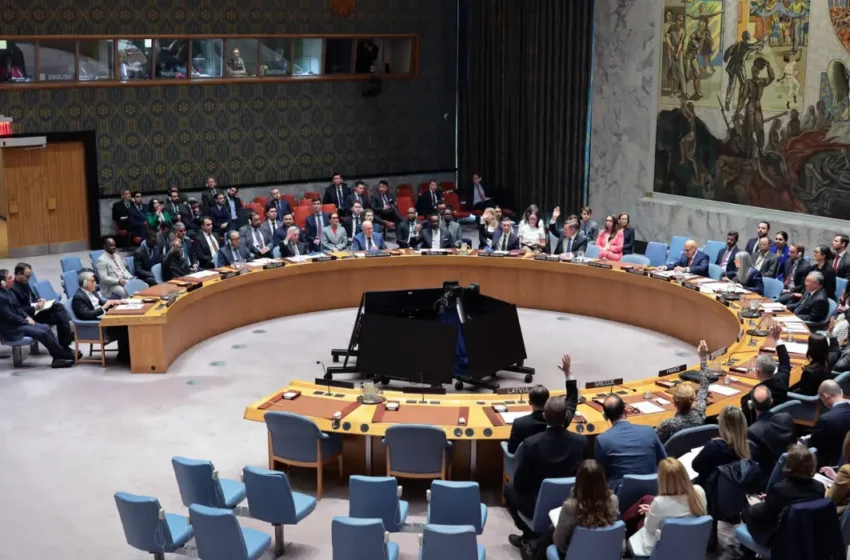
On June 3, 2026, the UN General Assembly will be voting for five new non-permanent members of the Security Council. Amid the few instances of intense Western European electoral contests, Germany and Austria will be competing fiercely for a place among two seats up for grabs during the 2027-2028 term. At 10:00 a.m., there will be a secret vote at the UN Headquarters in New York to determine the result. The election holds great importance to Europe’s foreign diplomacy as both countries leverage their years of experience to garner the votes of two-thirds of the UN member states.
This three-way race—Germany, Austria and Portugal—represents a rare competitive dynamic within the Western European and Others Group (WEOG), where seats are typically allocated by consensus or uncontested elections. The competition has drawn sharp attention from capitals worldwide, as the outcome will influence how the EU projects its voice on critical global security issues such as the war in Ukraine, the Israel–Gaza conflict, Iran’s nuclear program, and the situation in Sudan.
Germany’s Campaign: Respect, Justice, Peace
The German bid rests on a story of multilateral trustworthiness, which is anchored by Germany’s historical dedication to the international order based on rules. As noted by Johann Wadephul, the German Foreign Minister, the bid is crucial in today’s world, wherein such an international order is “under stress.”
“With the rules-based world order under stress, Germany is on a mission to gain a coveted seat at the United Nations’ top table,”
Wadephul told DW in an April 2026 interview, underscoring Berlin’s urgency to secure influence at the Council’s decision-making table.
The Berlin approach is built on three main pillars, which include respect, justice, and peace; the same reflects the vision of Germany for a Security Council that will give priority to the rule of international law, prevention of conflicts, and fair representation. According to the German government, its long involvement in various peacekeeping operations and other initiatives under UN auspices qualifies it as an experienced country that can make a valuable contribution to the discussions in the Council.
“Diplomacy still makes a difference,”
said Wadephul.
Nevertheless, Germany came to the contest late in the day after Austria and Portugal gained wide support in the WEOG grouping. It is indeed this development which has posed serious problems for Germany as far as building an international consensus in favor of the country is concerned, and now Germany must make extra efforts to win the backing of Africans, Asians, and Latin Americans.
Austria’s Stance: Partnership, Dialogue and Trust
For Austria, the campaign has been based on a platform of partnership, dialogue, and trust, portraying the country as a mediator for conflict resolution on an international scale. Austria highlights its position as one that has housed many United Nations organizations and institutions such as the UN Office at Vienna.
“Austria has a reputation to lose,”
one analyst noted, pointing out that Austria’s first Security Council candidacy in the 1970s faced challenges, but its subsequent bids succeeded without serious competition until now.
The Austrian mission emphasizes Austria’s strengths in crisis management, security issues related to the environment and conflict resolution. The Alpine nation believes that being a small state enables it to play an impartial role in negotiations between conflicting nations, thus making diplomacy a key component of its mission statement.
The Austrian Foreign Minister has publicly advocated for a Security Council seat, arguing that Vienna’s diplomatic infrastructure and experience make it uniquely positioned to contribute to the Council’s work.
“Austria’s candidacy is about partnership, dialogue and trust,”
the Foreign Minister stated in May 2025, outlining a vision of the Council as a forum for mediation and constructive engagement rather than confrontation. This message has resonated with many Small and Medium-sized States (SMS) that value impartiality and procedural fairness in Council deliberations.
The Two-Thirds Hurdle and Regional Dynamics
Getting a position in the Security Council involves more than just prestige; it includes achieving certain mathematical criteria. According to UN General Assembly procedures, any individual seeking the position in question must secure no less than two-thirds of the total number of 193 states. In other words, one needs a minimum of 129 votes for successful election.
The Western European and Others Group offers two slots for the term 2027–2028. Austria and Portugal were ready to occupy these slots without any opposition due to an internal agreement between the two countries. However, Germany has joined late in this election campaign and made the previously agreed-upon decision competitive by opposing Austria and Portugal for these seats. This unexpected development has been highly criticized by other member countries.
The importance of the vote cannot be understated since the non-permanent council members have an instrumental influence in crafting resolutions, setting agendas, and defining the atmosphere of debates on the crisis at hand. The results of the vote will decide if Germany, which has been seeking a seat for quite some time but has not yet gotten one beyond the non-permanent status, will once again have a say on the Council after its 2019-2020 term concludes. On the other hand, Austria will be campaigning for its fourth term.
Why This Election Matters Beyond Europe
The conflict between Germany and Austria does not exist solely within the sphere of Europe’s diplomatic relations but rather is indicative of larger issues pertaining to the structure of the UN Security Council as well as its distribution of powers between different regions. The nations of Africa, Asia and Latin America will play a major role in determining the final result of this struggle, since their votes count.
It is expected that the period of 2027-2028 will be characterized by global crises such as the conflict between Russia and Ukraine, the humanitarian crisis in Gaza, the threat posed by Iran regarding nuclear weapons, and the situation in Sudan. Having a seat on the Security Council provides countries with the opportunity to participate in shaping resolutions, sponsoring debates, and setting the agenda at such crucial times. Germany sees an opportunity through a seat on the Security Council to become one of the world’s leading powers.
The election also comes amid growing skepticism about the UN’s effectiveness, with some member states questioning whether the Council remains legitimate in addressing 21st-century threats.
“For the UN to stay legitimate, we need a Council seat,”
a German envoy argued in a 2021 statement, a sentiment echoed in Germany’s current campaign narrative that emphasizes the need for a stronger European voice to uphold multilateralism.
Campaign Strategies and Diplomatic Outreach
The German bid has aggressively been seeking votes from African and Asian delegates by making promises of partnership in development, financial contribution towards climate change and UN reforms. Germany is using its economic influence as well as being the largest economy within the EU in order to forge alliances, alongside its involvement in peacekeeping and humanitarian efforts.
On the other hand, Austria has focused on its mediation expertise, the ability to host international talks and nuclear disarmament and climate change security. The Vienna campaign has been specifically designed to attract countries valuing neutrality and conflict-resolution over geopolitics.
Thirdly, there is Portugal, another competitor vying for a permanent seat, whose own aggressive campaign has been tailored toward its strengths in Lusophone Africa relations and maritime security cooperation.
The diplomatic outreach has been ongoing for months, with ministers and ambassadors traveling to capitals across Africa, Asia and Latin America to build personal relationships and secure commitments. The level of effort reflects the high stakes: losing this election would be a diplomatic blow to Germany’s global ambitions and a setback for Austria’s long-term foreign policy strategy.
What the Result Could Mean for Global Security
In the event of victory by Germany, this will be a clear indication that there is an increasing level of influence of the EU in the UN Security Council. Germany’s inclusion in the UN Security Council will ensure increased attention paid to climate security, development, and the reform of multilateralism.
In the event of victory by Austria, it is important to note that this will serve to strengthen the position of small countries and neutral countries in the context of international security. Either way, regardless of the outcome of this election, the winning country will have to work with an extremely divided UN Security Council where permanent members like the US, China, and Russia do not agree on many matters.
The outcome will also shape the internal dynamics of the Western European and Others Group, influencing future candidacies and the balance of power within the EU’s diplomatic apparatus. As the vote unfolds today, the international community watches closely, knowing that the result will resonate far beyond New York’s Conference Building.
Diplomacy in a Divided World
The battle for a Security Council seat between Germany and Austria is not only about a simple procedural election but also a litmus test of whether multilateralism can exist in today’s increasingly fractured world. Both countries have very promising perspectives to offer: Germany in terms of its commitment to respect, justice and peace and Austria in regard to partnership, dialogue and trust.
As the ballots are cast today, the world waits to see which vision will prevail—and how the Council will respond to the challenges of 2027 and 2028. One thing is certain: in an era of rising geopolitical tensions, a seat at the UN Security Council remains one of the most coveted positions in global diplomacy.

