

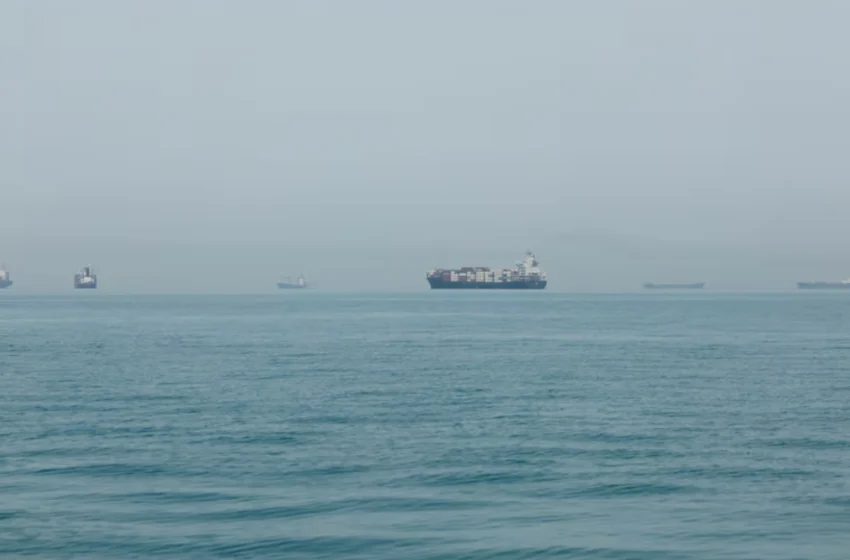
France Drafts UN Security Council Plan to Secure Strait of Hormuz Shipping
France is now positioning itself as the central player in the diplomacy to address what is considered one of the world’s most volatile sea passages – the Strait of Hormuz. According to the available data, France is currently working on the UN Security Council resolution aimed at creating an international operation to ensure traffic along the passage. The initiative of France comes amid a deadlock between the United States and Bahrain regarding their own resolution which is stuck without any definite date for voting.
This is because there lies the critical and very important strait through which a large number of international energy flows pass. Anything affecting this strait will immediately affect the oil market, security strategies, and insurance rates. The French approach seems to show that it is trying to leave all its diplomatic options open, but at the same time it is also making sure that the Security Council still has something to do.
Why is the Strait of Hormuz so important?
Strait of Hormuz, one of the most monitored maritime straits in the globe, connects the Persian Gulf and the Arabian Sea, making it an important waterway for crude oil shipments, liquefied petroleum gas, and commercial traffic. This makes any kind of tension at the strait have huge implications on the flow of energy around the world and on the security of ships sailing through it.
In this particular instance, there are both economic and geopolitical dimensions involved in the situation. In light of the security problems brought up by the ongoing conflict, there is an effort by the United Nations to take action regarding the strait. For that reason, the wording in the two resolutions that the UN has drafted becomes extremely relevant.
What has France proposed?
There is a French draft of the UN Security Council resolution that can be proposed if conditions allow. According to the reports, the idea is to form an international task force meant to ensure movement through the Strait of Hormuz. It will not be viewed as a unilateral move, but rather as a multilateral initiative under the auspices of the United Nations.
It is noteworthy that French authorities have been conducting consultations with American and Iranian authorities regarding the draft. It can be concluded from this that it is not simply a move aimed at resolving some security-related issues. Rather, it is a politically-motivated step that should contribute to establishing a dialogue between Tehran and Washington. Consultations are necessary since no resolution concerning the Hormuz issue can get past numerous conflicting national and international parties involved in the matter.
Why is the US text stalled?
The draft US-Bahrain resolution is allegedly being discussed, but no voting date has been announced yet. This delay is important since it indicates that the draft has yet to gather enough approval for a hassle-free passage. At the Security Council, a lack of agreement on even the most pressing issues has been known to happen when the permanent members are at odds.
However, the alleged difficulty with the draft goes beyond mere procedure. The political climate in the Gulf area is extremely polarized, and both Russia and China have displayed reluctance regarding prior resolutions on this topic. In such an atmosphere, a document that takes a stance very similar to that put forth by the White House is not likely to gain much ground. A text which requires Iran to cease attacks and mine-laying operations would appear attractive from a political standpoint, but it may also increase resistance to such an approach.
What are France and the UK trying to do?
France and the UK have come out in support of a defensive international mission geared towards ensuring the protection of shipping as well as ensuring continued navigation. This is very significant since it portrays the undertaking as defensive, as opposed to being offensive. Rather than using coercion against an entity, the move would take the form of a maritime security mission aimed at ensuring free shipping through the region.
This is significant when considering the UN process of deliberation, where states that might not necessarily agree to coercion and accusations are much more likely to consider a limited proposition, one of securing international commerce. What makes the French position particularly significant is the fact that it indicates the government does not want to leave the situation hanging due to the failure of some vote.
What did the officials say?
The reported statements from French officials give the clearest picture of Paris’s approach.
French spokesperson Pascal Confavreux said,
“There is a draft resolution between the US and Bahrain currently under discussion. This forms the basis of the current discussions. The date for the vote has not yet been announced.”
This statement confirms that the US-Bahraini text is still alive, but also that it has not reached the point of a scheduled vote.
He also said,
“We are working on an international mission to restore freedom of navigation. We have also prepared, as a permanent member, a draft resolution that could be discussed if the conditions are right.”
That is a significant statement because it reveals France is not merely reacting to events, but actively preparing its own UN track.
Reuters-based reporting further says President Emmanuel Macron wants the initiative to advance only once the situation permits and after consultations with both Washington and Tehran. That suggests France is aiming for a diplomatic opening rather than forcing a confrontation in the Council. The strategy appears to be to keep leverage available while avoiding a symbolic defeat at the UN.
How does the Security Council divide on this issue?
This is illustrated by the veto of a previous draft resolution concerning the Strait by Russia and China in April 2026. The significance of this historical background lies in the fact that a new proposal should not only contain the appropriate wording, but also have sufficient political weight to withstand any new confrontation between powers.
From this point of view, this would mean that the French draft might be considered a milder version of a statement on the Strait. For instance, if the US-Bahraini resolution is too specific concerning Iranian responsibility for the problems in the strait, it will inevitably lead to a repeat of the same scenario.
It is interesting to note that the divisions within the Council also point to one of the weaknesses of the existing international system. Even if there is unanimous opinion regarding the need for security of maritime traffic, there is no certainty about the identity of the agency leading the effort and its jurisdiction. It also remains unclear as to the extent to which the mission should extend.
What happened earlier in the month?
This is evident from the timeline provided above in which the initiative can be seen to have developed from a previous attempt at solving the same issue. This is because on April 6, 2026, it was noted that the Security Council could not adopt any resolutions concerning the Strait of Hormuz following the veto by Russia and China.
Later on April 17, 2026, France and the UK launched a defensive multinational mission to the strait. This indicated that the efforts were now being concentrated on a security initiative. Further evidence indicates that France had formulated its own resolutions for submission under favorable political circumstances before May 21-22, 2026.
This sequence is important because it shows the evolution from failure to planning. The current situation is less about whether the world recognizes the problem and more about whether it can agree on a workable response. France seems to believe a separate draft could provide the flexibility the stalled US text lacks.

