

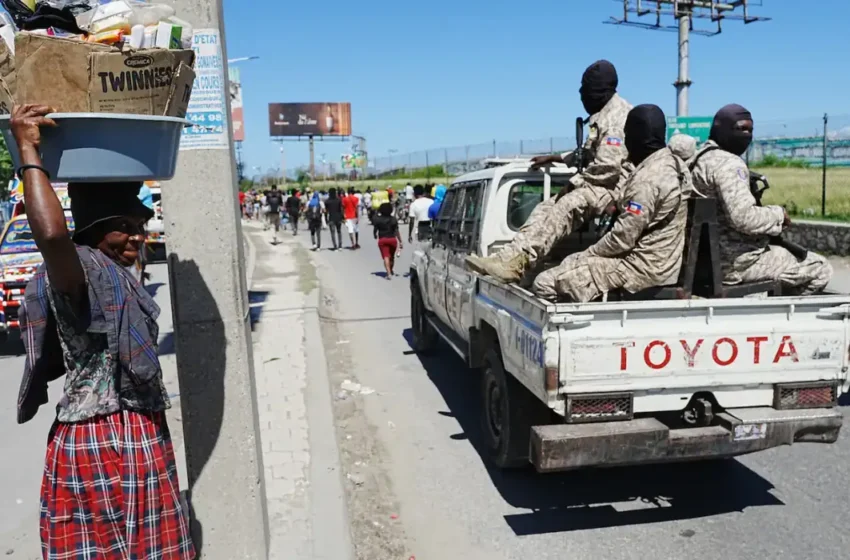
Chadian Troops Lead UN-Backed Push Against Haitian Gangs
The Chadian troops Haiti gangs mission represents a decisive shift in how international actors approach urban insecurity in fragile states. Unlike previous limited deployments, the new Gang Suppression Force (GSF) combines scale, funding, and an expanded mandate, suggesting that the international community is moving toward more assertive stabilization strategies in environments where state authority has largely collapsed.
This transition is not occurring in isolation. Haiti’s prolonged governance crisis, compounded by escalating gang control over territory and infrastructure, has forced policymakers to reconsider earlier approaches that emphasized training and advisory roles. The introduction of a larger, combat-capable force signals recognition that the security vacuum has reached a level where indirect support is no longer sufficient.
Force composition and operational scale
The structure of the GSF reflects lessons drawn from earlier missions that struggled with insufficient manpower and unclear mandates. The decision to deploy a larger, more cohesive force indicates a recalibration toward operational dominance rather than symbolic presence.
Transition from Kenya-led framework
The earlier Kenya-led mission, capped at around 1,000 personnel, faced constraints that limited its ability to control territory or sustain operations. The transition to a 5,500-strong force, led by Chadian troops, reflects a belief that scale is essential in confronting heavily armed gangs that operate with near-military coordination.
This shift also demonstrates a broader willingness among international actors to reassign leadership roles based on operational experience rather than political considerations. Chad’s involvement is tied to its track record in high-intensity conflict environments, particularly in counterinsurgency operations.
Chadian deployment structure
Chad’s contribution of approximately 1,500 troops, organized into two battalions, forms the operational backbone of the mission. The presence of advance units already active in Port-au-Prince suggests that the deployment is moving beyond planning into sustained engagement.
The phased rollout allows for gradual escalation while testing coordination with Haitian national forces. This structure reduces the risk of immediate overstretch while maintaining momentum in key urban areas.
Logistics and multinational support
Logistical backing from regional partners, including air transport and supply coordination, plays a critical role in sustaining the mission. The reliance on structured logistical channels indicates that planners are attempting to avoid the operational bottlenecks that hindered earlier interventions.
This infrastructure is essential in a context where gangs disrupt transport routes and supply chains, making conventional deployment strategies difficult to execute.
Funding and political backing
Financial commitments to the GSF highlight the extent to which international stakeholders view Haiti’s instability as a broader security concern. The scale of pledged funding suggests a level of urgency that was less evident in previous efforts.
Scale of financial commitments
More than $200 million has been pledged by multiple states, with a portion already disbursed. This funding level exceeds that of earlier missions and reflects a recognition that sustained operations require consistent financial support rather than short-term injections.
The inclusion of multi-year commitments also indicates an expectation that the mission will extend beyond immediate stabilization efforts.
Political signaling through funding
Funding is not only a practical necessity but also a political signal. By committing substantial resources, participating states are demonstrating a willingness to support a more interventionist approach to security crises.
This contrasts with earlier hesitation, where concerns about sovereignty and mission creep often limited engagement.
Mandate clarity and expectations
Statements from UN officials suggest that expectations for the GSF are unusually high. The framing of the mission as a potential “turning point” reflects both optimism and pressure, as stakeholders anticipate measurable improvements in security conditions.
At the same time, the emphasis on eventual Haitian self-sufficiency indicates that the mission is not intended to become a permanent fixture.
Operational realities on the ground
The deployment of Chadian troops into Haiti’s complex urban environment introduces a range of operational challenges that differ significantly from traditional peacekeeping scenarios.
Urban combat complexity
Haiti’s gangs operate within densely populated urban areas, where distinguishing between combatants and civilians is inherently difficult. This environment increases the risk of collateral damage and complicates efforts to establish control.
The shift toward direct combat operations suggests that planners are prepared to accept higher operational risks in exchange for more decisive outcomes.
Early confrontation indicators
Initial operations have already resulted in significant casualties among gang members, as well as civilian harm. These outcomes underscore the intensity of the conflict and the difficulty of conducting precise operations in such environments.
The seizure of weapons and the disruption of gang networks indicate some tactical success, but they also highlight the scale of the challenge.
Coordination with Haitian forces
Integration with Haitian police and security forces remains a critical factor in the mission’s success. Effective coordination is necessary to ensure that gains made by international troops can be sustained by local institutions.
However, the capacity limitations of Haitian forces present an ongoing constraint, raising questions about long-term sustainability.
Violence trends and humanitarian impact
The security situation in Haiti continues to deteriorate, with violence levels reaching unprecedented levels in recent years. The GSF is entering a context where humanitarian needs are deeply intertwined with security challenges.
Rising violence metrics
The increase in killings between late 2025 and early 2026 reflects a broader trend of escalating violence. The high homicide rate underscores the extent to which gangs have entrenched themselves within the social and economic fabric of the country.
These figures provide the backdrop against which the GSF’s effectiveness will be judged.
Displacement and social disruption
The displacement of more than 1.45 million people illustrates the scale of the humanitarian crisis. The disruption of communities and the breakdown of basic services create additional pressures that extend beyond immediate security concerns.
Gangs’ control over aid routes further complicates efforts to address these challenges, making security and humanitarian objectives inseparable.
Civilian vulnerability
The overlap between combat operations and civilian spaces increases the risk of unintended harm. This dynamic places additional scrutiny on the conduct of operations and the mechanisms in place to protect non-combatants.
Balancing operational effectiveness with humanitarian considerations remains one of the mission’s central dilemmas.
Strategic implications for UN-backed interventions
The Chadian troops Haiti gangs mission may serve as a template for future interventions in similarly complex environments. Its structure and mandate reflect evolving assumptions about the role of international forces.
Shift toward enforcement roles
The move from advisory to enforcement roles represents a significant departure from traditional peacekeeping models. This shift acknowledges that some conflicts require direct intervention to restore basic security conditions.
However, it also raises questions about the boundaries of international involvement and the risks associated with deeper engagement.
Lessons from Sahel operations
Chad’s experience in the Sahel provides a foundation for its role in Haiti, but the differences between rural insurgency and urban gang warfare present new challenges. Adapting tactics to a different operational environment will be critical.
The transfer of expertise across regions highlights the interconnected nature of modern security challenges.
Long-term sustainability concerns
The success of the mission will ultimately depend on its ability to create conditions for Haitian institutions to function independently. Without a clear pathway to sustainability, even a successful intervention risks becoming a temporary solution.
This underscores the importance of aligning military objectives with broader governance and development efforts.
Political narratives and legitimacy
The deployment of foreign troops in Haiti carries significant political implications, both domestically and internationally. Legitimacy remains a key factor in determining the mission’s effectiveness.
Haitian government positioning
Statements from Haitian leadership emphasize the restoration of state authority, framing the mission as a necessary step toward reclaiming control. This narrative is essential for maintaining domestic support.
At the same time, reliance on external forces highlights the limitations of current state capacity.
International framing of success
International actors have framed success in terms of reducing dependence on foreign troops. This framing reflects a broader concern about the sustainability of interventions and the need to avoid long-term reliance.
The emphasis on measurable outcomes suggests that the mission will be closely monitored for tangible results.
Risks of perception gaps
Differences between international and local perceptions of the mission could create challenges. While external actors focus on metrics and timelines, local populations may prioritize immediate security and stability.
Managing these expectations will be critical in maintaining legitimacy.
Evolving benchmarks for success
The Chadian troops Haiti gangs mission is redefining how success is measured in complex security environments. Traditional metrics such as territory controlled or enemy casualties may not fully capture the mission’s impact.
The broader challenge lies in translating short-term operational gains into long-term stability. Reducing violence, restoring public confidence, and enabling economic activity are all part of a more comprehensive definition of success.
As the mission unfolds, its outcomes will likely influence how future interventions are designed and implemented. Whether the GSF becomes a model or a cautionary example may depend less on immediate results and more on its ability to navigate the intricate balance between force, legitimacy, and sustainability in a deeply fractured state.

