

UN Human Rights Chief “Appalled” by Anti-Immigrant Violence Sweeping United Kingdom
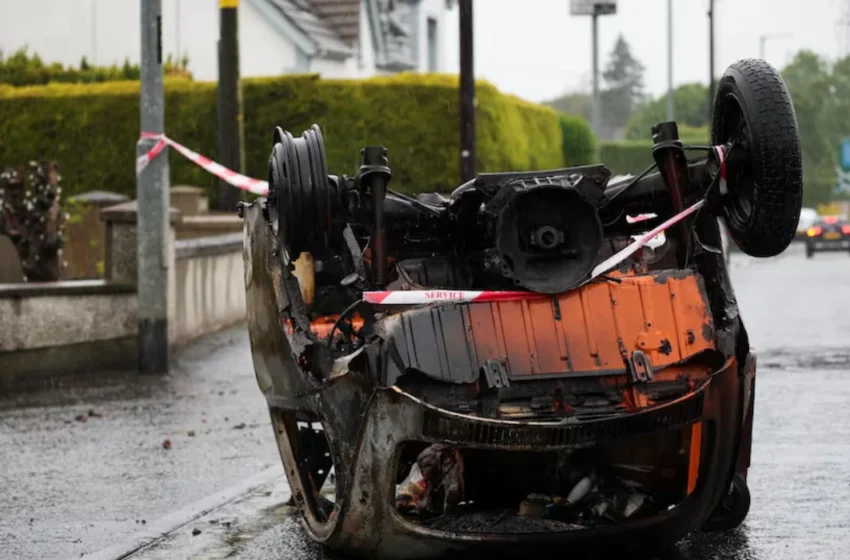
There has been an alarming spike in instances of racist violence in the United Kingdom against immigrants, Muslims, and members of ethnic minorities. This situation has received serious criticisms from the international human rights community, including the UN Human Rights High Commissioner, Volker Türk. The latter issued a statement expressing his “horror” at the violence against migrants, Muslims, and minorities in the cities of Belfast and Southampton. His comments are among the most powerful criticisms made by the UN regarding such violence in the United Kingdom recently.
This issue is not one-off in nature; it is a continuation of a bigger trend of hatred-inspired violence that has been plaguing the United Kingdom ever since July 2025, when right-wing extremists stormed mosques, refugee settlements, and immigrant communities in several urban centers. This current spate of violence in Belfast and Southampton has raised international concerns regarding the UK’s inability to prevent increasing levels of division, hatred, and online extremism.
The Immediate Crisis: Belfast and Southampton Under Fire
Belfast: Anti-Immigrant Attacks in Northern Ireland
The violence seen recently in Belfast, Northern Ireland, has occurred due to the activities of anti-immigrant protesters who have formed groups in areas where there are a lot of migrant and Muslim residents. There are claims that there has been violence against the homes, businesses, and community centers that belong to the migrants, as the police in Belfast struggled to control the situation, with hate speech spreading quickly through the internet and into real life attacks.
What makes the situation particularly concerning is that Northern Ireland has always had a sensitive attitude towards ethnicity, based on its own background with sectarian strife. This shows that the far-right movement in the UK has gone beyond national politics, and may soon be seen elsewhere.
Southampton: Clashes with Police and Racist Violence
Violence in Southampton, England, however, presented a different face but just as dangerous when the confrontation took place between protesters against immigrants and the police force itself. Incidents were reported in Southampton showing the use of racial and Islamophobic chants by a large group that vandalizes and attacks the property of migrants. The situation for the police force in Southampton is not easy either with reports of verbal harassment and threats of violence coming from the increasingly aggressive crowd.
This form of violence in Southampton resembles incidents reported in other English cities during the riots of the far-right movement in 2025, where the police force was attacked directly by mobs fueled with hatred towards minority groups.
Volker Türk’s Forceful Condemnation: Key Statements and Demands
The High Commissioner’s Core Message
Volker Türk’s intervention in Geneva was marked by unusually sharp language, reflecting the severity of the crisis. He stated clearly that
“the violence that comes out as a result in both Northern Ireland and in Southampton were really shocking”
and emphasized that
“we cannot tolerate this in today’s world.”
His condemnation went beyond mere criticism, targeting the underlying attitudes that enable such violence to flourish.
Türk’s most damning assessment focused on the dehumanization of entire groups within society. He declared that
“dehumanisation of whole groups within a society is totally unacceptable and is frankly despicable.”
This statement directly challenges the ideology of far-right extremists who frame migrants, Muslims, and ethnic minorities as threats to national identity or security.
The Role of Social Media and Digital Incitement
A central element of Türk’s analysis was the role of social media platforms in amplifying hate speech and inciting violence. He warned that
“the polarisation that we see is shocking”
and accused online platforms of failing to take responsibility for the content they allow to spread. Türk demanded that
“social media providers must take the responsibility seriously”
that hate speech, violence, and incitement are unacceptable and must be prevented.
In light of the UK’s media regulator issuing warnings regarding the role of online platforms in fomenting hatred and violence following the viral postings concerning the Belfast unrest, it becomes even more pertinent to emphasize the necessity of accountability in cyberspace. The rapid spread of extremist ideologies in cyber space has had a dramatic impact on the nature of hate-driven violence.
The UK’s Struggle with Far-Right Violence Since 2025
The July–August 2025 Far-Right Riots
The currently happening in Belfast and Southampton is not an isolated occurrence but rather part of a larger wave of violence by far-right, racist, and Islamophobic extremists which terrorized the entirety of the UK in July and August of 2025. In those months, mob attacks were carried out against mosques in various cities, asylum-seekers’ housing was vandalized, and migrants were targeted in communities throughout Britain, according to security analysts.
The 2025 riots were defined by mobs utilizing social media to coordinate their attacks, share information on the locations of the most vulnerable communities, and disseminate dehumanizing messages about migrants and Muslims. These attacks led to property damage, injuries, and widespread fear among minorities who were left feeling like they had been abandoned by a powerless government.
Rising Hate Crimes and Political Hate Speech
Before the 2025 riots, there was an increase in hate crimes and hate speech in the United Kingdom. In August 2024, the United Nations Human Rights Committee called upon the UK government to take measures against racist hate speech, which had seen a “sharp increase,” especially against ethnic minorities. The UN committee was concerned specifically about hate speech from politicians, who portrayed immigrants as a threat to national security and culture.
This is a crucial aspect of hate speech within the context of politics since it creates an aura of legitimacy for far-right extremist movements by lending credibility to dehumanization rhetoric. Hate speech, when used by political figures, helps create the ideology that is used to justify the use of violence against these immigrant groups.
The UN’s Broader Human Rights Concerns About the UK
Facial Recognition and Mass Surveillance at Protests
Beyond the acts of violence, the United Nations has expressed great concern regarding the use of facial recognition and mass surveillance technology by the UK government in protests. In 2024, the UN Human Rights Committee asked the UK to stop using facial recognition technology in public protests as it infringes on the privacy rights of the protestors and may lead to discrimination against minorities.
UN highlighted that mass surveillance technology would discriminate against immigrants, Muslims, and ethnic minorities, and would create more resentment against them. It was especially relevant to the current situation as increased surveillance would increase mistrust among minorities and the police force because of anti-immigration violence.
The Palestine Action Ban and Freedom of Association
In July 2025, Volker Türk also criticized the UK government’s ban on Palestine Action, calling it “excessive and unwarranted” and a violation of the right to peaceful association. The UN High Commissioner argued that banning a group engaged in peaceful protest undermined fundamental democratic rights and contributed to the broader polarization that fuels hate-driven violence.
This particular measure draws attention to the worry of the UN that the British government’s approach towards civil society and the rights of protest may actually be creating a climate that contributes to the growth of far-right extremism. Restrictions on the right of peaceful assembly can lead people to feel estranged from the state, thereby forcing them to resort to extremism.
The UK Government’s Response and International Pressure
Domestic Political Reactions
There has been much pressure on the UK government to react to the attacks in Belfast and Southampton, with demands made for increased policing efforts and tougher sentencing for hate crimes, among other steps. It is important to note that this pressure has come amid criticism of the government’s response, which has been deemed insufficient, since previous policies have failed to stop right-wing violence from occurring again.
Leaders have adopted differing views, with some calling for increased law enforcement efforts while others have asked for a more comprehensive approach to addressing extremism driven by hatred, including education and regulation of the Internet.
International Condemnation and Diplomatic Pressure
Beyond Volker Türk’s statement, the UK has faced condemnation from other international human rights bodies and foreign governments for its handling of the crisis. The UN’s intervention adds to a growing chorus of international pressure on the UK to address rising hate crimes, improve protection for minority communities, and take stronger action against online hate speech.
This international scrutiny is significant because it places the UK’s human rights record under global examination, potentially affecting the country’s diplomatic standing and its ability to advocate for human rights on the international stage.

