

UN refugee agency loses aid in Russian strike
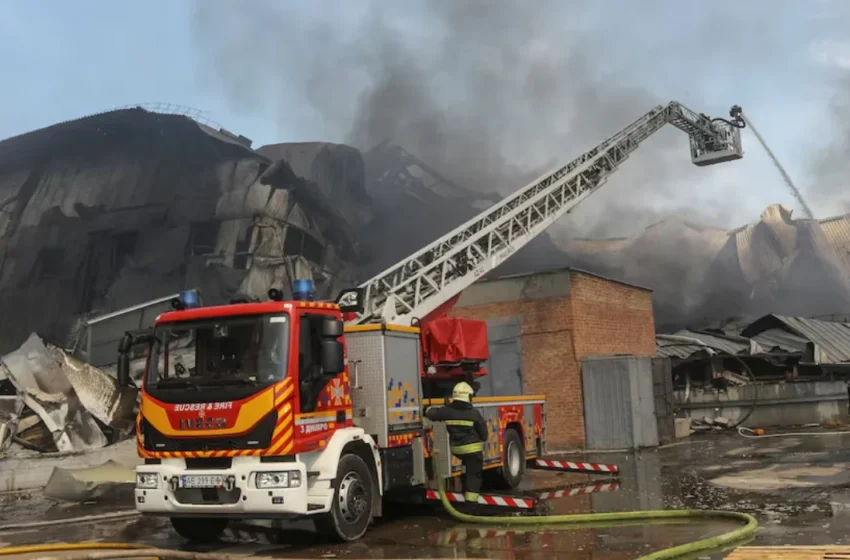
The loss of over $1 million worth of humanitarian aid supplies by a Russian missile and drone attack against Ukraine also serves as yet another painful reminder that the war in the country continues to take its toll on civilians as well as aid systems put in place to keep them alive. A warehouse leased out by the UNHCR came under attack in the city of Dnipro as the result of missile strikes and drones, causing a blaze that led to the burning down of many loads of aid supplies meant for victims and communities at the front lines of the war.
According to the UN’s office responsible for handling refugees, the warehouse contained necessary humanitarian goods intended for those affected by the war in eastern and southern Ukraine. Based on UNHCR’s report, the attack damaged about 900 pallets of aid commodities consisting of blankets, sleeping mats, hygienic kits, and other shelter-related items. It is important to note that these goods did not constitute just a collection of products sitting in storage. Rather, these goods were already allocated for use in the distribution system aimed at people who had been displaced, lost their homes, and had to deal with the consequences of war.
What the strike destroyed
The strike took place at a warehouse in the city of Dnipro, which is a key logistical point and has played a very important part in the humanitarian supplies in Ukraine. According to UNHCR, the strike involved a ballistic missile followed by a fire, destroying goods intended to help thousands of displaced and affected people. It was estimated that the lost humanitarian supplies were valued at over a million dollars.
This number is important, yet not fully describing the negative impacts from the strike. Often, humanitarian goods are stockpiled specifically in order to use them during emergency situations, in cases when the roads are unsafe to travel and the supplies are unreliable. As a consequence, destroying the stocks means not having the possibility of sending supplies quickly, which implies additional costs related to the strike.
Pragmatically too, the destroyed items were not just symbolic but practical. Blankets and mats would be essential for those families who find themselves staying temporarily at shelters or in houses that have been damaged by the attacks. Hygiene kits will prove very useful where there is no water supply system, or where there is crowding due to lack of space. In the process of recovery, materials used for constructing shelters often become the first necessity.
Civilian toll and legal concerns
UNHCR said the attack killed at least two civilians and injured others, underscoring once again that strikes in populated areas continue to inflict direct human cost. Dnipro has repeatedly been exposed to missile and drone attacks throughout the war, and the incident adds to a pattern in which civilian infrastructure and humanitarian assets are damaged or destroyed.
The agency’s response was blunt. UNHCR strongly condemned the strike and described it as “unacceptable” and “abhorrent,” language that reflects both operational frustration and legal concern.
These incidents are not just tragedies for humanitarian agencies but represent violations of the very values that have been established to safeguard people during wars. Warehouses of aid organizations are not military assets; their bombing leads to additional damage beyond the initial area of destruction.
Additionally, the agency emphasized that premises of humanitarian organizations and materials meant for aid must be safeguarded according to international laws. It is important to mention that the ongoing Russian-Ukrainian war had already created an issue about the boundaries between civilian and military infrastructure before. This bombing sends an indirect signal to all humanitarian organizations that nobody is safe within the response network.
UNHCR’s response
According to the UNHCR, efforts have been underway in cooperation with local authorities and other organizations to find additional warehouses and replenish resources. This is a realistic step to address a problem that is common in war logistics – when one point in the network fails, organizations need to adapt their distribution plans accordingly and reestablish delivery routes.
The role played by the agency is both operational and political, in a larger sense. Through its condemnation of the strike, UNHCR highlights the losses suffered, but also the fact that the increasing risk of conflict is affecting humanitarian actors and resources. Another key aspect of the statement lies in its ability to provide reassurance for both donors and recipients, indicating that even though there have been losses, aid will nevertheless keep coming. This is especially crucial in crisis situations, where maintaining public confidence is key.
“These attacks must stop,” UNHCR said in response to the deadly strike, linking the warehouse destruction to a wider pattern of repeated damage to civilian and humanitarian infrastructure. That message is aimed not only at the parties to the war but also at the international community, which continues to watch the conflict as it enters another prolonged and exhausting phase.
Why Dnipro matters
Dnipro does not only belong to the geography of warfare in Ukraine. Instead, it serves as a key point of operation for humanitarian organizations that assist displaced and affected populations living in disputed zones. This implies that Dnipro is an important storage area and the place for distribution and dispatching of humanitarian supplies to different parts of Ukraine. When such a warehouse is destroyed, it entails losses not only due to its destruction but also due to its role in the network of operations and aid.
In particular, the items that were kept in such a warehouse were meant for use in Dnipropetrovsk region and surrounding front-line regions where displacement and destruction continue. Hence, we can conclude that these supplies were necessary for addressing the needs of people who continue to live under the threat of repeated displacement, insecure housing conditions, and cold season.
This is one reason aid agencies often emphasize logistics in reporting on the war. Public attention usually focuses on front lines, casualties, and diplomacy. But humanitarian response depends on warehouses, trucks, fuel, storage, and coordination. Once a warehouse is destroyed, the crisis extends beyond the blast site into the administrative and operational machinery of relief.
Humanitarian impact across Ukraine
The destruction of property in Dnipro City comes as part of a larger pattern where pressures increase for humanitarian work throughout Ukraine. According to UN reports, the conflict has been increasingly impacting civilians and challenging aid delivery efforts. With continuing attacks, organizations will require more time spent restoring supplies and defending staff than delivering relief.
This development is relevant insofar as humanitarian aid tends to be effective when reliable. If supplies are destroyed, beneficiaries may experience shortages or interruptions of aid that could exacerbate precarious situations. A beneficiary group may face further hardship as it awaits delivery of hygiene kits, bedding, or repair supplies. Households living close to the battle lines risk exposure to the elements without proper sanitary or shelter arrangements.
The strike also illustrates how aid itself has become vulnerable in modern warfare. Humanitarian organizations operate on the assumption that relief goods and facilities should be insulated from conflict. When that assumption breaks down, response systems become more expensive and less efficient. Donors then face the burden of replacing lost value, while agencies must invest in backup plans, dispersed storage, and stronger protection measures.
Statements in context
In this situation, UNHCR uses its most powerful wording to convey the gravity of what happened and how significant a statement it is for a warehouse strike. This is not a mere condemnation expressed through rhetoric. It is an official record stating the fact that the destroyed cargo included civilian aid, civilian employees, and a civilian storage facility located in a country that has already suffered a lot from war-related destruction.
According to UNHCR, the destroyed supplies would be sufficient for providing assistance to thousands of forcibly uprooted persons and those who were affected by the war. The significance of this number is that it conveys how serious the loss was in humanitarian terms. For example, losing 900 pallets means having no blankets, hygiene kits, or building material.
The fact that the warehouse belonged to a UNHCR contractor is also relevant. It shows that humanitarian operations in Ukraine depend on a network of local and international partners, not just UN personnel. That network is essential for speed and reach, but it also exposes suppliers, contractors, and facilities to the same wartime risks faced by the broader population.
The bigger picture
This strike is part of a war that has increasingly blurred the line between battlefield and civilian space. Every attack on a school, hospital, warehouse, or residential block deepens the humanitarian burden and raises the cost of recovery. In Ukraine, where displacement remains widespread and infrastructure damage continues, the loss of emergency stocks can have effects that last well beyond the day of the strike.
The broader significance of the Dnipro attack lies in what it says about the war’s next phase. If aid warehouses can be destroyed with such ease, humanitarian planners must now factor in not only demand for assistance, but also persistent threats to the supply chain itself. That means more dispersion of stock, more contingency planning, and more urgency around protecting civilian logistics.
At a political level, the incident will also reinforce international criticism of attacks that hit non-military targets. It gives UN agencies more evidence to argue that humanitarian space is shrinking. And for people on the ground, it means a longer wait for essential goods that were already scarce.
The destruction of more than $1 million in aid is therefore more than a material loss. It is a reminder that in Ukraine’s war, the cost is measured not only in destroyed buildings and battlefield gains, but also in blankets not delivered, shelters not repaired, and civilians left with fewer resources to survive another week of conflict.

