

WHO flags low global Ebola risk, but regional danger remains high
According to the World Health Organization, the ongoing Ebola epidemic has been categorized as a low risk for international spread. However, it should be noted that the situation is still very serious on a local level, with the potential for spreading within the affected regions and neighboring countries of the Democratic Republic of Congo and Uganda. The difference lies in the fact that this outbreak does not yet pose a threat on an international level.
Outbreak picture
From the most recent reports, it appears that there have been confirmed cases of Ebola in the northern provinces of Congo, namely, Ituri and North Kivu. There are also confirmed cases of Ebola in Uganda that are related to the general regional scenario. Some of the numbers mentioned in the reports are 51 confirmed cases in Congo, two confirmed cases in Uganda, almost 600 suspected cases, 139 probable cases, and around 134 suspected deaths. These numbers explain WHO’s concern, as the number of confirmed cases is indeed high, while the suspected and probable cases suggest that the outbreak might be even bigger.
In situations such as these, the number of confirmed cases is hardly ever the whole truth. Public health workers frequently have to contend with inadequate information, late testing, and regions that are hard to access due to either geographical challenges or conflict zones. This implies that the challenge is not only to treat the existing cases but to trace any undetected chains of infection.
WHO’s risk assessment
The main message that WHO is trying to send is that the threat level in this case is high on a local and regional scale but low on a global level. This is important because it influences everything from the allocation of resources to the level of alertness.
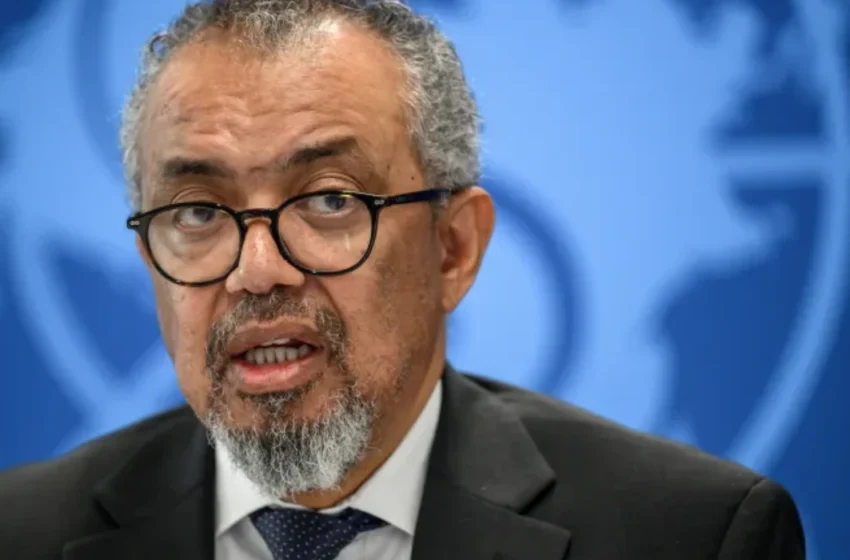
Tedros Adhanom Ghebreyesus, WHO’s Director-General, is reported to have said the outbreak is a serious concern for Congo and neighboring countries, while not yet a global threat.
“The risk is high at national and regional levels, but low globally,”
Tedros Adhanom Ghebreyesus said in the coverage, reflecting WHO’s effort to balance urgency with precision. That framing is deliberate: if the public hears only “low global risk,” the danger may sound smaller than it is; if they hear only “Ebola outbreak,” they may assume an immediate worldwide emergency.
WHO also appears to be emphasizing that the current situation does not amount to a pandemic-type emergency. That does not mean the agency is relaxed. It means the organization is using a measured risk scale based on where transmission is happening, how fast it is moving, and whether it has the conditions to spread internationally.
Why the region is vulnerable
The rationale behind why WHO considers the risks to be very high for both national and regional areas is obvious, since the virus is already present in regions that are connected by borders and have a lot of interaction among the people from different regions and even different countries.
It is at this point that Ebola is especially deadly. As it is transmitted via direct contact with bodily fluids, if an initial case is not quarantined quickly enough, subsequent cases can be generated through family care, burial services, hospitals, and general community contact. In regions where healthcare facilities are less accessible, a few missed cases can result in an epidemic developing before the situation is understood.
It is also in response to the likelihood that cases may not have been discovered yet. The discrepancies between confirmed, suspected, and probable cases suggest further research, along with a need for increased testing and tracing. Should contact tracing break down, the epidemic will spread silently through multiple districts and borders despite the low international risk level.
The numbers behind the warning
These numbers provide the scale of the outbreak. The cases in Congo, which are concentrated in the Ituri and North Kivu provinces, suggest the presence of a geographic cluster of cases rather than scattered ones. Two confirmed cases in Uganda suggest that this outbreak does not even remain limited to just one country. What is significant about the probable and suspected cases is that they highlight the uncertainties surrounding the spread of the disease.
The fact that there were close to 600 suspected cases is of particular importance. A suspected case differs from a confirmed one, although it usually reflects the broadness of surveillance carried out by the authorities. In an outbreak situation, many suspected cases end up being negative; nevertheless, the sheer number indicates the seriousness of the situation.
The fact that about 139 probable cases and 134 suspected deaths are reported serves as additional evidence for WHO’s concerns. Probable cases usually indicate individuals who match the clinical presentation and/or have an epidemiological link but have not been confirmed in the laboratory yet. If there are many probable and suspected cases, it means that the number of confirmed cases may actually be higher.
What WHO is trying to prevent
The primary goal of WHO at the present time is to contain the outbreak so that it does not evolve into a regional crisis. This involves interrupting transmission, isolating cases, tracing contacts, protecting health care workers, and proper burial techniques. In previous outbreaks of Ebola virus disease, WHO has emphasized that the key factors in containing the epidemic were speed, trust, and community involvement.
Another goal of WHO at the present time is to prevent an irrational response that may prove counterproductive. Previous outbreaks of Ebola have led to fear-induced actions and information that may be harmful in dealing with the outbreak. For example, patients and health care workers may become targets of discrimination.
“This is not a pandemic emergency,”
WHO’s warning is being reported in substance as a statement that global threat remains limited even though local danger is high. That matters because Ebola control depends on keeping the response proportional. Overstating the global threat can create fear; understating the regional threat can cost lives.
Public-health context
Ebola virus is regarded as one of the deadliest diseases in the world due to its ability to cause severe illnesses and high fatality rates without swift intervention. According to the WHO disease fact sheet, Ebola is a dangerous disease that spreads through direct contact with the body fluids of the infected person, meaning that there is need for proper infection control measures.
The nature of the disease is what makes the WHO report very clear. The virus is not easy to transmit compared to air-borne diseases; hence, the global risk rating is low in this particular situation. However, once transmission takes place, the effects can be catastrophic to the affected community.
That is also why border areas are under special scrutiny. Once a health event overlaps with mobility, insecurity, and limited surveillance, regional spread becomes much more plausible than a global one. For that reason, WHO’s focus is on Congo, Uganda, and neighboring countries rather than broad international alarm.
The statements in context
The most important official message in this story is not that Ebola is “under control,” but that it is being viewed through a layered risk lens. The phrase “low global risk” should not be mistaken for reassurance that the outbreak is minor. It simply means WHO does not currently see the conditions for worldwide spread.
The fuller picture is more sobering. Confirmed cases are present, suspected and probable cases are much higher, and the outbreak is affecting a region where movement and healthcare access create real challenges. That is why WHO continues to frame the situation as a significant outbreak with a potentially long response period.
In practical terms, that means health authorities must act as though the outbreak could worsen locally even if it never becomes a global event. That is often how epidemic control works: success is measured by what does not happen next. If transmission is stopped in Congo and Uganda, the low global risk assessment will have been justified by containment, not by luck.

