

US and Bahrain Push UN Resolution to Open Strait of Hormuz Amid Global Crisis
The relevance of the Strait of Hormuz as one of the most tactically critical bottlenecks worldwide continues, with around 20% of global maritime oil transportation and an estimated 20-25% liquid natural gas transportation around the world passing through this strait.
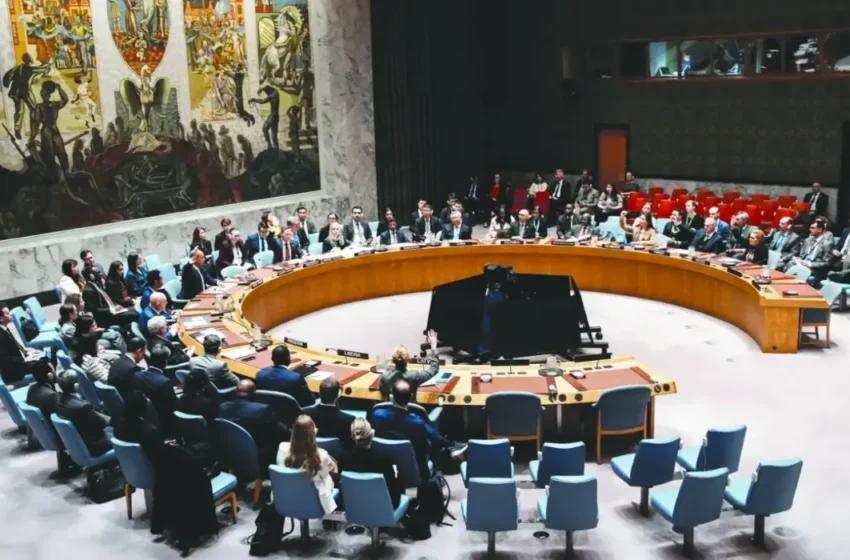
The most substantial multilateral effort to date to restore and guarantee freedom of navigation under Chapter 7 of the United Nations Charter, which contains binding enforcement provisions, stems from this diplomatic action by Bahrain, who is a current member of the Security Council and plays host to the US Fifth Fleet.
However, the absence of a direct mechanism for enforcing the provisions of these agreements continues to exist as United Nations actions become less relevant due to the competing interests of large powers; thus, creating serious issues as to whether this action will succeed where previous actions did not, or whether it will become just another victim of geopolitical fragmentation at the world’s premier diplomatic forum, the United Nations.
The Architecture of the Draft Resolution
The resolution scheduled for circulation on May 6, 2026, at UN Headquarters in New York is built on several key pillars that distinguish it from previous diplomatic instruments. Bahrain, serving as both sponsor and current president of the Security Council, has positioned the initiative alongside the United States, with co-sponsorship from Kuwait, Qatar, Saudi Arabia, and the United Arab Emirates. This Gulf Arab backing signals regional unity against what these nations view as an existential threat to their economic security and maritime stability.
The legal foundation rests on Chapter 7 of the UN Charter, a significant escalation from earlier resolutions that relied on moral suasion or non-binding language. This chapter permits the Security Council to determine the existence of any threat to peace, breach of the peace, or act of aggression and to take military or economic action to restore international stability. The draft explicitly demands that Iran immediately cease all attacks and threats against merchant vessels, stop placing sea mines and disclose their locations, terminate illegal tolling through its self-styled Persian Gulf Straits Authority, and participate in UN humanitarian corridor efforts for aid and fertilizer delivery.
Perhaps most critically, the resolution contains an explicit sanctions threat, warning that effective measures commensurate with the gravity of the situation, including sanctions, will follow if Iran fails to comply. This provision transforms the document from a symbolic statement of principle into a potential enforcement mechanism with real economic consequences for Tehran.
The Human and Economic Toll of Maritime Closure
The statistics surrounding the Strait of Hormuz crisis paint a stark picture of global disruption. Since the conflict began on February 28, 2026, shipping traffic through the strait has plummeted by more than 95 percent compared to pre-war averages of approximately 100 vessels per day. Between February 28 and April 12, only 279 ships managed to pass through the waterway, and in the period following the shaky ceasefire established on April 8, a mere 45 vessels traversed the strait.
Nearly 2,000 vessels remain stranded in the Persian Gulf with approximately 20,000 crew members unable to return home or continue their journeys. The energy market implications have been severe, with Brent crude climbing past $120 per barrel from pre-war levels in the $70 to $80 range.
This price surge represents the largest energy supply disruption in modern history, with vulnerable, import-dependent countries feeling the brunt through rising energy and food insecurity. The flow of critical humanitarian supplies, including fertilizer essential for global food production, has been severely compromised, creating secondary crises in agricultural-dependent regions worldwide.
Diplomatic Statements and the Rhetoric of Crisis
Throughout the diplomatic campaign, key actors have articulated their positions with clarity and urgency. US Ambassador Mike Waltz emphasized the global stakes, stating that
“Freedom of navigation for the entire global economy is what’s at stake — nothing less than a cornerstone of worldwide stability and commerce.”
He further warned that those who abuse navigational rights are
“setting a very, very dangerous precedent — and frankly setting the stage to doom global trade.”
Bahrain’s Ambassador Jamal Fares Alrowaiei framed the strait’s importance beyond regional concerns, asserting that
“The Strait of Hormuz is critical not only to the stability and prosperity of the Gulf region, but also to the global economy.”
He noted that recent developments had underscored the necessity of keeping the waterway “safe, secure and fully open” and demonstrated the need for “collective action.” Alrowaiei concluded that
“Allowing such action to become normalized is unacceptable,”
emphasizing the precedent-setting nature of Iran’s blockade.
Gulf Arab ambassadors reinforced these positions through their joint statements. The UAE’s Mohamed Issa Abushahab highlighted that recent developments led to “significant disruptions in maritime traffic” with wider risks to “global energy security and supply chains.” Qatar’s Sheikha Alya Ahmed bin Saif Al Thani noted the situation affected
“around 20 percent of global oil and LNG trade, with major implications for energy markets and maritime stability.”
Saudi Arabia’s ambassador emphasized that disruptions hit
“vulnerable, import-dependent countries hardest, particularly through rising energy and food insecurity.”
Kuwait’s Tareq Albanai asserted that the draft reaffirms the core principle that
“international waterways must remain open, secure and free from coercion or unlawful restriction.”
The Shadow of Previous Failure and Geopolitical Reality
This effort comes in the shadow of a significant diplomatic setback just one month prior. On April 6, 2026, Russia and China vetoed a previous watered-down UN resolution aimed at reopening the Strait of Hormuz, demonstrating their continued willingness to shield Tehran from international pressure.
The geopolitical dynamics complicating this resolution extend beyond simple UN procedural rules. Both Russia and China have substantial economic ties with Iran, including energy purchases and infrastructure investments under what Beijing has termed its comprehensive strategic partnership. Moscow views any UN action against Iran through the lens of broader tensions with Western powers and sees unilateral Western military interventions in the Middle East as destabilizing precedents that undermine international law as Russia interprets it.
Bahrain’s leadership position in this initiative reflects the kingdom’s unique strategic position. As host of the US Fifth Fleet, Bahrain maintains an exceptionally close security relationship with Washington while simultaneously facing direct military threats from Iran, which has attacked Bahrain and more than ten other countries with missiles and drones since February 28. The Gulf Arab co-sponsors share this vulnerability, having witnessed Iranian missile barrages and drone attacks targeting their territory, infrastructure, and shipping interests.
Institutional Legitimacy and the UN’s Structural Limitations
The critical lens through which United Nations activities must be examined reveals profound structural weaknesses in the Security Council’s capacity to address crises when permanent member interests diverge. Resolution 2817, adopted on March 11, 2026, with a 13-0 vote and only Russian and Chinese abstentions, represented a high-water mark of consensus on the Hormuz issue. Yet merely three weeks later, that consensus collapsed completely when Russia and China deployed their vetoes against substantive enforcement measures.
This pattern underscores a fundamental truth about the UN Security Council: its effectiveness depends not on the moral clarity of its resolutions or the legal precision of its language but on the alignment of great power interests.
The Chapter 7 provisions in the new draft, while legally powerful on paper, highlight another limitation: enforcement requires not just legal authority but political will among permanent members to authorize military or economic coercion. Without Russian and Chinese support, any enforcement mechanism remains theoretical rather than operational.
What Comes Next and Why It Matters
The fate of this resolution remains uncertain as it moves through Security Council deliberations scheduled for the coming days. If it succeeds in gaining adoption, it would represent the first binding international legal instrument specifically addressing the Hormuz closure and would provide a framework for coordinated sanctions and potentially military action to restore navigation. If it fails, as the April resolution did, the international community faces the prospect of continued paralysis in one of the world’s most vital waterways with no clear diplomatic pathway forward.
For the global economy, the stakes could not be higher. Every day the Strait remains closed deepens supply chain disruptions, elevates energy prices, and increases the risk of miscalculation between conflicting military forces in the region. For the United Nations, another failed resolution would further erode the institution’s credibility as an effective mechanism for peaceful conflict resolution and reinforce perceptions that it serves as a forum for great power posturing rather than genuine problem-solving.
The US-Bahrain initiative represents an earnest attempt to mobilize international law and diplomatic consensus around a clear moral imperative: keeping international waterways open for peaceful commerce. Yet the structural realities of the Security Council’s design, combined with the geopolitical interests at play, suggest that even the most carefully crafted resolution may prove insufficient to overcome the fundamental obstacles standing between diplomatic language and real-world change.

