

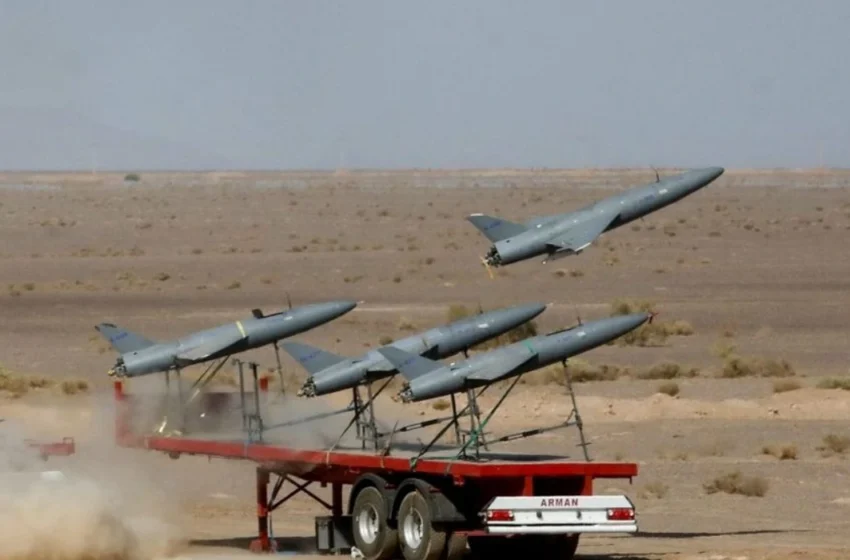
UN Warns of Rising Drone Threat in Sudan
Recently the United Nations expressed serious concern over the increasing use of drones in combat. They have now defined these strikes as being more than just isolated incidents in one warzone, but part of a systematic effort to kill civilians and destroy important infrastructure, thus contributing to the overall humanitarian crisis in Sudan.
This statement reflects the UN’s growing fears that the war is going into a new level of danger, in which aerial strikes are spreading throughout many different regions of Sudan, and placing the already fragile civilian areas of Sudan even closer to total breakdown.
Perhaps most concerning to the UN is both the physical distance and number of drone strikes that have taken place since this past week. Reports indicate that drone strikes are hitting locations throughout Khartoum, Al Jazirah, White Nile, North Kordofan, West Darfur, and South Darfur.
It’s not just that the drone strikes are all occurring along the front lines of battle, but now the use of drones is expanding into locations where supplies are being transported, where fuel is kept, where media outlets are located, and where humanitarian assistance is being provided. Because of this, the UN’s concern is not only for military activities, but also for the broader destruction of civilian life.
A conflict spreading across states
The drone strikes from Sudan are now central to this current phase of the war and the latest reports show that “violence is spreading beyond previous battlefields.” Of particular concern are reports that a drone strike near Khartoum International Airport forced flight cancellations when a drone was shot down. The airport is significant for more than just air transport, as it serves as a vital entry point for the UN and other humanitarian organizations; disruption of this point threatens to delay distribution of supplies and impede relief agencies from reaching affected areas.
In addition to the expansion of Sudan’s violence into previously non-combat areas, there are reports of non-combatant casualties occurring across Sudan due to drone attacks or related violence. In Al Jazirah state, it was reported that five family members (including women and children) were killed in one attack.
In White Nile State, a fuel station and fuel-filled tanker were reportedly struck during the attack on Kosti; consequently, there are serious concerns over fuel shortages and the potential for fire and secondary explosions in urban centers. Furthermore, North Kordofan has seen damage to the state-run television station in El Obeid, reinforcing the fact that attacks are extending beyond just military targets and now include government and civilian institutions.
Further west, the picture is equally troubling. In West Darfur, strikes were reported, while in Nyala, South Darfur, at least five people were injured and nearby buildings, including those close to humanitarian organizations’ offices, were damaged. This kind of proximity matters because it can intimidate aid workers, disrupt operations, and reduce the safe space needed for relief activities. The UN’s concern is rooted in exactly this kind of cumulative pressure on civilian life.
Civilian toll and displacement
The human cost of the drone escalation is unfolding alongside one of the world’s largest displacement crises. According to the UN, nearly nine million people are internally displaced in Sudan, while about 4.5 million have fled across borders into neighboring countries since the war began more than three years ago. Those figures alone show that the country’s crisis has long since moved beyond a conventional armed conflict and into a massive regional humanitarian emergency.
The latest attacks are adding to that burden. The UN cited International Organization for Migration figures showing that more than 2,600 people were displaced in North Kordofan and about 1,000 in South Kordofan in just one week. These numbers may appear small compared with the overall scale of the war, but they are important because they show continued population movement driven by fear and insecurity. In conflict zones, each new wave of displacement compounds the strain on shelters, food access, water systems, and local host communities that are themselves under pressure.
This is why the UN has linked the drone strikes not just to deaths and injuries, but to a larger pattern of civilian harm. When airports close, fuel supplies are hit, transport routes become unsafe, and humanitarian offices are damaged, the impact extends far beyond the immediate target. It affects health care, food distribution, water pumping, and the ability of people to remain in their homes. In Sudan, where the humanitarian system is already stretched, even limited attacks can trigger wider consequences.
The UN’s public stance
The UN’s reaction has been firm and repeated. Speaking through its spokesman, the organization said it is alarmed by the rising drone threat and stressed that civilians must be protected at all times. The central message is that all parties to the conflict must comply with international humanitarian law and avoid attacks that place civilians or civilian objects at risk.
The UN also emphasized the need for humanitarian access to remain open and sustained. This is a crucial point because aid groups are operating in an environment where roads are unsafe, airports can be disrupted, and front lines shift quickly. When the spokesman described Khartoum International Airport as vital to humanitarian access, he was underlining a practical truth: relief operations in Sudan depend on fragile logistics, and drone strikes can quickly make those routes unreliable.
The Secretary General’s own earlier statement on the drone attacks in Port Sudan pushed the same message further. He said he was gravely concerned that such attacks could produce large scale civilian casualties and destroy critical infrastructure. That warning matters because Port Sudan has been a key logistical and administrative center during the war. If it becomes vulnerable to drone warfare, the ripple effects could be severe for aid coordination, supply chains, and governance.
Why the attacks matter now
The timing of the drone escalation is especially alarming because it comes at a moment when Sudan is already struggling with war exhaustion, displacement, hunger, and a collapsing public services system. The attacks do not need to be frequent to be strategic. They need only be unpredictable and disruptive. By targeting airports, fuel facilities, media buildings, and areas near aid organizations, the actors behind these strikes can create an atmosphere of insecurity that weakens state capacity and makes normal life even harder for civilians.
From a journalistic and policy standpoint, the deeper concern is that drone warfare lowers the threshold for violence. It can be used quickly, at distance, and with little warning. That makes attribution, deterrence, and civilian protection far more difficult. In Sudan, where multiple armed actors are already competing for territorial and political control, drone strikes introduce an additional layer of instability that complicates both military calculations and humanitarian planning.
The UN’s language reflects this broader risk. Its concern is not limited to the deaths reported in recent incidents. It is also about the pattern of destruction that follows when services are disrupted. Since January, attacks on power stations and related infrastructure have reportedly affected electricity, healthcare, clean water, and food access. Those are not abstract losses. They translate directly into disease risk, hospital failures, food spoilage, and worsening living conditions for families already trapped in crisis.
Humanitarian consequences on the ground
The humanitarian impact of the drone attacks is likely to be cumulative rather than immediate. One damaged building may seem manageable on paper, but when several states are affected in quick succession, the result is a broad erosion of stability. Markets become harder to supply, fuel becomes scarcer, transport routes become more dangerous, and humanitarian agencies face delays in reaching people in need. In a country already facing mass displacement, the effect is a deepening spiral.
The reports of damage near humanitarian offices in Nyala are especially worrying because aid operations depend not only on physical infrastructure but also on a sense of relative security. Once aid workers become potential targets or are forced to work near attack zones, planning becomes more difficult and response times slow down. That can affect everything from emergency food distribution to medical referrals and shelter support.
The UN’s insistence on unimpeded aid access is therefore not ceremonial language. It is a practical appeal tied to survival. In Sudan, humanitarian access is itself a front line. Any attack that closes roads, grounds flights, or frightens away relief workers can increase suffering without necessarily changing the battlefield balance in a dramatic way. That is why the UN is treating the drone escalation as a serious humanitarian warning, not merely a military development.
What comes next for Sudan
The latest UN position suggests that international concern over Sudan is likely to intensify if drone attacks continue or spread further. The organization’s repeated calls for restraint and respect for humanitarian law signal that the current trajectory is unacceptable from a civilian protection perspective. Yet the bigger challenge is that condemnations alone cannot reverse the conditions driving the conflict.
Sudan’s crisis now combines active combat, displacement on a massive scale, fragmented authority, and repeated infrastructure damage. That means the drone strikes are not happening in isolation. They are part of a wider struggle that is steadily weakening the country’s social and administrative fabric. If airports, fuel routes, media facilities, power stations, and aid access points continue to come under attack, the humanitarian consequences will likely worsen even if the battlefield remains geographically uneven.
For the UN, the message is clear. Civilian lives, essential infrastructure, and relief access must be protected. For Sudan, the danger is equally clear. Drone warfare is turning an already catastrophic conflict into one that is harder to contain, harder to help, and harder to resolve. The immediate need is not only to condemn the strikes, but to prevent further normalization of a conflict method that places civilians at the center of the damage.

