

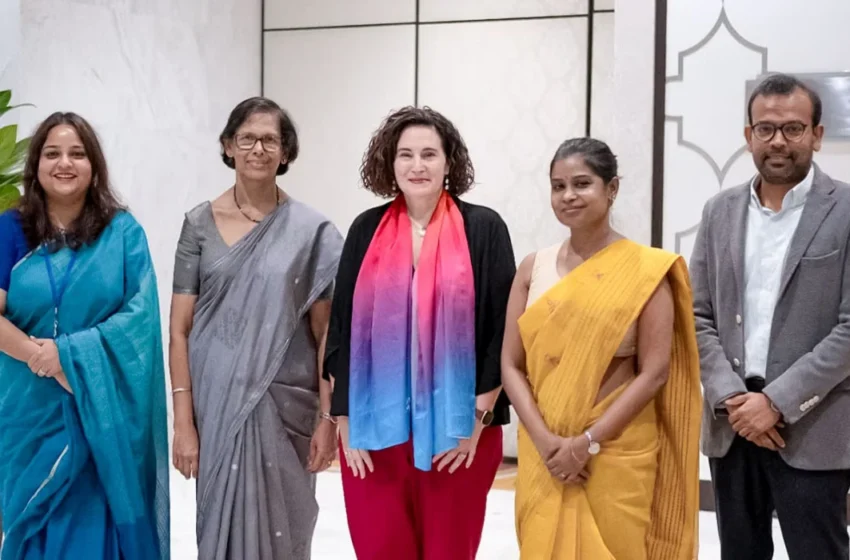
Sri Lanka’s CGEP Launch: Blueprint for Gender Equality 2030?
The Sri Lanka CGEP launch in March 2026 represents a structured attempt to align national gender policy with long-term development targets. Developed with support from UN Women, the Country Gender Equality Profile consolidates data across sectors to guide interventions through 2030. It reflects a shift toward evidence-based governance, where measurable indicators replace fragmented policy responses.
Officials framed the CGEP as both a diagnostic and planning tool. During the launch, Christine Arab emphasized that gender equality requires urgent action rather than incremental change, noting that systemic reform must extend beyond legislation into societal norms. The framework therefore integrates economic participation, protection from violence, and political inclusion into a unified national strategy.
Data-driven policy alignment across sectors
The CGEP introduces a consolidated dataset covering labor, education, health, and governance. This integration allows policymakers to identify overlapping inequalities rather than addressing issues in isolation. By linking indicators to national planning cycles, the profile ensures that gender considerations are embedded within broader development agendas.
The emphasis on measurable benchmarks reflects lessons from 2025 reforms, where fragmented initiatives struggled to demonstrate impact. The CGEP aims to close this gap by standardizing monitoring systems and aligning them with international commitments.
Institutional coordination and stakeholder engagement
The launch process involved coordination across ministries, civil society organizations, and international partners. This multi-stakeholder approach signals an effort to reduce policy silos that historically limited implementation effectiveness.
Engagement with local actors also enhances policy legitimacy. By incorporating community-level data, the CGEP acknowledges regional disparities that national averages often obscure, particularly between urban and rural populations.
Labor participation disparities remain central to economic reform challenges
Economic participation continues to define one of the most persistent gender gaps in Sri Lanka. Female labor force participation stands at approximately 36 percent, significantly below regional averages. This disparity reflects structural barriers that extend beyond employment availability to include social norms, unpaid care responsibilities, and limited access to formal sector opportunities.
The CGEP identifies labor inclusion as a critical driver of broader economic recovery following the country’s recent financial crisis. Policymakers increasingly view gender parity not only as a social objective but also as an economic necessity.
Informal sector concentration and vulnerability
A significant proportion of women remain concentrated in informal sectors such as garment production and tea plantations. While these industries provide employment, they often lack job security, fair wages, and social protections.
The CGEP highlights how this concentration limits upward mobility. Informal employment restricts access to benefits such as healthcare and pensions, reinforcing long-term economic vulnerability among women.
Policy reforms targeting workforce inclusion
Recent legislative measures, including the Women’s Empowerment Act of 2024, aim to address structural inequalities. Provisions for equal pay audits and workplace protections represent a shift toward accountability within both public and private sectors.
In 2025, gender-responsive budgeting expanded to cover a portion of national expenditures, funding skills development programs for tens of thousands of women. These initiatives indicate growing recognition that economic inclusion requires targeted investment rather than generalized growth strategies.
Gender-based violence response frameworks expand amid rising reporting trends
Gender-based violence remains a critical challenge, with reporting trends indicating both increased awareness and persistent underreporting. A 20 percent rise in helpline calls in 2025 reflects greater willingness to seek support, but experts caution that the majority of cases still go unreported.
The CGEP integrates violence prevention and response mechanisms into its broader framework, recognizing that safety is foundational to participation in economic and public life.
Reporting patterns and awareness dynamics
The increase in reported cases suggests improved outreach and public awareness campaigns. However, it also underscores the scale of the issue, as rising numbers reveal previously hidden incidents rather than new occurrences alone.
Awareness initiatives launched in 2025 contributed to this shift, particularly through digital platforms that expanded access to information and support services.
Institutional mechanisms and legal protections
The establishment of a national commission for women’s rights under recent legislation marks a significant institutional development. This body is tasked with investigating complaints and ensuring enforcement of legal protections.
Parallel initiatives under the national action plan on violence prevention aim to address emerging challenges such as online harassment. These efforts reflect a broader understanding of how violence evolves alongside technological and social changes.
Political representation gains signal gradual shifts in leadership inclusion
Political participation has shown measurable improvement following electoral reforms implemented in 2025. Women now hold approximately a quarter of parliamentary seats, marking progress toward more inclusive governance structures.
The CGEP positions political representation as a key indicator of systemic change. Increased participation at decision-making levels is expected to influence policy priorities, particularly in areas related to health, education, and social welfare.
Quota systems and legislative impact
Quota mechanisms introduced in recent reforms have played a central role in increasing representation. These measures ensure a baseline level of inclusion, creating opportunities for women to enter political institutions.
Early outcomes suggest that increased representation correlates with greater attention to gender-sensitive policies. Budget allocations for social sectors have reflected this shift, indicating the broader impact of political inclusion.
Leadership pipelines and capacity development
Efforts to build leadership capacity extend beyond electoral participation. Training programs conducted in partnership with international organizations have equipped thousands of women with skills in governance and public administration.
These initiatives aim to create a sustainable pipeline of female leaders, addressing long-term barriers to representation at higher levels of decision-making.
Security and peace frameworks incorporate gender perspectives into national planning
Sri Lanka’s post-conflict context continues to shape its approach to gender equality. The integration of gender perspectives into peace and security frameworks reflects recognition of the distinct experiences of women in conflict and recovery processes.
The National Action Plan on Women, Peace, and Security, covering the period from 2023 to 2027, aligns with international standards while addressing local priorities.
Community-level interventions and conflict recovery
Programs focused on community mediation and conflict resolution have demonstrated measurable impact. Pilot initiatives reported reductions in domestic disputes, suggesting that localized approaches can complement national policies.
These interventions also address the long-term effects of conflict, including trauma and displacement, which disproportionately affect women.
Regional and refugee considerations
Sri Lanka’s engagement with refugee populations introduces additional dimensions to its gender strategy. Support programs for displaced women incorporate protection measures alongside economic and social integration efforts.
Cross-border cooperation initiatives highlight the regional nature of these challenges, reinforcing the need for coordinated responses beyond national boundaries.
Implementation challenges highlight gaps between policy ambition and execution
Despite comprehensive planning, implementation remains a critical challenge. Funding limitations, institutional capacity constraints, and social resistance all influence the pace and effectiveness of reforms.
The CGEP acknowledges these challenges, emphasizing the need for sustained commitment and adaptive strategies to ensure progress.
Budgetary constraints and resource allocation
While gender-responsive budgeting has expanded, it remains below regional benchmarks. Achieving parity will require increased investment and prioritization within national fiscal planning.
Donor contributions have supported initial implementation, but long-term sustainability depends on domestic resource mobilization and efficient allocation.
Monitoring systems and accountability mechanisms
The introduction of monitoring dashboards represents a step toward greater transparency. These systems track multiple indicators, enabling policymakers to assess progress and adjust strategies as needed.
Accountability mechanisms also involve civil society participation, ensuring that policy outcomes are evaluated beyond government reporting. This inclusive approach enhances credibility while identifying gaps in real time.
2025 reforms and partnerships shape momentum toward 2030 targets
Developments in 2025 laid the groundwork for the CGEP launch, providing both policy direction and institutional momentum. Legislative reforms, expanded partnerships, and increased public engagement have collectively advanced the gender equality agenda.
International collaborations have also elevated Sri Lanka’s profile within global discussions on gender policy, linking national efforts to broader development frameworks.
Legislative and institutional progress
The passage of key legislation established enforcement mechanisms that were previously absent. These reforms created a legal foundation for addressing disparities in employment, safety, and representation.
Institutional strengthening has complemented legislative changes, ensuring that policies are supported by functional governance structures.
Expanding partnerships and innovation
Partnerships with international organizations and private sector actors have introduced new approaches to implementation. Digital tools for monitoring and reporting have enhanced data accuracy and accessibility.
These innovations reflect a broader trend toward integrating technology into governance, enabling more responsive and adaptive policy frameworks.
Sri Lanka CGEP launch reflects a comprehensive attempt to translate gender equality commitments into measurable action across multiple sectors. The alignment of data, policy, and institutional frameworks suggests a more coordinated approach than previous initiatives. Yet the effectiveness of this blueprint will depend on sustained political will, adequate funding, and the ability to navigate deeply rooted social norms. As implementation unfolds toward 2030, the evolving balance between ambition and execution will determine whether the CGEP becomes a model for replication or a reminder of the complexities inherent in systemic transformation.

