

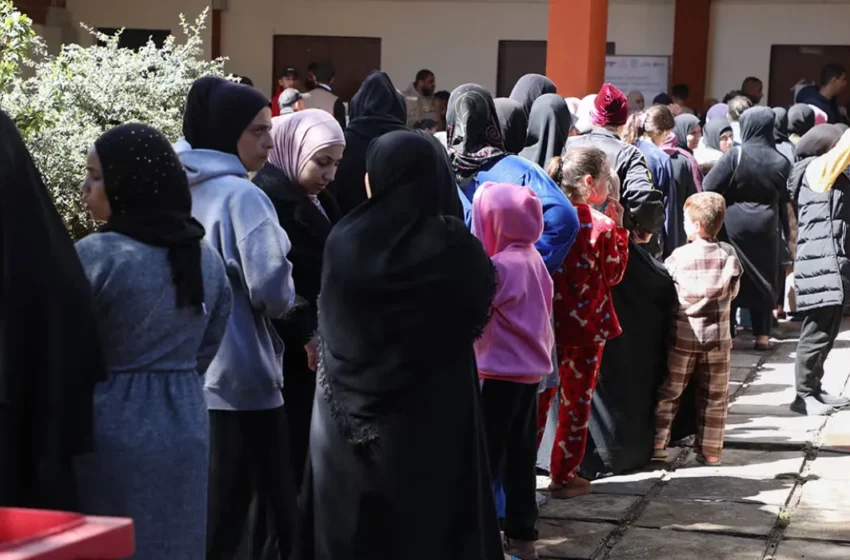
Lebanon’s Displaced Women: War’s Gendered Trauma Overlooked?
The scale of displacement in southern Lebanon since late 2025 has altered the social and humanitarian landscape, with women bearing a disproportionate share of the burden. Intensified cross-border exchanges between Israel and Hezbollah have forced more than 90,000 civilians to flee, many relocating to already strained urban centers such as Beirut and Tripoli. Within this population, women and girls account for a majority, often assuming leadership roles in households disrupted by sudden evacuation.
This demographic shift has reshaped caregiving structures, as women navigate the dual pressures of ensuring family safety while adapting to unfamiliar and overcrowded environments. Testimonies collected by humanitarian agencies reflect a recurring sense of abandonment and instability. One displaced woman described the experience as a cycle of repeated uprooting, where “it feels like the whole world is complicit,” highlighting the emotional toll embedded in prolonged insecurity.
Civilian flight patterns and household dynamics
Displacement patterns indicate that women now head a significant proportion of households, particularly as men remain behind or are separated due to conflict dynamics. These women manage limited resources while coordinating access to aid, education, and healthcare for children. The fragmentation of family units complicates decision-making and increases exposure to exploitation.
Urban displacement has also introduced new vulnerabilities, as informal settlements and temporary shelters lack adequate infrastructure. The influx has stretched municipal capacities, leaving many families dependent on inconsistent humanitarian support.
Shelter overcrowding and service breakdowns
Shelter conditions have deteriorated rapidly under pressure from rising numbers. Facilities designed for short-term occupancy now operate beyond capacity, with limited privacy and inadequate sanitation. These conditions have direct implications for women’s safety and health, particularly in relation to hygiene management and reproductive care.
Service delivery gaps have widened, with aid organizations reporting that available assistance meets only a fraction of identified needs. The strain on water, sanitation, and healthcare systems has intensified risks of disease outbreaks, disproportionately affecting women responsible for caregiving roles.
Gender-based violence escalates within displacement environments
The increase in gender-based violence reflects a broader pattern observed in conflict-driven displacement, where social protections erode under stress. Reports from early 2026 indicate a 40 percent rise in incidents, encompassing domestic abuse, harassment, and exploitation within shelters and transit routes.
These patterns are closely linked to environmental factors such as overcrowding, economic hardship, and weakened law enforcement presence. The absence of secure spaces for women and girls amplifies exposure to risk, particularly during nighttime or in shared facilities.
Harassment and domestic abuse trends
Domestic violence has emerged as a significant concern, driven by psychological stress and economic instability within displaced households. Confinement in small spaces contributes to tension, while the loss of livelihoods exacerbates frustration and dependency dynamics.
Humanitarian actors have documented a notable increase in early marriage proposals, often framed as coping mechanisms by families facing financial uncertainty. Such practices carry long-term implications for education and autonomy among young girls.
Protection gaps during transit and relocation
Women traveling between conflict zones and shelters encounter heightened risks, including harassment and assault along transit routes. Despite attempts to establish safe corridors, enforcement remains inconsistent, leaving gaps in protection.
Initiatives such as women-only transport arrangements showed limited success in 2025 pilot programs but have yet to scale effectively. The persistence of militia activity and unpredictable security conditions complicates efforts to ensure safe passage.
Economic disruption deepens gender inequalities in affected communities
The economic dimension of displacement has disproportionately affected women, particularly those engaged in informal sectors prior to the conflict. Agriculture, small-scale trade, and service roles provided income for many households in southern Lebanon, and their abrupt loss has left women without financial stability.
Remittance flows, a key support mechanism for many families, have also declined amid broader regional tensions. This contraction has intensified reliance on humanitarian assistance and informal coping strategies.
Loss of livelihoods and income instability
A significant percentage of displaced women have lost access to their primary sources of income. Without formal employment protections or savings, many face immediate financial insecurity. This vulnerability has forced some into exploitative labor arrangements or dependency on aid distributions.
Programs aimed at providing cash assistance or temporary employment have reached only a limited segment of the affected population. While these initiatives offer short-term relief, they fall short of addressing structural economic displacement.
Informal sector collapse and recovery challenges
The informal economy, which once absorbed a large share of female labor, has contracted sharply due to displacement and infrastructure damage. Efforts to revive these sectors face logistical and security barriers, as well as limited access to credit.
Microfinance initiatives launched in 2025 demonstrated potential but encountered repayment challenges as conditions deteriorated. The sustainability of such programs remains uncertain in the absence of broader economic stabilization.
Psychological impact reveals long-term consequences for women and families
Beyond immediate physical and economic challenges, the psychological toll of displacement has emerged as a critical dimension of the crisis. Women, often serving as primary caregivers, experience heightened levels of stress and anxiety while supporting children and elderly family members.
Mental health indicators suggest widespread distress, with symptoms of trauma affecting both adults and children. The cumulative impact of repeated displacement episodes has intensified these outcomes.
Mental health strain among caregivers
Women report high levels of anxiety and emotional exhaustion, reflecting the pressures of managing uncertainty and loss. Access to mental health services remains limited, particularly in overcrowded shelters where privacy is scarce.
Humanitarian organizations have expanded counseling services, yet coverage remains insufficient relative to need. The stigma surrounding mental health further complicates outreach efforts.
Intergenerational trauma patterns
The transmission of trauma across generations has become increasingly evident, as children absorb the stress and instability experienced by caregivers. Educational disruptions compound these effects, with girls disproportionately affected by school dropout trends.
Previous conflict cycles, including the 2006 war, provide a reference point for understanding how prolonged exposure to violence shapes long-term psychological outcomes. Current conditions suggest a risk of repeating these patterns on a larger scale.
Aid response struggles to integrate gender-specific priorities
Humanitarian responses have expanded in scale but continue to face challenges in addressing gender-specific needs. Funding constraints, access limitations, and coordination gaps have hindered the delivery of targeted interventions for women and girls.
While some progress has been made in integrating gender considerations into aid frameworks, implementation remains uneven across regions and sectors.
Gaps in gender-focused assistance
Allocations for women-specific programs, including protection services and hygiene support, remain below required levels. Distribution mechanisms often prioritize household heads, which can exclude women in practice despite formal guidelines.
Advocates have emphasized the need for a more comprehensive approach that combines protection with economic empowerment, recognizing the interconnected nature of these challenges.
Access limitations and logistical barriers
Security conditions continue to restrict access for aid organizations, with convoy denials and safety risks limiting operations. Air-based delivery methods have supplemented ground efforts but cannot fully replace sustained, large-scale distribution networks.
Prepositioning strategies developed in 2025 have improved responsiveness in some areas, yet ongoing conflict dynamics limit their effectiveness.
Regional dynamics intensify pressures on Lebanon’s humanitarian system
The situation in Lebanon is further complicated by regional spillovers, including the presence of Syrian refugees and the broader geopolitical context of the conflict. These overlapping crises strain already limited resources and complicate coordination efforts.
Infrastructure damage and economic decline have compounded vulnerabilities, particularly for women operating small businesses or relying on community networks.
Cross-border conflict and civilian impact
Ongoing exchanges between Israel and Hezbollah have contributed to civilian casualties and infrastructure destruction, with women disproportionately affected due to their roles within households and communities. Evacuation patterns indicate high compliance with warnings, yet repeated displacement undermines resilience.
The destruction of local economies and services has reinforced dependency on external assistance, creating a cycle that is difficult to break.
Overlapping refugee vulnerabilities
Syrian refugee populations within Lebanon face similar challenges, with women experiencing compounded discrimination and resource competition. Joint humanitarian programs have attempted to address these overlaps, though coverage remains limited.
Coordination between agencies has improved since 2025, but funding gaps continue to constrain comprehensive responses.
Lebanon’s displaced women remain at the center of a crisis where conflict, economic collapse, and social vulnerability intersect in complex ways. Their experiences reveal how displacement reshapes not only immediate survival strategies but also long-term prospects for recovery and stability. As humanitarian systems adapt to evolving pressures, the extent to which gender-specific needs are prioritized may determine whether resilience can take root or whether existing inequalities deepen further under prolonged uncertainty.

