

UNIDO’s Riyadh Framework: Greening Industry for Poverty Reduction and Climate Goals
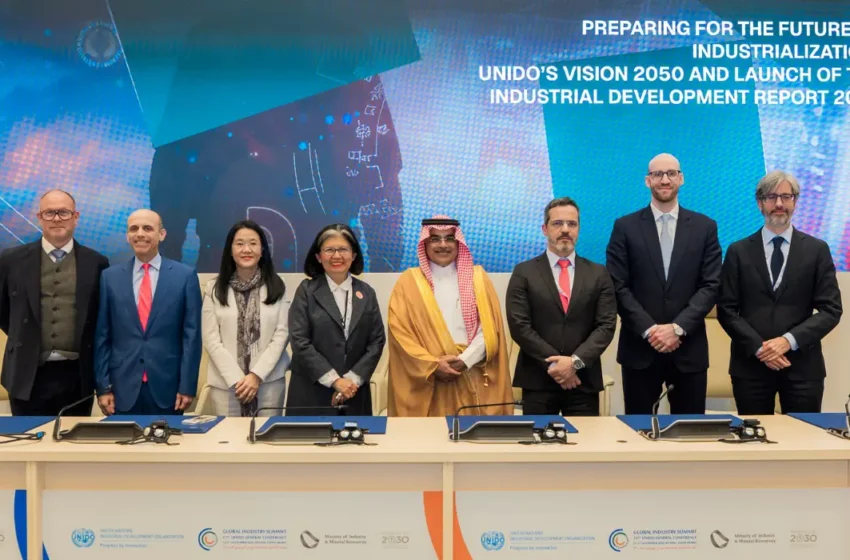
The Riyadh Framework by UNIDO is the result of the Riyadh 21st General Conference in Riyadh, Saudi Arabia, during which over 170 member states supported the Riyadh Declaration unanimously, which was adopted on November 27, 2025. The conference also brought to an end a week of intense ministerial meetings and high-level discussions aimed at boosting inclusive and sustainable industrial development. This meeting involving Global South policymakers and international industry experts placed the industrial policy as a characteristic of economic change, climate adjustment and poverty alleviation.
The event in Saudi Arabia created a high profile of the event, following its growing industrial policy under the Vision 2030. UNIDO Chief of Cabinet Manuel Mattiat stressed that there are solutions by already tested technologies and resources and it makes the Declaration a compact to scale investments to least developed countries. The framework promotes the implementation of the commitments of the Paris Agreement, as well as aligning the global industry with the worldwide needs of climate adaptation.
Core pillars of sustainable industrialization
The Riyadh Framework of UNIDO focuses on poverty reduction as one of the main results of industrial development. It also describes ways of creating massive jobs, especially to youth and women who are most hit by reports of labor market instability. The plan focuses on skill creation, industrial training and enterprise support systems aimed at stabilizing household incomes in the developing countries.
UNIDO has greatly extended its technical cooperation abilities to promote the objectives of the Declaration. In 2024, the volume of delivery increased 29 percent and funding of the projects went up 102 percent. These growths indicate rising confidence in industrial interventions through UNIDO in the world. And small and medium-size enterprises are noted to be the major agents of productive change, and new supporting mechanisms can contribute to their inclusion in regional and global supply chains.
The funding footprint of the European Union also increased with the addition of almost 60 million EUR of funding in 2024 to bring the total number of ongoing collaborative projects to 368 million EUR in 2025. Most of these programs can be used in the support of renewable energy implementation, the resilience of food systems, and the competitiveness of industries in Africa and Asia.
Greening economies and emissions cuts
The second pillar in the Riyadh Framework of UNIDO is environmental sustainability. Member states signed pledges to speed up the adoption of low-emission technologies, the development of models of the circular economy, and enhance the energy efficiency of industrial sectors. The Declaration is also in line with the UN climate targets, making green industrialization the key to achieving emission-reduction targets by 2030 and 2050.
The EU gave its most obvious case of green industrial reformation its Emissions Trading System. Since its introduction, this program reduced emissions in sectors covered by the program by over 50 percent, and brought about 250 billion EUR in revenue to be reinvested in climate projects. By 2025, the number of complementary bilateral investments in clean energy had reached 335 billion EUR and the partnerships were supporting over 1.8 million jobs.
The Climate Change Strategy of UNIDO with the new framework strengthening it aims at empowering the developing economies to use cleaner production technologies. These initiatives are placed as the key to balancing economic growth and ecological boundaries.
Empowering women and youth leaders
UNIDO Riyadh Framework has a wide inclusivity requirement, but especially to women and youth. The delegates endorsed the creation of April 21 as International Women in Industry Day, which is an international holiday that is designed to increase women visibility and leadership in industries. In relation to SDG 5, which is aimed at gender-equality, UNIDO documents that 69 percent of its projects support it.
Saudi Minister Bandar Alkhorayef also highlighted that empowering women is a social and economic necessity, and he pointed at the potential productivity of more women involvement. The Panels on youth entrepreneurship in the summit covered innovation, start-up ecosystems, and bridging the skills gap in the speedily industrializing nations.
Digital transformation and technology access
Digitalization is entrenched on the framework as a source of modernization in the industry. The Declaration seeks to foster the application of artificial intelligence, high-tech production, and digital supply chain technology to enhance the resiliency of industries. The delegates of the G-77 and China emphasized the significance of UNIDO as a means of promoting equal access to digital technologies so that the developing countries can compete with advanced manufacturing centers.
These goals are supplemented by the Global Gateway strategy of the EU with its 150 billion EUR investment pipeline with Africa by 2030. It endorses the regional integration measures such as African Continental Free Trade Area, which has been adopted in collaboration with UNIDO to enhance the industrial corridors and cross borders production networks.
Stakeholder commitments and funding directions
The chairmanship of the conference in Saudi Arabia contributed to the achievement of consensus on the Riyadh Declaration following a number of negotiation rounds. Minister Alkhorayef called the final document a common voice of our goals of sustainable development. UN Secretary-General Antonio Guterres hailed the Declaration as a working sequel to the Sevilla Commitment, which provides a roadmap to peace and sustainable development at the global level with an inclusive economic progress through industrial policy.
The European Union also renewed its long-term commitment to the UNIDO and praised the re-appointment of the Director General Gerd Muller and advocated overall increased budgetary flexibility in 2026-2027. Further cooperation agreements were also signed between UNIDO and Organisation of Islamic Cooperation and the League of Arab States indicating increased regional integration towards industrial sustainability objectives.
Implementation challenges and global outlook
The wide-ranging approval notwithstanding, the implementation has proven a challenge especially in the mobilization of the private capital in the developing economies. Member states emphasized the necessity of plausible investment frameworks, risk-share tools and technical assistance to guide the investors on viable industrial prospects. Mattiat reinforced the changing role of the agency as a connection between investors and real opportunities within the Global South.
The SMART indicators in the medium-term strategic frameworks of 2026-2029 of UNIDO describe the progress measurement, enhancing of transparency, and accountability. The geopolitical instabilities and regional conflicts however still pose a threat to industrial infrastructure and supply chains. The representatives once again highlighted the importance of enhancing the international law on the protection of industrial property, particularly in war-torn areas.
The Riyadh Framework of UNIDO makes sustainable industrialization one of the foundations of global poverty eradication and climate mitigation. As the world moves towards a new model of the global economy that is less carbon-intensive and COP30 draws close, the Riyadh Declaration promises to expect co-ordinated action. The true test of it will be played out over the coming years when nations will turn the promises into concrete investments and technology transfer, leaving it to be questioned how the Global South will apply these instruments to reshape the growth trajectories in the rapidly growingly climate-constrained world.

