

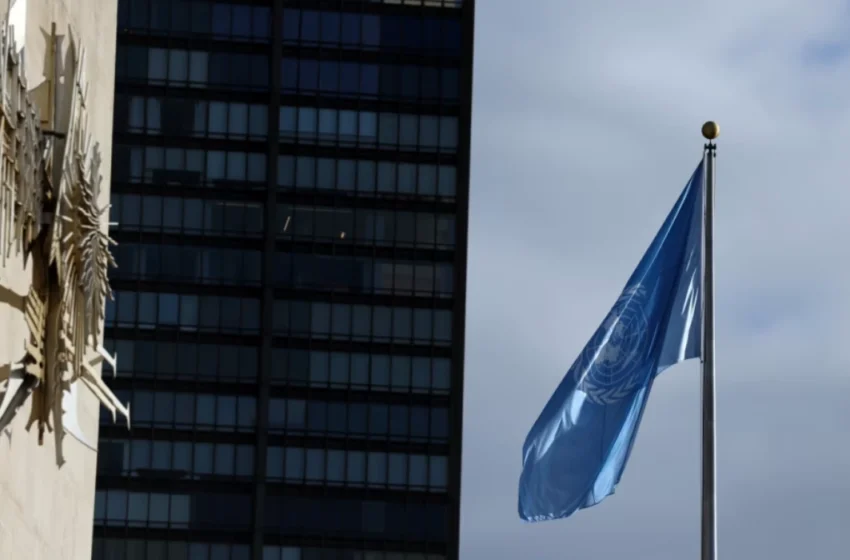
UN Financial Crisis Deepens as US and China Withhold Billions in Dues
According to the UN Secretary General, António Guterres, the organization is on the verge of a financial collapse as the world’s largest economies – the USA and China – fail to make their assessed contributions amounting to billions of dollars. The liquidity problem will bring all activities of the global body to a standstill, including peacekeeping operations and human rights investigations, as even salary payments may be at stake by July 2026.
Unprecedented Scale of the Financial Crisis
The magnitude of the UN’s financial emergency distinguishes it from previous budgetary challenges the organization has faced. Secretary-General António Guterres categorized the current situation starkly, stating,
“While the UN has encountered financial challenges before, the current circumstances are categorically different.”*
This distinction matters because the crisis is not merely a temporary cash flow problem but a structural breakdown in the international community’s commitment to funding the multilateral system.
By the end of 2024, there were already $760 million of debts owed to the United Nations in addition to $300 million of debts that had to be repaid to the United Nations as credits. Things got worse for the UN during 2025, when the total sum of the amount of regular budget dues owing by May 2025 amounted to $2.4 billion while peacekeeping budget dues owed were around $2.7 billion. This accounts for almost 77% of the total amount of unpaid dues on regular budget dues.
The geographical location of the debt owed shows the political aspect of the situation. The United States, for instance, was owing $2.19 billion of regular UN budget debts up to February 2026, representing over 95% of the total arrears owed by all other member states. Such an accumulation of outstanding balances within one single member state is unique to this organization and turns a collective affair into a political issue between two countries.
The United States’ Political Leverage and Demands
In fact, there is an unprecedented attitude towards UN funding on the part of the current US administration. According to internal memoranda written at the White House, the US government is prepared to cut off tens of millions of dollars in extra funding if the UN does not make nine “quick wins.” Among these requirements are further savings in UN operations expenses, as well as a refusal by the UN secretary-general to accept Chinese money into the UN discretionary account.
By taking up such a position, the US government has shown an effective tactic of leveraging its finances to force the UN to make organizational changes. It is reported that US authorities are seeking for the UN to “reject China funds”* as a precondition for paying dues to the US, thus showing that the funding issue is not just a matter of money, but is part of a larger geopolitical struggle.
It is far from what America has historically stood for regarding multilateralism. Considering the degree to which the UN depends financially on America in light of the fact that America is responsible for most of its overdue contributions, the administration now has enough power to change how things are done at the UN. It appears that the administration’s dissatisfaction is not merely with the size of the budget but also with its structure.
China’s Role and Growing Financial Influence
The role of China in the funding crisis at the UN can be seen as a product of both the changing nature of China’s standing as a world power and of the complex relationship between China and the multilateral system. The second largest funder of the UN behind the United States, as of December 2024, China was in debt by $281 million in terms of regular budget payments to the UN.
It is clear from the Trump administration’s call to prevent China from using voluntary contributions towards the discretionary fund for the Secretary General, which is estimated to be worth tens of millions annually, that Americans are concerned about the growing power of China in the United Nations as regards their soft power. This arises as a result of the strategic role played by voluntary contributions in furthering the country’s foreign policy agenda within the UN context.
Financial power at the UN has been on the rise among Chinese actors over the past ten years through voluntary contributions to UN specialized agencies, peacekeeping missions, and development projects. It appears that the US administration is responding to the liquidity issues faced by the UN by attempting to undermine the role played by China in providing financial support for various UN programs. Contrary to America, China has not openly announced any intentions of reducing funding to the UN.
Guterres’ Emergency Warnings and Institutional Response
Secretary-General António Guterres has issued increasingly urgent warnings about the UN’s financial trajectory, moving from concern to alarm over the past year. In October 2025, he warned that the UN faces a “race to bankruptcy”* unless member states pay their dues in full and on time, presenting a sharply reduced $3.238 billion regular budget for 2026. By January 2026, his language had intensified dramatically, with Guterres stating the UN is at risk of “imminent financial collapse”* due to member states not paying their fees.
The Secretary-General’s warning about payroll obligations carries particular weight given the UN’s operational reality. He explained that
“If major arrears remain unpaid, the UN will be unable to meet payroll and vendor obligations by July.”*
This timeline creates immediate pressure on member states, particularly the United States, to resolve the arrears problem or face the humiliation of an international organization unable to pay its employees.
Guterres characterized the crisis as fundamentally different from previous financial challenges, emphasizing that
“the current circumstances are categorically different.”*
This distinction reflects the political nature of the arrears problem, where major member states are deliberately withholding payment for political leverage rather than experiencing genuine financial hardship. The Secretary-General’s public warnings represent an unusual level of urgency from a typically diplomatic institutional leader, signaling the severity of the situation.
Crippling Budget Cuts and Workforce Reductions
The UN General Assembly’s response to the financial crisis has been drastic and painful. In December 2025, member states adopted a $3.45 billion programme budget for 2026, representing a $577 million reduction (15.1%) from the previous year. This budget cut necessitates the elimination of nearly 18% of staff positions, approximately 188 positions, through a combination of attrition and direct layoffs.
This budget received the largest amount of reductions, being cut by $149.5 million, or 21.6%, to $543.6 million for the year 2026. This budget includes various mission expenses, such as peacekeeping, mediation activities, and electoral assistance initiatives that play a role in preventing conflicts, fostering democracy, and protecting civilians in the conflict areas of the world.
The agency has already put in place a freeze on recruitment as well as drastic budgetary restrictions within all of its departments. This jeopardizes many key operations, including human rights investigations, humanitarian coordination, and developmental support programs. Human Rights Watch made an early warning statement in December 2024 that
“uncertainty over UN funds poses threat to rights investigations.”*
Global Implications Beyond UN Headquarters
The financial challenge facing the United Nations goes much further than just Geneva and New York, affecting millions of people across the globe who rely on UN initiatives and programs. Due to a lack of money to pay its vendors and contractors, the UN finds itself unable to provide humanitarian, nutritional, and medical aid to countries and communities affected by war and disasters. These financial difficulties affect those most in need, particularly those in Syria, Yemen, South Sudan, and Afghanistan.
It should be noted that this crisis contributes to further weakening of the credibility of the multilateral system at a time when global problems necessitate joint action within an international framework. Indeed, it is necessary to collaborate with each other to tackle problems related to climate change, pandemics, migration, and nuclear proliferation. At the same time, the UN, which is the main mechanism for such collaboration, is suffering from serious financial distress caused by its members.
It appears that developing nations are particularly vulnerable to this problem, because they are unable to cover the losses in terms of budgeting resulting from delays by their major partners in payments. In addition, as the UN becomes less capable, there will be less technical support, capacity-building efforts, and coordination of policies available for these countries.
The Path Forward and Political Obstacles
A solution to the UN’s financial woes would require political will that, at least for now, seems missing, specifically from the US government. The fact that the current US administration tied the financing to reforms means that negotiation has been made even more difficult by intertwining budget issues with geopolitics and ideological preferences. The “nine quick win” requests signal a revolutionary approach to UN finances that is hard to accomplish solely by negotiation.
On the other hand, China has not made any open threats of withholding funds from the UN, yet still owes arrears to the organization. The efforts of the US administration to curtail the financial power of China imply that the resolution of the crisis would have to take into account wider problems in US-China relations in the context of the UN.
The UN General Assembly’s adoption of a sharply reduced budget signals member states’ acceptance of a smaller, leaner organization, but this approach does not address the underlying arrears problem. Without payment of outstanding dues, the UN will face recurring financial crises that undermine long-term planning and institutional stability. The organization’s survival depends on major member states, particularly the United States, recognizing that a dysfunctional UN serves no nation’s interests, including America’s.
The coming months will be critical in determining whether the UN can avoid financial collapse or whether the organization will be forced to curtail operations, delay payments, and potentially declare bankruptcy. The outcome will shape not only the UN’s future but the broader architecture of international cooperation in an increasingly contested global order.

