

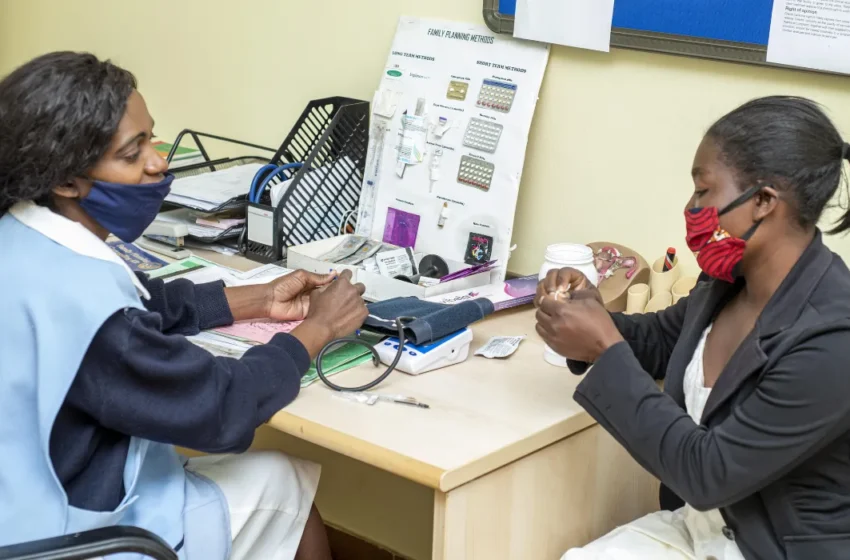
Bridging the Gap: Addressing the Global Unmet Need for Family Planning in 2025
The world overall, as of 2025, has been struggling with the unmet demand of family planning, which is one of the most nagging issues when it comes to reproductive health and development. Even decades of international investment and national programs have failed to provide women of reproductive age with access to modern contraceptive methods, an estimated 224 million women of reproductive age do not have access to modern contraceptive methods. This number is highly concentrated in the low and middle-income nations where the healthcare systems are still grappling with the capacity, presence and absence of distribution and continuity of the services. Several of these nations struggle with overlapping challenges of population rise, economic turmoil and unsound governance which complicate long term gains in access.
Although the use of contraceptives in the world has increased considerably since the beginning of the 1990s, demand has increased at a rate that is even greater. There are now close to 1.9 billion women of 15 to 49 years old in the world with 874 million women taking modern contraception. But there is still a disparity between demand and access. The case of Sub-Saharan Africa can be seen as an example of this patchy trend: the unmet need in the region has dropped by some 21 percent to 18.5 percent between 2012 and 2025, which is also positive but reveals the rate of change is slow in the areas with low resources and firmly established obstacles.
Increasing Demand As Populations Grow
Demographic growth increases the burden on the health systems. Countries of high unmet need also have a high fertility rate which makes it one of the highest in the world, increasing the demand of services that the governments are not able to sustain. The women of child bearing age population is also expected to grow by a further 13 percent in the next thirty years, adding to the urgency with which it should be invested.
Structural Constraints In Health Systems
Poor infrastructure limits the regular supply of contraceptives. Remote or rural clinics often have disruptions in supply and personnel, which restricts the options as well as the dependability of approaches. Where supplies are available, quality, counseling and follow-up services are limited by limited provider training.
Persistent Gender And Cultural Barriers
The culture still prevails, and in many cases, it restricts the autonomy of women in the decision-making process. In most contexts, consent with male partners or relatives is still a precondition to contraception, which further depends on dependency. The stigma and misinformation also exist, which plays a role in the fear, reluctance, or evasion of offered services.
Human Development And Health Implications
The impact of the unmet demand of family planning globally in 2025 will stretch further than the reproductive health indicators. According to estimates, one point two hundred and eleven million unintended pregnancies happen annually around the globe with several of it taking place where safe abortion facilities are limited or illegalized. This has led to a significant amount of unsafe practices that have persistently contributed to the health of the mothers being at risk, even though the countries commit internationally to bring down the death rates.
There are also serious social outcomes of unintended pregnancies. It is especially the case with adolescent girls who have been interrupted in school, pressured to marry early, and find less and less of a future to look forward to. These paths strengthen poverty cycles, particularly in already low economic mobility communities. The connection between access to family planning and gender equality is already well-established: a wider access to contraceptives will enhance the involvement of women in education, labor force, and civic life.
Barriers And Regional Disparities In Access
Several barriers which overlap interact to establish the persistence of unmet need. The problem of economic barriers has been not eliminated, especially when the out-of-pocket costs take up a significant part of healthcare expenditures. Contraception is not wholly subsidized or included in universal health cover arrangements in most countries and the poorer families are disadvantaged.
Regional Differences In Unmet Need
Massive inequalities emerge between regions and countries. Sub-Saharan Africa also has some of the highest numbers in the world: Democratic Republic of Congo is about 33 percent unmet need, Nigeria is about 25 percent and Uganda is about 28 percent. These statistics are similar to constrained health spending, political unrest, and ongoing gender disparity.
Policy Restrictions And Legal Obstacles
Unmet need is also determined by politico-legal frameworks. Reproductive health policies in some nations are restrictive and deny access to particular methods of contraception, restrict access to services to married women or enlist an age requirement against adolescent access. Connective to these policies is the conservative social norms but they may be due to institutional inertia or lack of resources.
Urban–Rural Divides And Service Gaps
High prevalence of contraceptives in urban centers can be attributed to its closeness to medical centres and accessibility of trained healthcare providers. In contrast, rural neighborhoods are geographically isolated, are understaffed, and the flow of information is limited. This gap keeps increasing the disparity in reproductive health.
Investment Gaps And Urgent Policy Priorities
A huge amount of money is necessary in addressing the unmet family planning need that is present across the globe by 2025. Recent estimations have revealed that the low- and middle-income nations need to spend about 104 billion yearly to cover the need for reproductive health and family planning. Expenditures are 54 billion short of actual requirements with this result being the underfunding of essential services and imbalanced provision.
Funding Requirements And Program Costs
Out of the overall money that will be required, approximately 14 billion a year will be required to bridge the contraception gap. This investment would guarantee stable supply chains, increase method choices, reinforce provider education, and pursue outreach initiatives that reach disadvantaged groups. Nevertheless, the lack of growth in international funding streams has been caused by the donor fatigue and the changing geopolitical priorities.
Integration Into Universal Health Coverage
The advocacy of voluntary family planning in the framework of universal health cover is very popular among the global health bodies. It would do this by lowering the financial obstacles affecting households and make reproductive health an essential service of public health and not an elective program. This will be in line with the Sustainable Development Goals which focus on maternal health, gender equality and reduction in poverty.
Enhancing Community Engagement And Education
Good programs should also be community-based to form trust, eliminate the misconceptions, and ensure the quality of making the informed decisions. Individualized communication campaigns have the potential to alleviate stigma and give women the strength to make decisions that are in line with their demands and likes.
Forward-Looking Dynamics And Emerging Challenges
The accessibility can be increased with technological innovation. Online health services, remote medical advice, and self-administered birth control might minimize the obstacles, especially among those women who are not mobile and have little privacy. The positive effects of innovation, however, can be experienced based on the inclusive implementation in underserved populations.
The availability is also subject to new challenges in the form of climate related displacement, political conflicts, among economic downturns. Displaced and migrants often do not receive regular health services which puts them at risk of unintended pregnancies. Maintaining access in crisis environments is an area of policy concern that is gaining growing importance among humanitarian and developmental actors.
Evolving Pathways Toward Reproductive Equity
The high unmet family planning requirement globally by 2025 highlights how the world is continually faced by the convergence of demographic pressures, structural inequality, and policy inadequacies to determine the nature of reproductive health. With governments and world health leaders reconsidering the next-decade strategy, sustainable investment, community-driven strategies, and a fresh sense of determination on rights-based access are the keys to the future. The impact of new things and changing geo-political environments on these efforts is still unanswered and therefore, interesting to further look into as stakeholders attempt to bridge a gap that has far-reaching consequences on the health and human development.

