

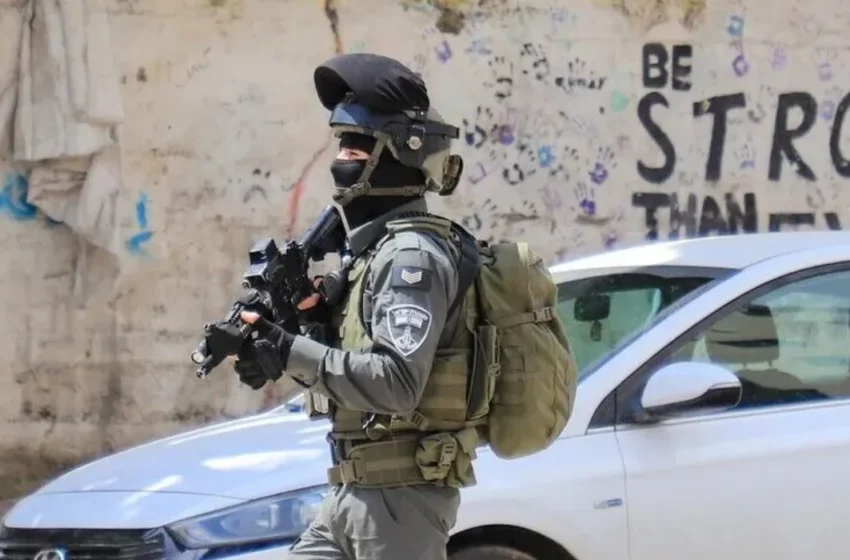
Israeli forces raided UNRWA’s East Jerusalem training center 5 times this year
Israeli forces have raided UNRWA’s Qalandiya Training Centre in occupied East Jerusalem five times since the start of 2026, according to the UN agency for Palestinian refugees. The repeated incursions have turned a vocational school into a flashpoint in the wider struggle over UNRWA’s presence in East Jerusalem, its mandate, and Israel’s tightening restrictions on the agency.
The centre matters because UNRWA describes it as its last operational facility in occupied East Jerusalem. It is not only an administrative site but a working education hub where Palestinian refugee youth receive free vocational training, accommodation and meals, making it one of the few remaining UN-backed lifelines in a politically and legally shrinking space.
What happened at Qalandiya
According to UNRWA, the most recent raid occurred on 27 July 2026 when Israeli authorities along with the municipal authorities forcibly entered into the Kalandia Training Centre for the second time within a span of less than a month. According to UNRWA, the students and staff were present in class when the raid commenced, and they were all confined while authorities photographed different buildings and office premises.
Jerusalem Governorate reported that Israeli authorities had raided the training center, used tear gas and detained the staff members inside a hall. Anadolu reporting further stated that teaching and administrative staff were detained during the raid, and the camp around was also invaded overnight by Israeli military forces, using stun grenades and tear gas. UNRWA reports have framed the issue in such a way that these raids were not conducted in the name of routine security checks; rather it was the infringement of UN premises protected under international laws.
Why the centre matters
The Qalandiya Training Centre is significant because UNRWA says it serves around 350 Palestinian refugee students aged 15 to 19 drawn from 19 refugee camps across the occupied West Bank. It provides tuition-free vocational education, accommodation, meals and training, giving refugee youth a path into jobs and technical skills that are hard to access elsewhere.
It is also significant that UNRWA represents the Centre as a crucial part of a much larger social structure. Its vocational schools have traditionally been the most durable UNRWA services, and according to UNRWA, the Qalandiya centre trained thousands of refugees during its long existence. Thus, the current threats against the Centre are not only a local problem but a challenge to a social network that UNRWA claims helps to preserve the dignity and prospects of Palestine refugees. The issue is very delicate, since East Jerusalem is an area of disputed territories. In this regard, for UNRWA, the centre is a part of its mission to serve Palestine refugees in the occupied territories. For Israel, the problem is linked to the issues of sovereignty and control over institutions in Jerusalem.
The legal backdrop
The raids came after a major legal shift in Israel. In October 2024, the Knesset passed two laws aimed at UNRWA. One prohibits UNRWA from operating inside Israel; the other bars official contact between Israeli state bodies and the agency. The bills passed overwhelmingly, with the first approved 92-10 and the second 87-9.
Those laws entered into force at the end of January 2025, with reporting indicating that UNRWA was ordered to vacate premises in occupied East Jerusalem and cease operations there by 30 January 2025. UNRWA said the new rules severely constrained its ability to function in East Jerusalem and the wider occupied Palestinian territory.
Legal pressure did not end there. At the end of December 2025, the Knesset also adopted an amendment that imposed more restrictions regarding utilities and services to UNRWA-affiliated facilities, including prohibition of provision of electricity and water to specific facilities, as well as authorization to the state to confiscate specific UNRWA facilities in Jerusalem. According to Israeli media, the amendment was introduced in order to deprive the agency of any possibilities that would enable it to continue functioning. In January 2026, reports noted that Israeli authorities confiscated UNRWA’s headquarters in Jerusalem and demolished certain buildings within the compound.
Competing narratives
UNRWA’s position is that its work is humanitarian, neutral and protected. In a November 2024 statement, the agency said reports that it was evacuating East Jerusalem were “grossly inaccurate” and stressed that it would continue operating in the West Bank, including East Jerusalem, and Gaza despite attempts to block its mandate. That stance remains central to how the agency presents the current raids: as obstruction of a civilian relief body rather than a dispute over politics.
In contrast, Israeli authorities and legislators have defended the new law on the grounds of claims that have long been made about the lack of neutrality of UNRWA and about its association with militancy on the part of some of its workers. The supporters of the new law believe that there should be no cooperation between Israel and such a compromised organization, and humanitarian aid may be provided via other means. It is exactly this logic that makes the situation with UNRWA so politically sensitive because to its supporters, this organization is one of the key humanitarian organizations serving millions of Palestinian refugees, while to its opponents in Israel, it is part of the problem, not the solution.
Humanitarian stakes
While the first effect of the Qalandiya operations is felt by the staff and students themselves, the effects go further than that. The vocational training is perhaps the only form of education that connects young refugees directly with employment, and UNRWA reports that its programs involve not just education but also accommodation and feeding of its students. Thus, such disruption of the educational process can influence the attendance rates, safety, learning process itself, and recruiting and retaining the staff of UNRWA. Furthermore, there is a symbolic cost to it. East Jerusalem has traditionally been an especially sensitive area for institutions involved in the Palestinian presence in the city, and with the remaining operational institution of UNRWA being located there, its ability to function becomes a measure of how much space is left for Palestinian humanitarian organizations.
At the same time, the repeated raids heighten the risk of escalation. When students and teachers are detained inside a training centre, the issue is no longer only legal or diplomatic; it becomes a matter of education, mobility, and the daily vulnerability of civilians in a militarized environment.
International reaction
The raids have drawn condemnation from regional actors. The Arab League denounced the storming of the training centre, saying occupation soldiers were joined by Jerusalem municipal officials and that students and staff were detained inside the facility. That reaction underscores how quickly the issue has moved beyond a bilateral dispute and into a broader Arab and international critique of Israel’s handling of UNRWA.
International concern also predates the raids. When the 2024 laws were passed, UN Secretary-General António Guterres warned they would be a “catastrophe,” while the EU and US expressed concern about the humanitarian consequences. Those warnings now appear increasingly relevant as implementation has shifted from legislation to enforcement on the ground.
What the numbers show
The headline figure in your brief is that UNRWA says the centre has been raided five times since early 2026. That number matters because it suggests an escalating pattern rather than a one-off incident. The other crucial numbers are the 350 students, the 19 refugee camps represented, and the two laws passed by the Knesset in 2024 that set the legal stage for the current confrontation.
The numbers paint the same picture – an educational institution relatively small in scale is engaged in the process of a broader political movement to oust UNRWA from East Jerusalem, while UNRWA maintains its position that it is just trying to ensure functioning of essential services for refugee children. The confrontation is no longer limited to theoretical discussions and legal debates; it is now apparent through frequent incursions into the functioning training center. The case of Qalandiya reflects the implementation of the Israeli anti-UNRWA laws. The legal actions of October 2024 are now affecting the reality inside the UN vocational training center of East Jerusalem, which is now facing repeated disturbances, detention cases, and uncertainty. For UNRWA, the center is a last resort education center in the city. For Israel, it is a part of the UNRWA agency limited by law and enforcement measures.

