

UN Says No Move on Taliban Taking Afghanistan’s UN Seat
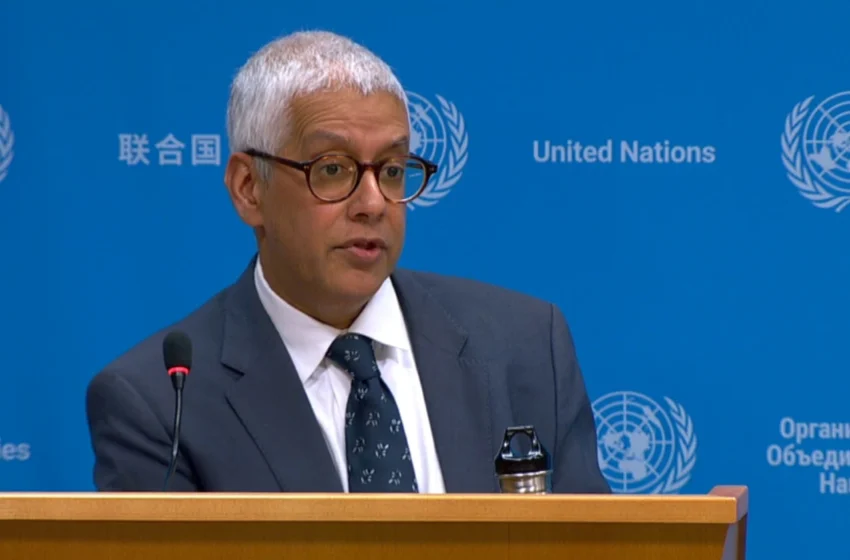
The Afghanistan UN seat dispute has once again exposed the gap between the Taliban’s de facto control in Kabul and the international system’s formal recognition process. In a statement reported, Farhan Haq, the Deputy Spokesperson for the United Nations Secretary-General, said there is currently no movement among UN member states to transfer Afghanistan’s seat at the United Nations to the Taliban.
This one-liner is important because it shows that despite repeated pressures from the Taliban and continued lobbying efforts, the issue has failed to move forward politically, rather than moving towards an agreement. What makes this important is not only the fact that the Taliban have been unable to obtain the seat. What is more important is the fact that the UN system believes there is no developing consensus among its members regarding any changes to be made regarding Afghanistan’s membership at the UN.
What Farhan Haq said
The significance of Haq’s statements lies in the fact that they explain the position of the UN without implying a change in its policy. He explained that the recognition of governments and the transfer of the seat from the UN of Afghanistan was an exclusive right of the member states of the United Nations and not of the UN Secretariat, and there was no recognition of the Islamic Emirate of Afghanistan as taking over the seat, as well as no procedure being carried out between the members of the UN. The importance of such distinction in diplomacy is obvious. It means that the transfer of the seat cannot be decided on by the UN Secretariat, which means that it should be made through the machinery and procedures of the UN member states.tribune.
Taliban push for legitimacy
The Taliban have continued to press their case publicly and diplomatically. On Aug. 4, Taliban spokesman Zabihullah Mujahid argued that no assessment of Afghanistan would be complete or fair without an official representative of the group, and said the Taliban do not expect any positive outcome from the United Nations until Afghanistan’s seat is handed to them. That position reflects a broader campaign by the Taliban to use the UN seat as a symbol of legitimacy and international acceptance.
The same theme has appeared repeatedly in Taliban statements over the past several years. Suhail Shaheen, the Taliban’s Doha-based representative, has also called for the seat to be transferred to the Taliban administration, while Taliban-linked reporting has framed the issue as one of fairness and representation rather than recognition.
A useful quote for context is
“no assessment of Afghanistan would be complete or fair without an official representative”
— as reported from Zabihullah Mujahid’s remarks.
Seat remains with former government
At present, however, the UN seat of Afghanistan is occupied by a diplomat representing the previous government. According to reports in several media outlets, Naseer Ahmad Faiq, who was nominated to the UN post by the previous Afghan government, still occupies the UN seat representing Afghanistan. The reason why the Taliban representative does not have that seat is the fact that the Credentials Committee did not approve him. As a result, there is now what is called a diplomatic oddity – the Taliban rule Afghanistan on the ground, while the Afghan UN seat is occupied by the diplomat representing the old regime.
How the UN process works
The Afghanistan issue is decided using the UN credentials system in which the members of the organization assess whether someone has the right to represent a particular country. If there is any dispute, then the Credentials Committee of the General Assembly has to convene and decide on either accepting or deferring the issue. It has been the case for the Taliban since they reclaimed power in August 2021. The first time this happened was in 2021 when the committee deferred the issue, thus, making it impossible for the Taliban to represent Afghanistan in the UN.
A clear quote from the 2021 committee process was
“the committee has decided to defer its decision of the credentials”
— a statement that effectively froze Taliban hopes of immediate UN recognition.
Repeated rejections
The record shows a pattern rather than a one-off dispute. By December 2023, the Taliban’s bid for the seat had been rejected for the third time, with the committee citing the interim government’s lack of international recognition. Reports from 2024 also said the UN denied the Taliban’s request for a fourth consecutive year.tribune.
That repeated refusal matters because it shows the issue is not waiting on a technical adjustment. It is tied to a deeper political judgment by UN member states that the Taliban do not yet meet the threshold for international recognition. Even when the Taliban nominate their own envoy, the appointment has not been accepted by the UN system.
Why recognition is the real barrier
What lies at the heart of the controversy, then, is recognition, and not merely representation. While the Taliban seek recognition by the international organization as being the rightful government of Afghanistan, many nations have continued to see this demand for what it is, and tied it to other matters such as good governance, inclusion, and human rights. This is why Haq’s point that there is no member-state movement becomes particularly relevant: in the absence of political recognition, there will be no relocation of the seat. It has indeed become more challenging for the Taliban as the international community has grown more concerned about what is happening in Afghanistan.
UN and wider diplomatic context
The issue has not been standing alone. The Taliban have been making many attempts to make use of the opportunities connected with the UN to advance their cause, such as appeals to speak before the General Assembly and nominations of their own delegate. In 2021, the Taliban made an attempt to have Suhail Shaheen appointed as the representative of Afghanistan to the United Nations, but the effort failed. In recent times, the Taliban have been stepping up lobbying to translate military victory into diplomatic success.
Reports in 2025 and 2026 mentioned talks, appeals to transfer the post, and fresh demands from Taliban representatives, but none of these efforts turned into a transfer of the UN seat. Thus, the question of who holds the UN seat of Afghanistan stays very much alive, but not an active one anymore. At the moment, the practical significance of Haq’s statement is quite clear: The UN seat of Afghanistan is not going to be transferred any time soon.
That makes the seat dispute more than a symbolic argument. It remains a test of whether the Taliban can convert domestic power into international legitimacy, and whether the UN will reward de facto control without the political conditions many member states still insist upon.

