

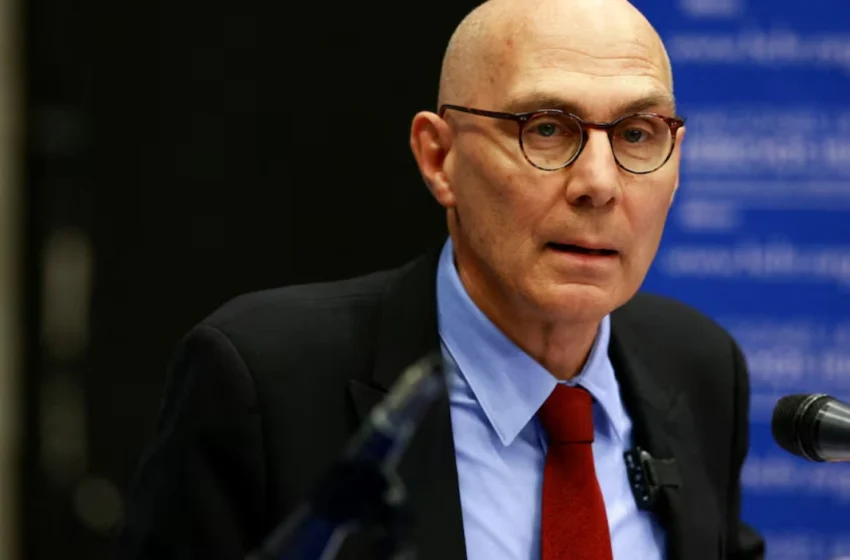
UN vote extends Volker Türk for rights chief amid US, Russia, Israel pushback
The U.N. General Assembly’s overwhelming decision to extend Volker Türk’s term as High Commissioner for Human Rights for four more years is more than a routine personnel move. It is a sharp reminder that the U.N.’s rights machinery remains central to global diplomacy, and that its top rights official can still trigger intense political backlash when his investigations and public criticism challenge powerful states.
A vote with political weight
The UN General Assembly, composed of 193 members, voted 144 in favor, 10 against, and 13 abstentions on Friday to extend the mandate of Türk, who will be serving as High Commissioner until October 12, 2026, for another four-year term. The size of the vote was just as important as the vote itself, with a strong majority vote won but also with opposition from three countries – Russia, Israel, and the United States. This transformed an expected routine extension into a highly political issue for the United Nations. UN Secretary-General António Guterres nominated Türk for a second term, and the UN General Assembly vetoed a Russian proposal to limit his service at the United Nations to the end of 2026. If this shorter term was accepted, the next secretary-general would get the chance to appoint another rights commissioner.
Why this reappointment mattered
The appointment of Türk is exceptional in the sense that he is the first high commissioner for human rights to be appointed for two successive tenures since the creation of the position in 1993. This made the choice more complex than just maintaining continuity; it was whether the global institution wanted to continue with the existing course of action of its human rights office amid an atmosphere of global conflict, war crimes accusations, and polarization on accountability issues. Türk’s appointment came at a time when the human rights office of the U.N. has been exceptionally active in dealing with some of the most sensitive situations in the world. The news reports from Reuters and AP said that Türk had been a strong critic of the war by Russia in Ukraine and the actions of Israel in Gaza.
The opposition front
Russia’s objection was not framed as a simple defense of its own record, but as a procedural and institutional argument. Moscow said a four-year extension would deny the next secretary-general the chance to make his or her own selection for such a sensitive post, and it pushed instead for a short extension until the end of 2026. Russia also dismissed suggestions that its objection was driven by Türk’s criticism of the war in Ukraine, calling that view “tunnel vision.”
Israel, meanwhile, strongly opposed the reappointment and treated it as a broader political signal. In earlier reporting, Israeli officials described the move as a “moral failure,” while Reuters said Israel’s position reflected anger over Türk’s criticism of Israel’s military campaign in Gaza.
The United States also raised objections before the vote and reportedly asked for a delay. After the vote, reporting said Washington would reassess its funding and engagement, underscoring that its concern went beyond a symbolic no vote and into broader questions about support for the U.N. human rights system.
Support that outweighed dissent
In spite of such opposition, however, there is no doubt about the numerical success of Türk’s reelection. As Reuters reported, European countries and a number of Latin American countries supported his renewal while a diplomatic memo of the African Union viewed by Reuters claimed that it “had ‘no objection’ to the four-year extension.” This example demonstrates one more characteristic feature of U.N. politics – even though the General Assembly can be a noisy and divided body, when it comes to many issues, including those relating to the personnel and human rights, its decisions are based on building coalitions rather than on confrontation.
What the numbers say
The final vote was 144-10 with 13 abstentions, a landslide by U.N. standards and a clear sign that most member states were unwilling to turn the appointment into a fight over any one country’s grievances. The rejected Russian proposal was also telling. It would have limited Türk’s extension to only a few months, effectively converting a normal reappointment into a caretaker arrangement. Reuters said that proposal was overwhelmingly defeated, as was the U.S. request to postpone the vote.
Türk’s record in focus
Türk has built a profile as an assertive and sometimes uncomfortable voice inside the U.N. system. Reuters described him as an outspoken critic of Russia’s war in Ukraine, while AP-linked reporting noted that he faced criticism for his approach to Israel’s war in Gaza and China’s treatment of Uyghurs.
That record helps explain both his support and his opposition. For governments that want a rights office willing to name abuses directly, Türk’s style is an asset. For governments that prefer more diplomatic language, his tenure can feel confrontational, especially when his office highlights civilian harm, occupation, detention, or military conduct.
His term beginning on October 12, 2026, gives him a longer runway to continue that approach. It also means the human rights office will remain under his leadership through some of the most sensitive geopolitical disputes facing the U.N. system.
U.N. politics and broader signal
The decision also had an institutional message attached to it. By showing such strong support for Türk, the General Assembly also indicated that the criticism coming from powerful governments does not mean per se that the rights chief cannot be elected, especially when many members of the organization see the role as essential in providing a counterbalance. On the other hand, the threat coming from Washington to rethink funding and engagement creates a different challenge for the UN system – to what extent can rights bodies go in pushing powerful countries before the latter start using money and influence to affect the results? The problem has long been there but in the case of Türk it became particularly clear. For Russia and Israel, the decision became a loss not just in terms of personnel but also in terms of the narrative. Even though their criticism was heard, it could not stop a significant majority from giving their support to the continuity of the head of the UN rights body.
Why this matters now
This reappointment matters because the High Commissioner for Human Rights is not a ceremonial post. The office investigates abuses, issues public statements, supports reporting on conflict zones, and often becomes the first U.N. institution to articulate legal and moral boundaries in crises.
That makes the holder of the office politically important far beyond Geneva. Türk’s renewed mandate suggests the U.N. membership is prepared, at least for now, to keep a forceful rights critic in place rather than choose a more cautious compromise candidate. It also suggests that objections from Russia, Israel, and the United States can be influential without being decisive when the broader coalition is aligned.
The greater importance of the vote is that it is a barometer of the present-day situation within the United Nations: international institutions continue being under pressure, yet they still have enough legitimacy to avoid being forced politically by great powers. The reappointment of Türk was not just the matter of continuity for one representative, it was a vote in favor of the U.N. maintaining its human rights leadership capable of telling the unvarnished truth about war, detention, and violation of human rights no matter if it annoys governments. On the other hand, this incident demonstrates how fragile this agreement is. The warning of the United States about budget cuts indicates that in spite of winning a vote, the institutions will face the consequences. Thus, the term of Türk’s work might become more complicated not only because of human rights violations but also because of the price paid for confronting them.

