

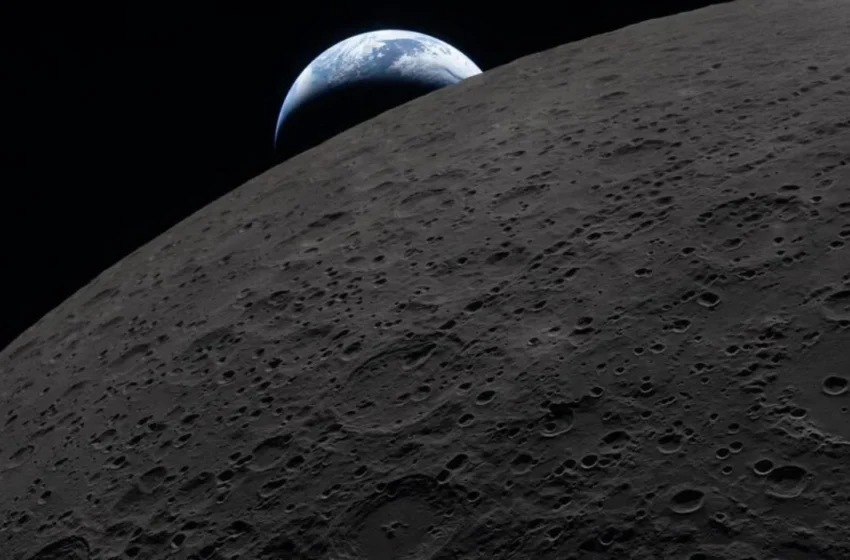
UN Sounds Alarm: Sustainable Lunar Exploration Must Not Sacrifice Earth
As governments and private companies accelerate plans to return to the Moon, the United Nations is moving to shape this new era of exploration around sustainability, environmental responsibility and multilateral governance. At the core of its emerging stance is a simple but far‑reaching message: humanity’s renewed push for the lunar surface must not come at the expense of Earth’s environment or the long‑term viability of space itself.
The warning comes at a time when lunar exploration is no longer an infrequent and symbolic undertaking, but the beginning of what might turn out to be industrial operations away from our planet. Numerous countries are designing landers, orbiters, and ideas for extraction of resources, while many private enterprises view the Moon as a new field for mining and construction. In this light, the United Nations tries to make sure that “sustainable lunar exploration” becomes a key principle and not just a slogan.
From Flags and Footprints to Infrastructure and Industry
While the first space age featured flags and footprints on the Moon, the second space age will involve infrastructure, resource development, and sustained presence. In contrast to the previous moon exploration efforts like Apollo, future missions will have a focus beyond exploration, toward settlement and development. The Moon will no longer be just an object for our aspirations but a place with complicated environmental and geopolitical implications. Scientific and policy analyses leading up to UN discussions emphasize how cumulative effects of landing, operations, and possible mining would change the lunar environment.
Engine exhaust of landing vehicles would remove and distribute regolith over vast distances. Dust storms can travel far away from their initial point of origin and affect equipment, darken the surface, and destroy precious scientific sites where we can learn about the early Solar System. Moreover, the production chain that enables these activities will affect our environment on Earth.
This is why UN officials and expert contributors have started framing the Moon not just as an exploration target, but as a test case for whether humanity can expand into space without repeating the extractive, polluting and competitive patterns that defined industrial development on Earth. In their rhetoric, the Moon is rapidly becoming a mirror held up to our collective political choices.
A Call for Sustainability: Linking Moon and Earth
At the heart of the UN’s warning is the insistence that the fate of Earth and the Moon are intertwined. Environmental and ethical input papers feeding into UN deliberations argue that terrestrial sustainability cannot be divorced from what happens in cislunar space and on the lunar surface. Launch emissions, debris in Earth–Moon orbits, and potential industrial activity on the Moon all form a continuum of impact rather than isolated phenomena.
That is why officials and expert contributors are calling for lunar policies that align with climate policies and the Sustainable Development Goals. The reason behind this approach is that it becomes necessary to protect the atmosphere and the climate of our planet as well as facilitate sustainable space exploration at the same time.
In order to achieve this objective, it is essential to adopt a holistic approach whereby cleaner propulsion is used wherever possible; mission designs should be made carefully in order to avoid generating space debris and there should also be guidelines regarding what can be called an acceptable environmental impact on the lunar surface. In other words, the new narrative suggests that the moon is not some distant sandbox with no consequences at all; decisions made by lunar activities will have repercussions on science, safety and earth’s environment as well.
“Laboratory of Peace”: UN’s Political Vision for the Moon
Beyond the technical language of debris, dust and emissions, the UN and its affiliated policy voices are investing heavily in the symbolism of the Moon as a political and ethical arena. In recent input to broader UN negotiations, contributors describe the Moon as a place that must become, in their words, “a laboratory of peace” – a phrase that encapsulates a vision of cooperative, non‑militarized and scientifically driven activity.
Embedded in this phrase is a deliberate contrast to the historical record on Earth, where resource‑rich territories have often become flashpoints for rivalry, conflict and unequal extraction. Applied to the Moon, the concept of a “laboratory of peace” suggests a conscious effort to flip that script: use the unique conditions of lunar exploration to experiment with new forms of governance, shared benefits and environmental stewardship.
In the same spirit, UN‑linked policy work underscores that
“lunar environmental and ethical guidelines need to be generated to avoid the mistakes made on Earth”.
This is not simply a plea to be careful; it is a demand for codified norms before industrial activity begins in earnest. The idea is to construct a framework in which scientific sites are preserved, culturally significant areas are respected, and extraction is managed under rules that prioritize common benefit over unilateral gain.
Governing the Moon: From Treaties to Operational Rules
Today’s lunar surge is unfolding under legal instruments that were drafted decades ago. The Outer Space Treaty established broad principles: no national appropriation, peaceful uses of outer space and responsibility for national space activities. Those provisions remain foundational, but they are far from sufficient for a future that may involve sustained mining operations, quasi‑permanent bases and complex commercial supply chains.
The emphasis in UN meetings and expert papers is increasingly on the “urgent need” for “more specific” frameworks governing “activities ‘on/around the Moon’.” The objective here does not have to be a rewrite of the treaties that exist but rather the creation of operational guidance that will complement them. Such efforts may include mechanisms for coordinating missions, standards for the sharing and disclosure of information, and norms for managing claims and safety zones in relation to facilities.
In terms of process, it is expected that this will be done either within or parallel to the United Nations Committee on the Peaceful Uses of Outer Space and the Office for Outer Space Affairs. Collectively, these institutions are being encouraged to go beyond declaratory instruments and move toward concrete governance measures such as joint registries of lunar activities, baseline environmental impacts, and guidelines for the protection of sites of scientific and cultural value.
The Governance Gap and Rising Commercial Stakes
If the first lunar race was between superpowers, the next one is increasingly commercial. Private firms see the Moon as a venue for trial‑running technologies that could later be deployed for asteroid mining, deep‑space industry or off‑world habitats. Contracts, partnerships and venture capital are beginning to flow into designs for power systems, resource extraction and communications.
The process of commercialization, in turn, makes governance more difficult. Space law has traditionally been nation-centered, where the government takes responsibility for the actions taken, even when performed by the corporation.
But as the level of commercial activity increases, states will have a necessity to license, control, and even limit the actions of parties which have the interest to develop rapidly rather than in a careful manner. Consequently, the message of sustainability of the United Nations does not refer solely to space agencies; it is also a warning to regulators and business that the chaotic development motivated by economic interests may bring negative consequences in the future for all. One can see the problem of the governance gap clearly in the sphere of resources utilization. Although there are already certain regulations at the level of particular nations and agreements, the world lacks a common standard of how responsible mining should look like on the Moon.
Environmental Stakes: Science, Sites and Dust
One of the most under‑reported aspects of sustainable lunar exploration is the environmental science that underpins UN concern. The lunar surface is not a uniform, interchangeable plain; it contains regions of exceptional scientific interest, from permanently shadowed craters that may harbor water ice to areas that preserve a long record of solar and cosmic radiation. Disturbing these sites through heavy landing traffic or mining could permanently damage their research value.
Technical studies highlight that each landing creates a blast zone, ejecting and lofting regolith that can travel considerable distances. Over time, multiple missions clustered around attractive polar regions could layer dust over instruments, alter surface properties and complicate efforts to conduct precision science. The Moon’s lack of atmosphere means such changes are not easily erased; they become part of the new baseline environment future missions must work within.
These environmental factors feed into calls for guidelines that cap mission density in sensitive regions, define buffer zones around scientific sites and require thorough impact assessments before large‑scale operations. The UN’s broader sustainability argument draws heavily on these scientific insights: if humanity cannot manage the environmental consequences of activity on a small, airless world, it suggests we have learned little from our stewardship failures on Earth.
Earth, Space Debris and the Cislunar Commons
The warning from the UN directly connects the exploration of the moon with the “sustainability of space in the long run,” which is becoming a pressing issue due to the increasing traffic of satellites and space debris. The Earth-Moon system is not just a setting but a passage for the paths, transfer orbits, and staging locations that will be employed in an increasing number of missions. Without proper governance, the increased traffic can increase the danger of creating space debris, make the navigation more complicated, and increase the likelihood of any potential collision and interference. Launching missions to the moon is based on the Earth’s infrastructure, which is connected with the climate and environmental policy.
In that sense, the UN’s call for sustainable lunar exploration is part of a broader push to treat near‑Earth and cislunar space as commons that require protection and cooperative management. The message is that sustainability cannot stop at the atmosphere’s edge. Instead, it must encompass everything from satellite constellations and space traffic management to lunar mission planning and debris mitigation.
A Test of Multilateralism in the Second Space Age
Similarly to climate change, the politics of lunar governance will be the ultimate test for the legitimacy of multilateralism. Spacefaring countries have conflicting interests, different technological capacities, and commercial approaches. New space countries aim to gain access and voice, whereas commercial players look for clear rules to make investments. The United Nations should not engage in designing hardware or mission concepts; it should provide a platform where all these interests can be balanced under common principles.
Practically speaking, it means to progress from broad statements to normative guidelines, which multilateral organizations find difficult to do. At stake is the fact that the decisions made regarding the Moon may set a template for Mars, asteroids, and other celestial bodies to come. If the international community does not manage to incorporate principles of sustainability and peacefulness into lunar governance, it will be more difficult to do it somewhere else in the future.

