

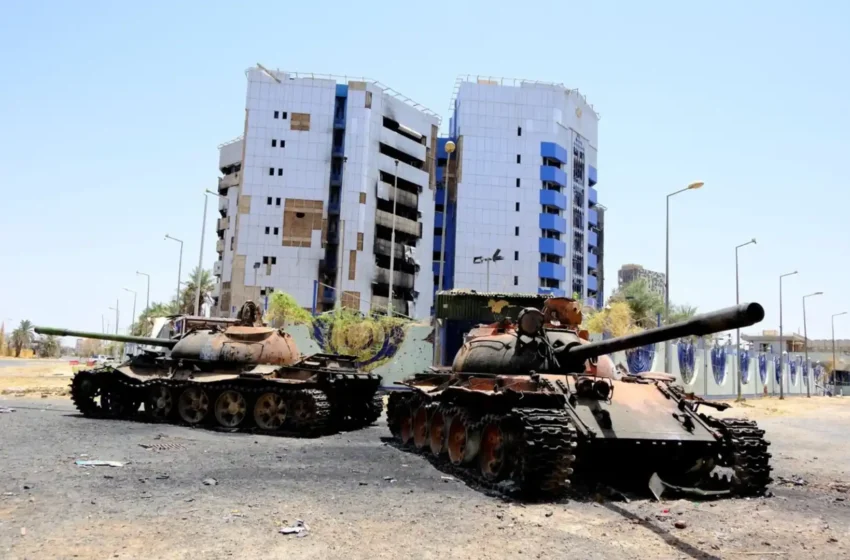
UN Urged to Impose Arms Embargo on UAE Over Sudan War Role
A new push by US-based rights groups for the United Nations to impose an arms embargo on the United Arab Emirates has sharpened global attention on the UAE’s alleged role in Sudan’s devastating war. The call, reported in mid-July 2026, centers on claims that the UAE has materially aided the Rapid Support Forces, the paramilitary group accused of mass atrocities in Darfur and elsewhere in Sudan. The demand is not just symbolic; it seeks to place the UAE itself under the kind of restrictions usually reserved for states accused of fueling conflict, a major escalation in the diplomatic and legal pressure surrounding the war.
The point being made by these rights organizations is clear but harsh. It is that the UAE should immediately be put under embargo since it is claimed to be providing support to the RSF through arming and equipping them, thus playing a role in the genocide that, according to UN experts, has been committed in some parts of Sudan, especially el-Fasher. The importance of this perspective is that it changes the discussion from one of the UAE being a significant regional power to it being guilty of war crimes and atrocities.
Why the call matters
This appeal is significant in that it targets a powerful Gulf state with wide-ranging military, business, and diplomatic interests throughout the Middle East, Africa, Europe, and North America. The United Arab Emirates is not being considered as a peripheral entity but as one of the core actors involved in the wider conflict economy which, according to rights advocates, has prolonged the war in Sudan. In case the claims stand up, the implications would be far-reaching not only for Sudan but also on the matter of enforcing UN arms embargoes, the responsibilities of third parties, and the willingness of powerful countries to challenge a key ally.
The case also involves the issue of international enforcement. There is already an existing arms embargo in Sudan based on decisions made by the UN Security Council. However, activists have claimed that embargoes are meaningless if the suppliers of these weapons can find their way around through networks. From this perspective, the current campaign does not involve just the punishment of the United Arab Emirates. Instead, it also involves whether international laws can keep pace with the new forms of proxy wars.
What the groups alleged
According to these groups based in the US making the call, the UAE has contributed to the RSF through different means. Their claims include the delivery or re-exportation of weapons, using foreign military equipment used in Sudan, and through the sponsorship of mercenaries associated with the fight. They also claim that this has helped the RSF abuse civilians in places such as Darfur and on the battlefields around el-Fasher.
“The UN General Assembly and individual member states should impose an immediate arms embargo on the UAE,”
the advocacy position summarized in the reporting says, reflecting the core demand of the campaign. The same coverage says the UAE is viewed by the groups as complicit in crimes that UN experts have described as genocide in Sudan. That language is deliberately strong, because it is designed to force an institutional response rather than a routine diplomatic objection.
Another key allegation is that the UAE has served as a channel for weapons that were later traced into Sudan. Reporting cited by the advocacy groups refers to advanced Chinese weaponry, re-exported through the UAE, that was identified in Sudan in breach of the arms embargo. The significance of this claim is that it suggests not only political support, but a tangible logistics chain connecting external suppliers to the battlefield.
Evidence and context
It bears noting that the human rights organizations are not presenting their case in a vacuum. The case made by the organizations is built on top of a larger body of journalism, investigation, and conflict monitoring which has been gathered over the course of several years. One of the main arguments is a report made by the Conflict Insights Group, which, according to the activists, proves the continued flow of lethal assistance to the RSF and the identification of the foreign nationals involved in the conflict. The information presented in the reports involves capturing and spotting of military equipment, re-export patterns, and presence of Colombian mercenaries in Darfur as recently as January 20, 2026.
This is important as it implies a certain continuity, rather than a singular incident. If mercenaries, weapons, and logistics are still supplied to Sudan as of 2026, then the supply chain cannot be considered historical or incidental, but an ongoing wartime operation.
The broader conflict picture also helps explain the intensity of the response. Sudan’s war has become one of the world’s most destructive crises, with the RSF and the Sudanese Armed Forces locked in a brutal struggle that has created mass displacement, famine risks, and allegations of ethnic violence. Background reporting cited in the coverage points to the long history of violence in Sudan and the recurring pattern of outside support intensifying local conflict. In that context, every alleged external supplier becomes part of a larger story about how Sudan’s war has been sustained.
The legal argument
At the heart of the call is a legal claim: if the UAE is enabling the RSF, then it may be violating the Darfur arms embargo and contributing to atrocity crimes. The rights groups argue that the embargo should be enforced more aggressively and that the UN should go further by imposing new restrictions on the UAE itself. That is a significant step because it would move the focus from the armed group in Sudan to the foreign state allegedly facilitating it.
There are two important reasons for that. First, it creates a challenge for the UN system to demonstrate that it is possible to enforce the embargo against the sophisticated supply chain. Second, it presents the UAE not as a country which might possibly help the rebels but as a state which can be held accountable in case if the allegations will be proved by the international community. The campaign also urges countries which maintain military ties with the UAE, including those from the West, to suspend any deliveries of weapons until the UAE ceases its involvement in supporting the RSF.
The rationale of such policy is evident: no supplier, no support, no indirect assistance, no machine of war continues functioning. The problem is that it can hardly become the reality because the UN Security Council can become paralyzed due to geopolitical interests and countries with security and economic links with the UAE might refuse to take any action.
UAE stance and international pushback
The UAE has always been denying or disputing claims regarding the fact that it was providing direct support to atrocities in Sudan. Denial plays a key role in the diplomatic struggle over the matter. So long as the UAE continues to deny its support for the RSF, it can interpret the accusations as politically-motivated or unsubstantiated. However, the pressure grows since the evidence provided by the advocates of arms embargo is more and more specific – from identification of weapon to battlefield traces and mercenaries. Reactions from the international community were growing as well.
Human Rights Watch and Amnesty International have already voiced their concern in their previous reports regarding the presence of advanced weaponry related to UAE re-exportations to Sudan and called to take actions to prevent the further arms deliveries. The report mentions that there were also members of the American political and policy community urging for measures to prevent the arms deliveries related to UAE problems with Sudan.
There is also a political calculation here. Because the UAE has become such an important regional and economic actor, many governments will be wary of confronting it too directly. That makes the rights groups’ call all the more pointed: they are essentially asking whether the international system is prepared to hold a strategically important partner to the same standard applied to less powerful states.
What happens next
The immediate concern is how the UN will deal with the situation: As an enforcement matter or yet another advocacy campaign that is dissipated by diplomatic pushback? The more evidence that builds up, the more likely it is that the UN will be under increasing pressure to undertake further investigation, improve monitoring, or pressure member states to curb the sale and transport of arms related to the UAE. The more the evidentiary gap closes, the less likely the problem will stay politically contained.
For Sudan, the immediacy and human cost of the situation make it clear: any foreign support that helps the RSF operate is likely to lead to increased civilian casualties, greater displacement, and difficulty delivering humanitarian assistance. For the UAE, the cost is one of reputation and strategic interest because it is now under close international scrutiny and potentially vulnerable to sanctions and embargo.

