

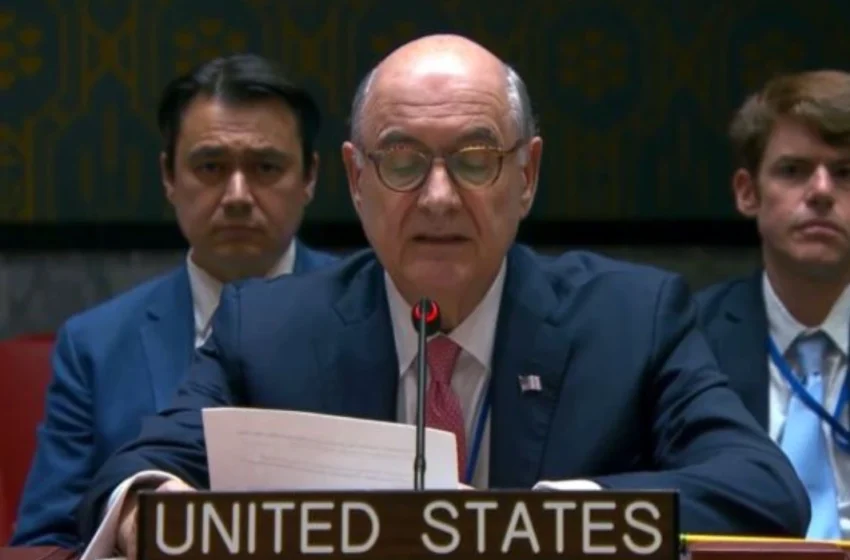
US Warns Russia at UNSC: Moscow Urged to End Ukraine War
The recent warning issued by the U.S. at the UN Security Council will increase the diplomatic pressure on Moscow at a time when the fighting in Ukraine continues to be an expensive and bloody stalemate. The American warning to Russia was clear and strategic. It told Russia to stop wasting time and make peace with Ukraine since the battle is going against it.
The core phrase,
“Time is not on Moscow’s side,”
attributed to the U.S. representative, captures the tone of urgency that defined the intervention and reflects a broader Western effort to push the Kremlin toward negotiations rather than escalation.
This is not an ordinary diplomatic warning in any sense. This is a message sent by the US regarding its strategy of making sure that the conflict is seen in the context of attrition, isolation, and negative results that Russia is reaping from the war. It is the phrasing of this statement that shows that there is a degree of confidence in the policy of pressure diplomacy, but the fact that the war will bring more harm to Russia.
The diplomatic message
At the center of the reported exchange is the U.S. position that Russia should make a deal now rather than wait for better terms that may never arrive. According to the reporting, the American representative said,
“Russia must make a deal. Time is not on Moscow’s side,”
directly tying the logic of peace to Russia’s weakening strategic outlook.
Such wording matters in that it does not present peace as a concession to the West, but as an actual necessity for Russia itself. The United States also stated that Washington still supports Ukraine, indicating that any pressure that would be brought to bear on Russia would still go hand-in-hand with support for Ukraine politically and militarily. Such approach is characteristic of the current Western strategy: press Russia, maintain Ukraine, and keep the path to peace open while not rewarding aggression. In other words, Russia was being told that procrastination would not help its cause at all.
Why the timing matters
It is important to note that the timeliness of this warning is due to the fact that now the war in Ukraine is in its fifth year in terms of UN coverage, which makes exhaustion and fatigue a factor in the international management of the conflict. In terms of long wars, there emerges an increasing desire to find a way out, however, the danger is that parties to the conflict will manage to persuade themselves that they are able to improve their negotiating position even further. The warning by the Americans had as its target overcoming such an illusion on the part of the Russians. Moreover, there is a bigger political context behind this move. According to other reports from the Security Council meetings in 2018, the US criticized Russia for what was called “dangerous and inexplicable escalation” of the situation regarding the attack on Ukraine’s civilian infrastructure.
Western pressure builds
The U.S. warning does not stand alone. A European Union statement at the Security Council also called on Russia to agree to a “full, unconditional and immediate ceasefire” and to enter meaningful negotiations. That matters because it shows a broader alignment among Western actors, not just a single American demand. The shared emphasis is on ending the fighting first, then building a framework for talks.
The UN’s own recent language has gone in the same direction. Coverage from February 2026 noted a senior UN official urging the international community to “use every diplomatic tool” to end the war, as the conflict entered a fifth year. That does not mean the UN is dictating terms, but it does show the institution’s recognition that the war is now a long-term international crisis, not a short burst of battlefield confrontation. The Security Council remains one of the few places where the major powers still have to publicly confront one another over the war.
Russia’s position under pressure
The phrase
“Time is not on Moscow’s side”
is more than rhetoric; it is an assessment of Russia’s strategic position as seen by Washington and its allies.
The point here is that as the war continues, the costs for Russia become increasingly high – both in terms of the military effort expended and the economic difficulties, political isolation, and reputation lost. In other words, in this context, the benefits that Russia expects from the war decline over time and do not increase. It was precisely for this reason that the American message centered around the need to act quickly. By insisting on Russia ending the war immediately, the United States is hoping to take away from Russia the ability to continue the war and thus hope for more favorable negotiating positions in the future.
What the statement reveals
The new move by the United Nations brings into light three things about the current phase of the war. Firstly, the U.S. knows that diplomacy should continue despite ongoing battle activities. Secondly, the administration in Washington wants to use the power of publicity to portray Russia as the party opposing peace. Lastly, the country aims to support Ukraine and show that negotiations are the most logical way for Russia. What’s more, it highlights how the diplomatic language has changed. The statements provided do not show any kind of gentle persuasion or vague calls, but a clear message that Russia’s days are numbered. The phraseology is characteristic of international relations and is usually used as a sign of confidence as well as an appeal to the audience. The latter consists of all those who can be affected by the conflict in some way.
The broader war context
The war itself remains central to every such statement. UN coverage has stressed that the conflict has already dragged on for years, while reports from Security Council meetings have highlighted repeated attacks, civilian suffering, and the continuing demand for a ceasefire. Against that backdrop, the phrase
“make peace with Ukraine immediately”
is not simply a diplomatic slogan; it is an urgent appeal tied to the humanitarian and strategic costs of the war.
At the same time, the fact that the U.S. is speaking so directly at the Security Council indicates that it wants the issue to remain international, not bilateral. Russia’s war is being treated as a challenge to the wider global order, which is why these statements are being made in a forum where the whole world can hear them. That public setting increases the pressure because it turns a bilateral conflict into a matter of global accountability.

