

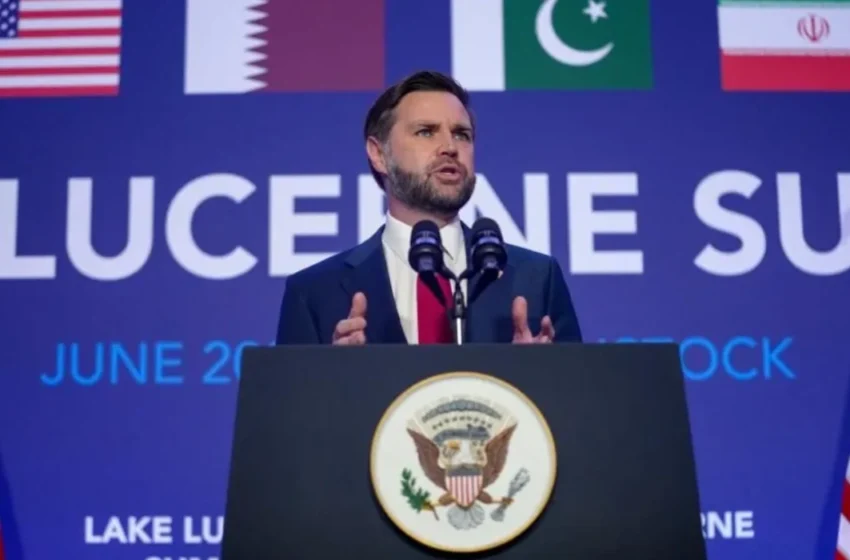
JD Vance: Iran Agrees to Allow UN Nuclear Inspectors Back Into Country
An important diplomatic development for the world came on Monday, June 22, 2026, when Vice President JD Vance of the United States made the statement that the Islamic Republic of Iran is now permitting the return of nuclear inspectors from the International Atomic Energy Agency of the UN to inspect their facilities. This statement was made after the first meeting held between the United States and Iran in Zurich, Switzerland, that started on Sunday and finished on Monday. It is said that this is a possible turning point in the almost five months long conflict between the two countries.
The importance of this treaty is hard to exaggerate against the background of existing international conflicts. It is worth noting that Iran’s exclusion of IAEA representatives happened during the June 2025 conflict, meaning that it is the first time Iran agrees to allow those people back. This treaty is an important step in negotiations aiming to solve issues with Iran’s nuclear program.
Vance’s Definitive Statements on the Agreement
Vice President Vance made several clear and definitive statements regarding Iran’s agreement, providing the international community with concrete information about this diplomatic development. He stated explicitly,
“Iran has agreed to allow inspectors from the International Atomic Energy Agency (IAEA) to return to the country“
following the conclusion of the first round of U.S.-Iran talks. This direct quotation from the Vice President provides undeniable confirmation of Iran’s commitment to allowing international nuclear oversight.
Vance further characterized this development as a “major milestone” in the broader negotiations, describing Iran’s invitation to IAEA inspectors as the
“first step toward permanently terminating Iran’s nuclear weapons program”.
His characterization of the agreement reflects the U.S. government’s perspective on the significance of this diplomatic breakthrough and suggests that American officials view this as a foundational element for any comprehensive future agreement.
The Vice President also expressed optimism about the broader implications of this development, stating that the agreement represents a
“good foundation for a successful final deal”
to end the war that began nearly five months ago. This statement connects the nuclear inspector agreement directly to the broader goal of conflict resolution, suggesting that U.S. officials view nuclear oversight as integral to achieving peace.
Progress Assessment from U.S. Officials
Beyond the specific announcement about nuclear inspectors, Vice President Vance provided additional context about the overall state of negotiations. He commented that
“a great deal of progress has been made”
after the first round of talks between the United States and Iran.
This evaluation shows that the negotiators managed not only to make an agreement on the inspection but also probably created foundations for more breakthroughs in future negotiations. What is especially important is the time of making this announcement. Negotiations started in Zurich on Sunday and continued until Monday when the agreement was reached by the end of the first round of negotiations. Such quick results indicate that both parties were ready for such a breakthrough beforehand.
Expected Timeline for Inspector Return
One of the most practical aspects of Vice President Vance’s announcement concerned the expected timeline for when inspectors would actually return to Iran. According to the Vice President, inspectors could return
“at the very least this week,”
indicating that the agreement is not merely theoretical but will be implemented with immediate effect. This accelerated timeline suggests that both the United States and Iran are committed to rapid implementation of the agreement.
It is interesting to note that according to Vance, conversations between the inspectors and the IAEA can happen “as early as today,” where today is Monday, June 22, 2026, the very day when this announcement was made. This timing gives an idea about the seriousness of the commitment on part of Iran, and how the necessary logistics are already being arranged to ensure that these inspectors can be brought back into the country. The importance of this quick turnaround becomes more evident since Iran had earlier expelled these inspectors amidst the conflict in June 2025.
Critical Details Still Unclear
Even though the agreement announcement is a great milestone in the talks between the two sides, there is still much to be clarified. First of all, VP Vance did not clarify the degree of access that the inspectors would have to the Iranian nuclear installations. The absence of such clarification creates doubt on whether the inspectors will have access to all of the locations or just to some of the inspected locations that are approved beforehand. Moreover, VP Vance did not reveal if the inspectors were authorized to inspect the same sites that had been previously targeted by the U.S. and Israel.
The Vice President also identified Iran’s agreement to allow IAEA inspectors to begin “identifying sites of enriched material” as potentially the most significant aspect of the negotiations, calling it
“perhaps the biggest deal struck during the talks”.
This focus on enriched uranium sites suggests that U.S. officials are particularly concerned about Iran’s uranium enrichment capabilities and view inspector access to these locations as essential for verifying compliance with any future agreement.
Strategic Implications for Conflict Resolution
This accord to have nuclear inspectors return to Iran holds strategic value in more ways than simply that of resolving the nuclear problem. By linking the accord on the nuclear issue to that of bringing an end to the conflict, Vice President Vance implies that American diplomats consider the inspection accord as a prerequisite to having full-fledged peace talks. It is consistent with the American policy all along regarding the resolution of Iran’s nuclear problem.
The announcement also demonstrates the effectiveness of the diplomatic approach adopted by the United States in these negotiations. The rapid progress achieved in the first round of talks suggests that the negotiation strategy is working and that both parties may be genuinely committed to reaching a comprehensive agreement. This development could encourage other international stakeholders to support continued negotiations rather than pursuing alternative approaches such as military intervention or expanded sanctions.
International Community Response Expected
Though no reaction has yet come from international organizations and other countries in regards to this development, it is quite possible that international attention will be drawn towards this development due to its importance. It is also expected that the IAEA would release formal statements concerning the return of the inspectors and the nature of their mission. The European countries who were engaged in talks with Iran concerning its nuclear program will react in favor of this development.
Regional powers in the Middle East, particularly Israel and Gulf states, will likely monitor this development closely given their security concerns regarding Iran’s nuclear program. The speed of inspector implementation and the extent of their access will be critical factors in determining whether regional powers view this agreement as addressing their security concerns.
The Path Forward for U.S.-Iran Negotiations
This deal marks the first concrete breakthrough in almost five months of struggle, implying that diplomacy is finally beginning to pay off. The rapid schedule for inspectors’ return shows that the two parties have resolved to show their goodwill during the negotiation process. Nevertheless, the outstanding queries regarding the level of access required and inspection of sensitive sites imply that more diplomacy is required to achieve a final deal.
The outcome of further rounds of negotiations will largely depend on whether Iran gives inspectors unrestricted access to all nuclear sites, including those previously attacked by military forces. The entire international community will be looking out to see whether this is really an indication of a breakthrough or just a diplomatic effort.
Vice President Vance’s optimism about the negotiations, combined with the accelerated timeline for inspector return, suggests that U.S. officials believe they are on a path toward a comprehensive agreement. Whether this optimism translates into actual peace will depend on the next phase of negotiations and Iran’s willingness to provide the transparency that international nuclear oversight requires.

