

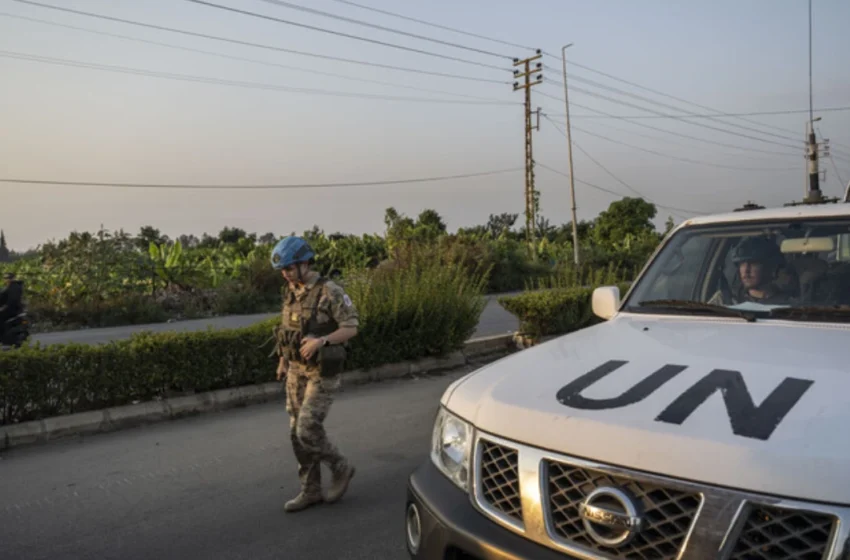
UN Security Council Demands Accountability After Serbian Peacekeeper Killed in Lebanon
The international community found itself at the receiving end of its own denunciation on June 10, 2026, when the UN Security Council released an unequivocal statement after the murder of Sergeant Milovan Jovanović, the Serbian peacekeeper who was killed in southern Lebanon. Indeed, this incident, which saw the fatal attack of the peacekeeper through a mortar shell that landed on UN position 7-2, near Marji’yun on June 3, marks the seventh casualty among UNIFIL peacekeepers since the onset of hostilities in March 2026.
In addition to killing the Indian soldier, the attack has also left two other peacekeepers wounded, one from El Salvador and the other from Spain. This shows that the victims of the attack are from several other nations who serve under the United Nations Interim Force in Lebanon (UNIFIL). In light of escalating political tensions and amid uncertainty about the recently declared end to hostilities that was made on April 16, it is clear that the council’s reaction reflects serious concern about the systematic targeting of peacekeeping missions.
The Victim: Sergeant Milovan Jovanović
Milovan Jovanović was a 36 year old Serbian soldier who would have been 37 years old by June 6, 2026, when he had been deployed as part of the UNIFIL sector east contingent. The death of this soldier goes beyond numbers, statistics, and figures, because this soldier is an individual who made the choice to join one of the most hazardous peacekeeping operations in the world. It is worth noting that Serbia has been present in UNIFIL from its inception and sent trained individuals whose main task was to ensure that the Israeli troops withdrew peacefully from the area.
The circumstances surrounding Jovanović’s death remain under investigation, though preliminary reports indicate a mortar shell struck the UN position while peacekeepers were conducting routine operations. Israel’s envoy to the United Nations has blamed Hezbollah for the killing of two UN peacekeepers, though no detailed evidence has been publicly presented to substantiate these claims. The lack of definitive attribution has complicated diplomatic responses and fueled competing narratives about responsibility for the attack.
UN Security Council’s Unprecedented Condemnation
The Security Council’s June 10 press statement is one of the strongest condemnations ever made on attacks against peacekeepers. The statement unequivocally condemned the murder and called for immediate accountability for the crime, which is a significant step forward in the international community’s approach towards dealing with the growing menace that poses a threat to the effectiveness of UNIFIL. In condemning the murders, the council said that “these are the most tragic cases in a trend of intimidation, endangerment, and attempts to disrupt mandated activities by UN peacekeepers.”
The Council urged for a speedy investigation into the incident, stating that “those responsible for this attack must be brought to account without delay.” It is clear from this statement that there is worry about previous attacks not having been prosecuted, which would have established a dangerous precedent. Moreover, such an incident has reduced the efficacy of the international community’s attempts to make peacekeepers more accountable in the execution of their duties. It is a known fact that peacekeepers need free movement to perform their job effectively.
Secretary-General Guterres’ Forceful Response
UN Secretary-General António Guterres issued an immediate condemnation through his spokesman Stephane Dujarric on June 3, 2026, the same day Jovanović was killed. Guterres’s statement carried the weight of the world’s highest UN office and emphasized the gravity of attacking peacekeeping forces. He declared,
“Attacks on peacekeepers must stop,”
a crystalline message that resonated across diplomatic channels worldwide and set the tone for subsequent Security Council deliberations.
This was a serious case of “violations of international humanitarian law and Security Council resolution 1701 (2006)”, the resolution setting the foundation of UNIFIL’s role in the aftermath of the war of 2006 in Lebanon. Through this, Guterres not only raised awareness of an important failure in terms of security tactics but also highlighted possible breach of international laws. It is worth mentioning that the phrase “may amount to war crimes” implies grave consequences for the offenders.
In his comprehensive statement, Guterres emphasized that
“All attacks on peacekeepers must be promptly investigated, and those responsible must be effectively prosecuted and held accountable.”
This dual demand for investigation and prosecution reflects the UN’s recognition that failed accountability mechanisms have contributed to the pattern of endangerment facing peacekeepers. The Secretary-General also urged all actors to respect the cessation of hostilities announced on April 16, suggesting that the attack may represent a deliberate effort to undermine diplomatic progress.
The Broader Pattern: Seven Deaths in Three Months
The killing of Sergeant Jovanović marks the seventh death of a UNIFIL peacekeeper since the escalation of hostility on March 2, 2026, in southern Lebanon. The rise in fatalities among UNIFIL peacekeepers marks a substantial deterioration in the security of peacekeeping operations, as opposed to previous years, when no peacekeepers died while serving under the UN flag. In addition, the pattern of violence involves attacks with heavy artillery, rockets, and direct engagement with the UN forces.
As of today, there are nearly 10,000 UNIFIL peacekeepers from several nations around the world, who serve in different units of the organization. Nations such as France, Italy, Spain, Turkey, and Serbia contribute substantially towards the staffing of the operation. The multinational character of the organization was introduced to guarantee that the peacekeeping process is seen as legitimate and is not dominated by a specific country. Nevertheless, the increase in the death toll raises concerns over the compatibility of the present security environment with the organization’s mandate.
The two peacekeepers wounded in the same incident as Jovanović’s death—one from El Salvador and one from Spain—represent additional casualties that compound the humanitarian impact of the attack. These injuries demonstrate that even peacekeepers who survive direct attacks face significant risks of permanent disability or psychological trauma that can affect their lives long after returning from deployment.
Legal Framework and International Accountability
Security Council Resolution 1701 (2006) established the legal framework governing UNIFIL’s operations and explicitly requires all parties to respect the safety and security of peacekeeping personnel. The resolution, adopted following the 2006 Lebanon War, mandates UNIFIL to monitor the cessation of hostilities, accompany the Lebanese armed forces in southern Lebanon, and assist in creating conditions for the safe return of displaced civilians. The killing of Sergeant Jovanović appears to violate multiple provisions of this resolution, including requirements for protecting UN facilities and ensuring peacekeeper freedom of movement.
This can be substantiated by the fact that the statement released by the Security Council referred to Resolution 2518 (2020) and Resolution 2589 (2021). The above resolutions are specific to the protection of the peacekeepers and also lay down an investigative process for any attack on the UN staffs. Resolutions of this nature impose obligatory duties on all countries to cooperate in the process of investigations and punish the offenders.
The Secretary-General’s characterization of the attack as potentially constituting “war crimes” carries significant implications under international criminal law. The Rome Statute of the International Criminal Court explicitly criminalizes attacks on peacekeeping personnel when they are entitled to protection as civilians under international humanitarian law. This legal framework could potentially enable prosecution of individuals responsible for the mortar attack, though such proceedings would require cooperation from states with jurisdiction over the perpetrators.
Diplomatic Implications and Regional Stability
The attack against UN post 7-2 happened during a period of increased diplomatic tensions following the signing of the agreement of cessation of hostilities on April 16. This agreement, which was signed via diplomatic means, was a chance for the two nations involved to come to terms and bring some semblance of stability along the Lebanon-Israel border. With the peacekeeper’s life cut just two weeks after this agreement, one wonders whether the two countries will honor their decision and maintain this cessation of hostilities.
The US Embassy in Beirut has not been left behind, issuing its own condemnation against this attack, where it is argued that such an attack ‘puts Lebanese civilians at risk and jeopardizes stability in southern Lebanon.’ This clearly points out to the US’s strategic fear that such attacks might result into destabilization of the whole region and jeopardizing its effort to establish diplomatic ties between the conflicting countries.
Israel’s blaming of Hezbollah for the killing reflects ongoing tensions between the Israeli government and the Iranian-backed militia that controls much of southern Lebanon. Hezbollah has repeatedly denied responsibility for attacks on UN positions, though the group has faced criticism from international observers for actions that endanger peacekeepers. The lack of definitive attribution has complicated diplomatic efforts and allowed competing narratives to flourish, potentially undermining confidence in international fact-finding mechanisms.
The Future of UNIFIL and Peacekeeping Operations
The condemnation from the Security Council and the rising death rate among UNIFIL peacekeepers pose basic queries as to the future sustainability of peacekeeping missions in southern Lebanon. It is imperative for troop contributing nations to review their capacity to operate safely within the existing circumstances, as well as determining the possibility of realizing the mission mandates considering the prevailing security scenario. Some troop contributors might find it necessary to reduce or withdraw their troops from UNIFIL, making it very difficult for the mission to carry out its mandate.
The prevailing climate of threats and endangerment of peacekeepers indicates that the existing security scenario might not allow sustainable peacekeeping operations. The inability to make significant changes regarding security situation and lack of a credible mechanism for prosecuting peacekeeper attackers would lead to difficulties being faced by the mission. This may result in dangerous scenarios where conflicting parties go back to their full scale of combat activities.
The international community’s response to Jovanović’s death will likely shape future peacekeeping operations globally. If the Security Council fails to secure meaningful accountability for this attack, other groups may view peacekeepers as unprotected targets, potentially leading to increased violence against UN personnel in conflict zones worldwide. The stakes extend far beyond southern Lebanon, encompassing the broader viability of UN peacekeeping as a tool for managing international conflicts and protecting civilians in war zones.

