

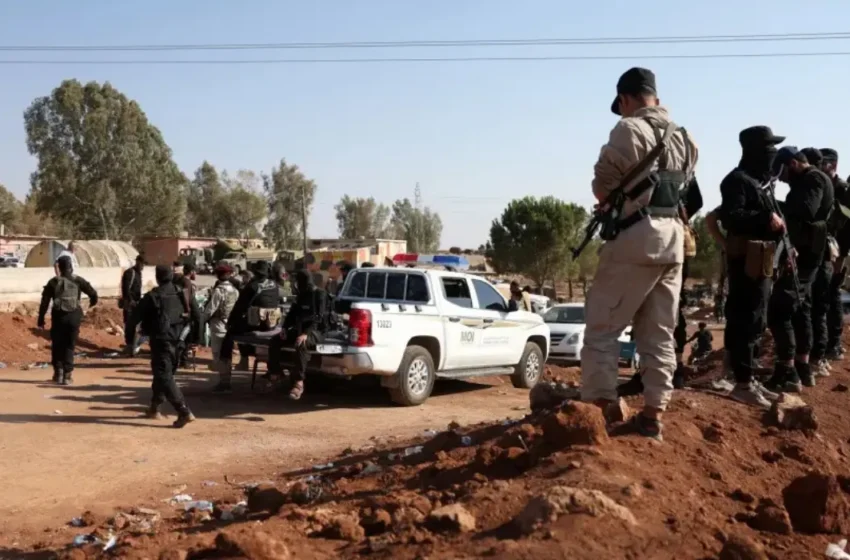
Sweida July 2025 Crisis Highlights Limits of UN Response Mechanisms
The July 2025 escalation in Sweida has increasingly come to be viewed not only as a humanitarian catastrophe but as a revealing test of how the international system responds to sudden, localized mass violence. While the United Nations Independent International Commission of Inquiry on Syria has documented more than 1,700 deaths and nearly 200,000 displacements, the broader significance lies in what the episode exposes about the limits of prevention, response, and accountability frameworks.
Sweida had long been considered a relatively stable region within the wider Syrian Civil War. Its transformation into a site of intense violence suggests that stability in fragmented conflicts may be more fragile than previously assumed. The rapid escalation illustrates how quickly localized tensions can evolve into mass atrocities when structural vulnerabilities remain unaddressed.
Stability Assumptions and Their Breakdown
For years, Sweida was treated as a peripheral zone insulated from large-scale conflict. This perception influenced both humanitarian planning and diplomatic engagement, often deprioritizing the region compared to more active frontlines.
The July escalation disrupted this assumption, showing that areas perceived as stable can become flashpoints when political, social, and military pressures converge. This shift challenges the prioritization frameworks used by international actors.
From Local Incident to Systemic Warning
The violence in Sweida demonstrates how local incidents can escalate into systemic crises. What begins as a localized confrontation can rapidly expand when external actors, internal grievances, and weak governance intersect.
The episode thus serves as a warning signal, indicating that similar escalations could occur in other parts of Syria or comparable conflict environments.
A Two-Phase Escalation and Shifting Control Dynamics
The sequence of events in July 2025 reflects a transition from state-linked violence to inter-communal conflict, shaped by changes in territorial control and external interventions. This progression illustrates how conflict dynamics can evolve within a short timeframe.
Understanding these phases is essential for assessing how and why the violence intensified, as well as for identifying points where intervention might have altered the trajectory.
Initial Phase and State-Centric Operations
The first phase, between 14 and 16 July, involved operations attributed to Syrian government forces and allied actors. These actions reportedly targeted civilian populations, particularly within Druze communities, resulting in widespread casualties and displacement.
The structured nature of these operations suggests planning and coordination, raising questions about command responsibility and operational intent.
Secondary Phase and Communal Retaliation
The second phase followed a shift in control linked to external developments, including actions attributed to Israel. The resulting security vacuum enabled local armed groups to assert dominance.
During this phase, violence became more localized and retaliatory, with Druze factions targeting Bedouin communities. This transition underscores how quickly conflict narratives can shift from state-driven to identity-based violence.
Rethinking Accountability in Fragmented Conflicts
The UN’s legal assessment identifies potential war crimes and crimes against humanity, yet the Sweida case highlights persistent gaps between documentation and enforcement. The existence of evidence does not automatically translate into accountability.
This gap reflects broader structural challenges within the international system, where political considerations often constrain legal action.
Documentation Versus Enforcement
The Commission’s detailed findings provide a strong evidentiary basis for future legal proceedings. However, enforcement mechanisms remain limited, particularly in conflicts where jurisdiction is contested.
This disconnect raises questions about the effectiveness of current accountability frameworks, especially in protracted conflicts like Syria.
Impunity and Its Strategic Consequences
The absence of immediate consequences can create incentives for further violations. When actors perceive that actions will not be punished, the threshold for violence may lower.
In Sweida, the lack of enforcement risks reinforcing patterns of behavior that have characterized other phases of the Syrian conflict.
Humanitarian Systems Under Strain
The displacement of nearly 200,000 people has placed additional pressure on humanitarian systems already operating at capacity across Syria. The scale of need highlights the limitations of existing response mechanisms.
Access constraints, funding gaps, and security risks have all hindered the delivery of assistance, leaving many affected communities without adequate support.
Infrastructure Damage and Service Disruption
The destruction of homes, markets, and health facilities has disrupted essential services. This damage not only affects immediate survival but also complicates long-term recovery efforts.
Humanitarian agencies face challenges in restoring these services, particularly in areas where security conditions remain unstable.
Social Impact Beyond Immediate Needs
The violence has had lasting social consequences, including the breakdown of trust between communities. These divisions complicate both humanitarian efforts and future reconciliation initiatives.
Psychological trauma adds another layer of complexity, requiring sustained support that extends beyond emergency response frameworks.
Regional Context and Constraints on Multilateral Action
The Sweida escalation reflects broader regional dynamics, including external military involvement and geopolitical competition. These factors shape both the conflict itself and the international response.
Statements from the United Nations Security Council in 2025 emphasized the need for civilian protection, yet practical outcomes have been limited. This gap highlights the constraints of multilateral action in divided political environments.
External Influence on Local Conflict Dynamics
External actions, including airstrikes, can alter local power balances and trigger new phases of violence. In Sweida, such dynamics appear to have contributed to the escalation.
These influences complicate efforts to stabilize conflict zones, as local actors respond to shifting external pressures.
Political Divisions and Operational Limitations
Differences among major powers limit the ability of international institutions to act decisively. This fragmentation reduces the effectiveness of coordinated responses and undermines enforcement efforts.
As a result, multilateral mechanisms often struggle to move beyond statements and into actionable strategies.
Sweida and the Future of Crisis Prevention
The events in Sweida highlight the need to rethink approaches to crisis prevention in fragmented conflict environments. Traditional models based on static frontlines and predictable escalation patterns may no longer be sufficient.
The rapid progression of violence suggests that early-warning systems must be more responsive and better integrated with local intelligence. Similarly, intervention strategies must account for the fluid nature of modern conflicts.
Sweida also underscores the importance of addressing underlying vulnerabilities, including governance gaps, social divisions, and economic instability. Without addressing these factors, similar crises are likely to recur.
The trajectory of Sweida raises a broader question about whether the international system can adapt to these evolving challenges. The ability to translate lessons from this escalation into concrete policy changes will determine not only future outcomes in Syria but also the effectiveness of global responses to emerging conflicts.

