

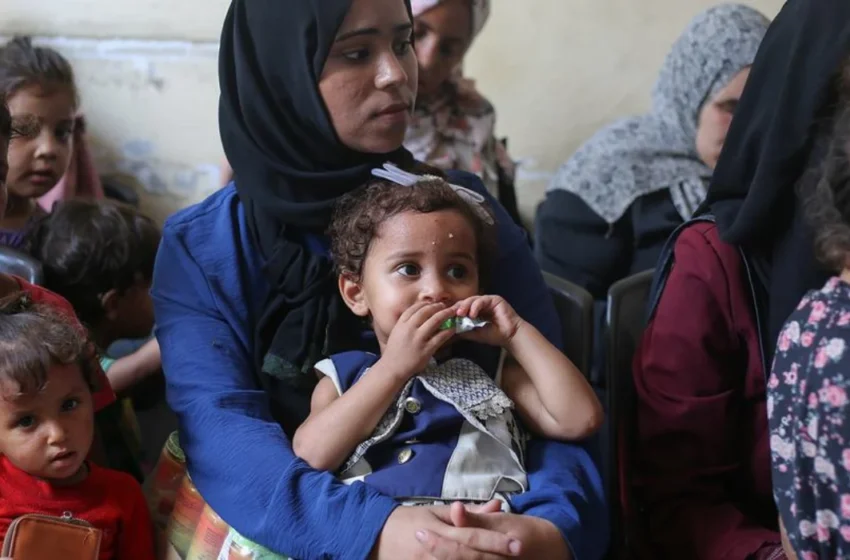
Girls in Gaza: Rising Risks and a Mounting Mental Health Crisis
The situation for girls in Gaza has deteriorated sharply over more than two years of continuous violence, displacement, and loss, creating what UN officials describe as a “profound mental health emergency.” Data collected in 2025 by UN-affiliated agencies indicates that nearly 96 per cent of children in Gaza experience a persistent sense of imminent threat, reflecting the intensity of daily fear and trauma. Adolescents are particularly affected: around 61 per cent exhibit symptoms of post-traumatic stress disorder, 38 per cent experience depression, and 41 per cent report anxiety, according to UN field reports. Sleep disturbances, nightmares, and hypervigilance are widespread, and girls face gender-specific stressors that compound the psychological burden already caused by conflict.
The broader humanitarian collapse amplifies these pressures. Schools have been repeatedly damaged or converted to shelters, families displaced multiple times, and many girls have lost parents, siblings, or entire communities. UNICEF officials warn that the cumulative effect of siege conditions, bombardment, and deprivation risks generational-level trauma, affecting education, employment, and long-term family stability. For girls, social and emotional development is intertwined with caregiving roles and community networks, both of which have been systematically disrupted, leaving them particularly vulnerable to long-term mental-health consequences.
Gender-Specific Risks and the Resurgence of Child Marriage
Girls in Gaza face distinct vulnerabilities rooted in gendered social norms, economic collapse, and displacement. Recent UN-linked assessments highlight a sharp resurgence of child and early forced marriage as families seek coping mechanisms amid poverty, overcrowded shelters, and fears of sexual violence. Child marriage, which had declined from 25.5 per cent in 2009 to roughly 11 per cent in 2022, has reportedly risen again. Human-rights monitoring in 2025 indicates that about 10 per cent of newly registered pregnancies involve adolescent girls, demonstrating the link between insecurity, economic desperation, and regressive gender practices.
Early marriage exacerbates the mental-health crisis for girls. Young brides are thrust into adult responsibilities without adequate support, often in settings where only 15 per cent of health facilities provide emergency obstetric and neonatal care. Limited access to maternal services, combined with social isolation, intensifies psychological stress and compounds trauma. UN experts have emphasized that the resumption of large-scale violence in 2025 has intensified these pressures, as families increasingly see marriage as a survival strategy, despite its potential to expose girls to further violence, exploitation, and long-term mental-health harm.
Psychosocial-Support Under Severe Constraints
International agencies and local NGOs stress that interventions addressing girls’ mental health operate under extreme constraints. UNICEF reports that all 1.1 million children in Gaza require mental health and psychosocial support—a demand that far outstrips available services. Many programs function in makeshift shelters and tents, vulnerable to weather and frequent disruptions, competing with urgent needs for food, water, and medical care. Field staff note that “many families prioritize survival over mental health,” resulting in psychosocial support often being deferred, even as trauma symptoms persist.
Community health workers report that current programs are overwhelmed, with limited trained counselors, restricted funding, and few safe spaces for girls to gather. Former school-based support structures now operate sporadically, leaving girls dependent on mobile clinics or informal networks coordinated by women and youth leaders. Human-rights and reproductive-health specialists argue that mental-health services are fragmented; girls whose needs are addressed piecemeal are less likely to experience durable improvement. UN agencies are advocating for integrated interventions linking psychosocial support with education, nutrition, and protection, emphasizing the importance of sustainable community-based counseling and teacher training.
The Long-Term Implications for Girls’ Futures
The mental health crisis in Gaza is both immediate and structural, posing threats to the development of an entire generation of girls. UN-backed studies in 2025 indicate that ongoing trauma, displacement, and disrupted schooling are likely to impair cognitive development, academic performance, and socio-emotional functioning. Girls often shoulder domestic and caregiving responsibilities, and exposure to violence, loss, and economic precarity can force them prematurely into adult roles without sufficient psychological maturation. This trajectory risks early school dropout, reduced labor-market participation, and heightened vulnerability to domestic violence and reproductive health complications.
Despite these challenges, the resilience and adaptability of Gaza’s girls remain evident. Programs supporting peer networks, art and sports activities, and small-group counseling have shown that even limited interventions can provide psychological relief and restore a sense of agency. Experts emphasize that scaling these efforts is essential: mental-health care must be a core element of emergency response, not an ancillary service. The critical question is whether the international community will address this crisis as a temporary emergency or as a long-term determinant of Gaza’s social and developmental trajectory, shaping families and communities for decades to come.
Coping Mechanisms and Community Strategies
Local and international organizations are deploying adaptive strategies to reach girls despite operational constraints. Mobile outreach teams, home-based counseling, and discreet community gatherings attempt to circumvent movement restrictions and security barriers. Reports from 2025 indicate that such approaches have facilitated access to psychosocial support for thousands of girls who would otherwise remain invisible to formal services. By maintaining these networks, agencies help preserve continuity in care while simultaneously documenting trauma and emerging vulnerabilities, creating an evidence base for both immediate action and long-term advocacy.
The interplay between local resilience and institutional support is crucial. Community-led initiatives, often run by women’s groups or youth volunteers, provide peer mentoring, creative expression, and educational continuity. While modest in scale, these programs demonstrate the potential for psychosocial recovery even amid conflict, reinforcing the importance of sustained international backing, resource allocation, and coordinated planning to reach girls who remain most at risk.
Integrating Mental Health into Broader Humanitarian Response
Experts emphasize that addressing Gaza’s mental health crisis requires integrating psychosocial services into wider humanitarian frameworks. Relief efforts that prioritize food, shelter, and medical care must simultaneously incorporate structured mental-health interventions, recognizing the interdependence of survival and psychological well-being. UN agencies advocate for cross-sectoral coordination, linking education, health, protection, and psychosocial programming to ensure that girls’ mental-health needs are met in a comprehensive and continuous manner. Failure to integrate these services risks compounding trauma and undermining broader development and peacebuilding objectives.
The rising mental health crisis among Gaza’s girls is a stark indicator of the broader consequences of protracted conflict. As families navigate poverty, displacement, and insecurity, girls bear disproportionate psychological burdens that may define their life trajectories. Sustained investment in psychosocial support, safe spaces, and community-led interventions is essential not only to mitigate immediate suffering but to preserve the potential of a generation whose experiences will shape Gaza’s future social and economic landscape. How the international community responds in 2025 and beyond will determine whether these girls’ resilience translates into recovery and opportunity or becomes another casualty of prolonged conflict.

