

Graduation Risks: Why Doha Strategies Must Tackle Debt and Climate Shocks?
The Doha Programme of Action sets an ambitious expectation that at least fifteen additional Least Developed Countries can graduate by 2031. Graduation indicates progress across income, human assets and structural resilience. It does not, however, mean that a country has eliminated exposure to climate shocks, external volatility or the financial stresses that weaken development systems over time.
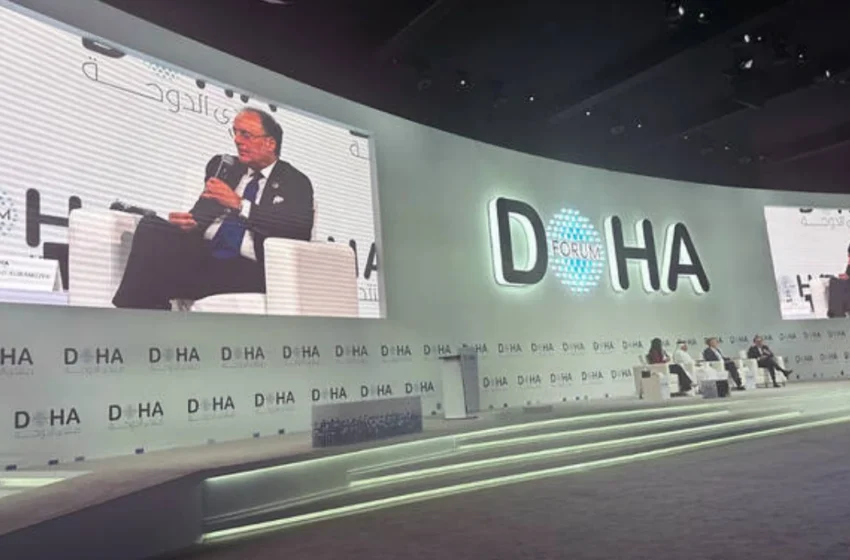
The 2025 high-level meeting in Doha brought these structural tensions into sharper view. Officials from prospective graduates such as Bangladesh, Nepal and the Lao People’s Democratic Republic examined how to manage the shift away from LDC-specific support without triggering a reversal in poverty reduction. Their discussions underscored a consistent theme: graduation risks intensify when strategies fail to confront debt pressures and climate vulnerability as primary determinants of resilience.
The Promise Of Graduation And The Reality Of Vulnerability
Durable economic progress is put in terms of the promise of graduation. However, it remains the case that many LDCs are undergoing repeated shocks that reverse years of gains of development. This disposition between the signs whereby graduation is measured and the ongoing realities of vulnerability constituted a fundamental element in the Doha discussions.
Rising Stakes Ahead Of The 2027 Midterm Review
The next midterm assessment in 2027 has put a strain on the need to prove tangible improvement. The countries which are towards attaining the eligibility are likely to exhibit structural transformation coupled with the ability to maintain gains following the transition. This puts further questions on their capability to handle their financial and climate-related risks which may derail long term resilience.
Debt Vulnerabilities As A Structural Graduation Risk
Graduation risks are currently centred on debt distress among a number of LDCs. Within the past ten years, a number of potential graduates borrowed more externally to grow infrastructure, empower social sectors and counter climate shocks. A lot of this borrowing was at terms that were not as concessional as those in which LDCs had traditionally been borrowing. These changes were more pronounced as the world interest rates increased in 2023-2025.
The increasing debt interest commitments decrease fiscal space at the very time that governments are supposed to fund more development processes themselves. This contradiction has influenced several discussions within Doha, with authorities cautioning that the time of graduation can also be marked by the most extreme financial constriction. This makes it more difficult to continue investing in health, education and infrastructure, which has the potential to cause an imbalance in the state budget, the premature graduation of students without special support systems.
The Fiscal Impact Of Losing Concessional Access
The exit of LDC mode transforms access to low interest loan and grant based assistance gradually. As much as these adjustments are made on a phased basis, they still demand nations to realign borrowing policies within a tight time constraint. Most of the potential graduates do not have strong domestic capital markets and thus have greater external borrowing costs.
Capacity Limits In Managing Complex Debt Portfolios
The debt management institutions in some of the LDCs are undersized or understaffed. Poor supervision of state-owned companies and a lack of full accounting of contingent liabilities creates blind spots that increase their vulnerability to financial shock. Such gaps reiterate the importance of paying more attention to fiscal governance as a precondition towards sustainable graduation as the Doha discussions prove.
Climate Shocks And The Resilience Deficit
Climate shocks also make the path to graduation even more challenging. Lots of LDCs exist in areas where flooding, droughts, cyclones and sea-level rise occurs with greater frequency. One event can ruin infrastructures, disrupt agricultural production and overstretch the capacity of populace budgets.
The participants of Doha repeatedly mentioned the fact that climate vulnerability is not the external factor but the essential element of graduation risks. The nations are not able to continue their development as every calamity shifts the level of their development. As the number of recovery requirements increases every year, new borrowing becomes a common practice among governments, which contributes to a vicious circle in which the effects of the climate directly contribute to the formation of debts.
The Financial Burden Of Repeated Disasters
The reconstruction process requires a lot of capital. Transport systems, power grids and irrigation systems often have to be totally re-established after significant climate events. Absence of an expected foreign capital implies that governments would have to redirect funds that would otherwise go to long-term development strategies to short-term recovery, undermining structural change.
Persistent Gaps In Climate Adaptation Capacity
A number of LDCs have established national plans on adaptation, but it is taking time since some lack funds and administrative abilities. This disparity makes countries susceptible even in the instances where risks associated with climate are clearly known. Doha delegates emphasized that strategies of graduation that do not include adaptation interventions create the danger of overestimating resilience.
Uneven Access To Climate Finance And Its Implications
The availability of climate finance is one of the most discussed aspects of graduating LDCs. Even though LDCs and recent graduates would technically be eligible to receive major climate funds, practical barriers restrict their capacity to back funds. The preparation requirements of the projects, delays in the approval process and intermittent payment schedules hinder progress.
Countries of graduation also fear that the increase in income classification can make them feel less deserving of the concessional climate finance. After graduation, however, exposure to climate does not alter them. This disparity adds to a feeling of injustice to those countries which have historically contributed least to global emissions but have to finance high costs of adaptation with diminishing concessional resources.
Smooth Transition Strategies As A Critical Tool
STSs have become one of the key tools in the management of risks of graduation. These are national frameworks that are designed to align the economic, environmental and social priorities in the transition and in the post-transition. Their success will depend on the extent to which they deal with the vulnerability to debt and climate resilience as core issues instead of them being a fringe issue.
We have to have a solid Smooth Transition Strategy that charts out the anticipated changes in concessional financing and examines the possible gaps and explains the steps/actions to take to improve debt governance. It ought to introduce a climate shock stress test, it ought to establish the fiscal risk and suggest how it can sustain investment in sectors that are important to it even when facing a budget constraint. In the event these elements are missing, transition strategies may only be aspirational and not operational.
Integrating Debt Sustainability Into Long-Term Planning
Debt sustainability appraisal should be included in the development planning at all levels. Those countries that are headed towards graduation have the advantage of scenario analysis that considers spending shocks associated with climate and external market volatility and the changing structure of foreign debt. By incorporating these tests in the fiscal policy, the chances of distress following graduation can be minimized.
Building Climate Resilience As A Foundation For Stability
Resilience to climatic changes should be incorporated in all sectors, so as not to experience recurrent setbacks. This encompasses climate-based infrastructure norms, robust agricultural structures and social protection projects that can exceptionally develop during the aftermath of calamities. Doha talks strengthened the principle that resilience investments are key elements of a sustainable graduation pathway.
The Role Of Global Partnerships And Facilities Like iGRAD
iGRAD Facility has become a major tool of assisting the countries out of LDC. The latest donations of Qatar in 2025 was an indicator of a new effort to make technical support and advisory services available. The facility can be significant in the context of bringing the national strategies to meet with international finances sources as well as in allowing dialogue with creditors.
For iGRAD and related partnerships to address graduation risks effectively, they require clear mandates on debt sustainability and climate resilience. Predictability of support is crucial. Development partners must avoid short project cycles that do not align with long-term structural challenges. Maintaining concessional windows for climate-vulnerable graduates and assisting with debt restructuring where appropriate will determine whether the Doha commitments materialize into tangible protections.
As preparations intensify for the 2027 midterm review of the Doha Programme of Action, early experiences from recent graduates will offer important insights. Whether graduation becomes a stable milestone or a point of renewed fragility will depend on how comprehensively debt and climate risks are integrated into both national strategies and international support frameworks. The choices made during this cycle will shape the credibility of the graduation process and determine how effectively global cooperation can safeguard progress for countries on the cusp of transition.

