

52% Unreachable: Returnee Women Suffer as UN Female Staff Barred
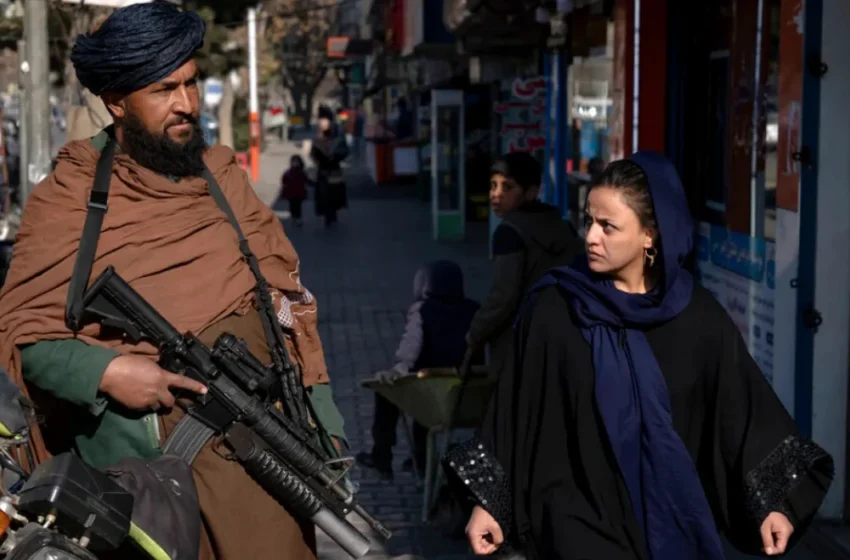
Afghanistan’s humanitarian landscape entered a new phase of disruption after Taliban authorities barred Afghan women national staff and contractors from entering United Nations compounds beginning September 7, 2025. The restriction, first imposed in Kabul and quickly extended across Herat, Mazar-i-Sharif, and regional offices, was enforced through armed guards stationed at facility gates. UN teams described it as a categorical reversal of earlier arrangements that permitted female staff to deliver women-focused assistance under gender-segregated rules.
The prohibition remained in effect three months later, prompting renewed calls on December 7, 2025, from UN Women to reverse the decision due to its severe humanitarian cost. UNAMA argued the directive violates fundamental non-discrimination principles of the UN Charter and Afghanistan’s obligations under CEDAW. This escalation compounds a series of gender-targeted edicts since 2021 that have eliminated women’s access to secondary education, restricted employment across aid organizations, and limited mobility without male guardianship.
Intensifying enforcement mechanisms
Reports from field offices in late November 2025 indicated that Taliban security personnel turned away women even for essential administrative duties, preventing case management and biometric registration for aid recipients. Some staff recounted instances of questioning, harassment, and detentions around compound entrances, demonstrating the widening coercive environment surrounding women’s work.
Links to ideological governance patterns
The September 2025 ban aligns with a pattern of governance decisions that fuse ideological doctrines with regulatory pressure. Officials in Kabul framed the step as “administrative restructuring,” yet internal directives circulated by provincial security departments presented it as a “mandatory compliance requirement.” The divergence mirrors earlier edicts where public messaging softened measures that later proved expansive and restrictive in implementation.
Humanitarian impact deepens as returnees lose lifeline access
The material impacts of excluding the female employees run over a displacement topography that is already stressed through the mass returns and natural calamities. According to aid agencies, the lack of direct contact with women destroys the very basis of the Afghan humanitarian architecture, which relies on the gender-separated outreach to isolate vulnerable households.
Mass returns overwhelm processing systems
Between January and December 2025 at least 2.4 million Afghans went back or were deported, 1.66 million of them Iranian and 360,000 Pakistani. This influx caused massive strain on the humanitarian response framework, especially the cash-assistance centers where identity verification and support packages are done to the returnees.
UNHCR closed down eight of such centers after the ban barred female employees from doing interviews and biometric data collection on women. This suspension immediately made 52% of the women who had returned impossible to enroll. The magnitude of the operational gap can be illustrated by the fact that the centers were managing almost 7,000 people each day before the closures.
Earthquake-affected populations face parallel isolation
The pressure is increased by the fact that a major earthquake in eastern Afghanistan in September 2025, that claimed the lives of over 2,200 and displaced tens of thousands, has already happened. There are cultural restrictions to interaction between the male humanitarian employees and the women survivors and especially in the conservative rural set up. The shortage of medical, psychosocial and field staff of female nature thus reduces the dispensation of shelter, hygiene kits and trauma support.
In October and November 2025, WHO once again stated that the mobility restrictions on female personnel, particularly those involving male guardian conditions, are necessary to sustain earthquake-zone health services. Although male employees reimburse where feasible, institutional loopholes on maternal care, gender-sensitive health services, and anonymous reporting of abuse still exist.
Gender policy trajectory clarifies Taliban governance intent
The September 2025 ban represents the rigid extension of a multi-year pattern that progressively removed women from public, economic, and humanitarian roles. Analysts charting decree evolution note that measures once framed as temporary, localized, or sector-specific have often become national and permanent.
Sequential prohibitions since 2021
The path began with verbal orders in March 2022 preventing women from office-based employment in government institutions, followed by December 2022 prohibitions on women working for NGOs. The April 2023 directive barred Afghan women from working for UN agencies, though exceptions were inconsistently applied across provinces. The September 2025 compound-access ban represents the first instance of fully denying women entry into UN premises, preventing even administrative or remote support roles.
The UN employed roughly 400 Afghan women when the restrictions solidified in mid-2025. Many now face mobility constraints intensified by local-level enforcement, including home-visit inspections and community-level pressure discouraging them from attempting to reach work sites.
International law implications remain unresolved
The restrictions place Afghanistan at odds with its commitments under core international treaties. UN Secretary-General António Guterres emphasized throughout 2025 that the bans breach foundational non-discrimination obligations. Security Council Resolution 2681 (2023), condemning barriers to women’s participation in humanitarian and public life, provides political backing yet lacks enforcement mechanisms capable of compelling Taliban compliance.
Human Rights Watch’s 2025 documentation highlighted a tightening legal framework that structurally excludes women from social and economic participation, pushing millions into dependence on aid systems that now cannot reach them.
UN adaptation strategies confront operational and ethical dilemmas
UNAMA and specialized agencies continue diplomatic engagement with national and provincial Taliban officials, seeking both immediate exemptions and long-term reversals. These negotiations frequently produce partial assurances that fail to materialize into operational access, leaving agencies to craft interim solutions while navigating ethical boundaries.
Institutional adjustments to maintain minimal service delivery
Where possible, agencies have adopted remote interviewing systems, gender-segregated community spaces, and mobile male-guardian-approved outreach teams. However, each workaround compromises the confidentiality, effectiveness, and reach of assistance. UN Women’s country representative, Susan Ferguson, stated on December 7, 2025, that “the ban must end for aid to reach women and girls most in need,” underscoring the structural limits of stopgap measures.
Earlier directives in May 2025 had instructed all UN staff to work from home; although later lifted for male staff, the order was never reversed for women, revealing the gendered nature of operational controls.
Funding pressures intensify operational constraints
Low funding across UN agencies adds another layer of risk, with several programs meeting less than half of their 2025 financial requirements. Limited resources restrict the feasibility of building alternative systems or expanding remote operations. UNICEF’s 2025 targets include treating 19 million children for malnutrition, a figure that becomes harder to reach as gender restrictions disrupt household-level access.
Afghanistan’s humanitarian trajectory hinges on political shifts
The three-month continuation of the compound-access ban signals the potential for further entrenchment of exclusionary policies affecting women and girls. For aid-dependent populations, the removal of female staff dramatically reshapes survival outcomes during displacement, disaster recovery, and economic hardship.
International actors now navigate a landscape defined by shrinking operational space, rising need, and unresolved questions about the limits of engagement under gender apartheid conditions. The major discussions prior to 2026 revolve around the ability to leverage change in the form of funding conditionality, diplomatic pressure, or even specific exemptions in order to implement changes in the Taliban structures of governance.
The ways in which sustained UN pressure cuts across local politics schisms, and how the mass emergencies like earthquakes compel pragmatic compromise, are critical questions of concern in determining the future of access to 52% of unreachable returnee women in the most vulnerable areas of Afghanistan.

