

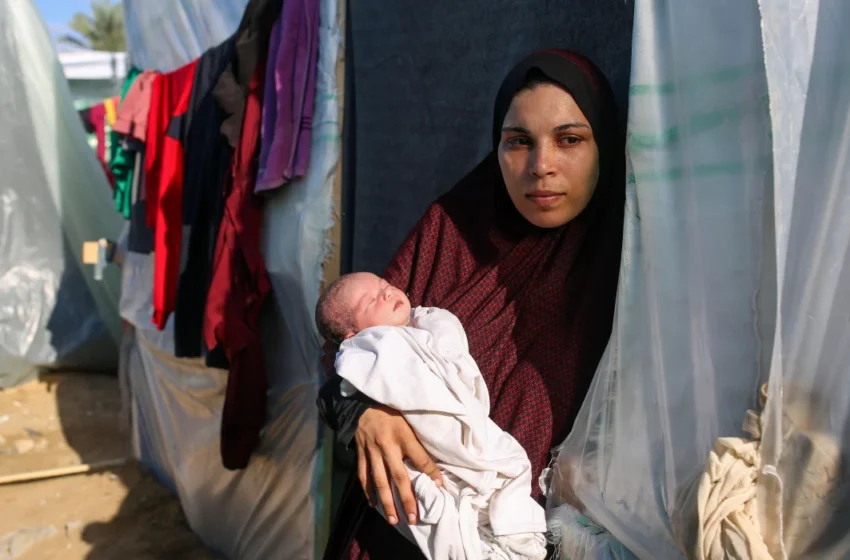
Gaza’s Women as Last Defenders: Gendered Impacts of Famine and Winter Siege
Women reside in Gaza with the greatest responsibilities of the growing humanitarian crisis that is becoming the last line in defense of the population threatened by hunger, winter, and repeated invasions. Women and girls make almost half of the 2.1 million residents of Gaza, and the overwhelming majority of them are forced into shelters crowded together with scarce heating or sanitation facilities and structural integrity. They take charge of food rationing, wellbeing of children and care of the elderly in circumstances that are referred to as one of the worst in the world by humanitarian organizations.
Oxfam estimated that close to seventy thousand Palestinians have been killed and over one hundred and seventy thousand injured since October 2023, with the majority of the casualties being women and children. The Integrated Food Security Phase Classification established a complete famine in Gaza, the first official famine ever declared in the Middle East that left over five hundred thousand in crippling hunger. The UN Women approximates that there are approximately a quarter million women and girls in IPC Phase 5 as another half million experience emergency level food insecurity.
Their weakness is increased in winter. A total of 90 percent of the population in Gaza is displaced forcefully, left to cold winds and even rain and without blankets, fuel, or structural cover. Women end up starving themselves to save children, yet being unable to travel the dangerous route to get food, water, and healthcare services due to the poor condition of the infrastructure.
Gendered Impacts of Famine
The starvation reinforces the historical gender inequalities. The Gaza Nutrition Cluster has found fifty-five thousand pregnant and breastfeeding women who need urgent care in case of severe acute malnutrition. There are an estimated one hundred and thirty two thousand children, who are in the same danger. At least 22 women and one hundred and twenty-four children succumbed to malnutrition in the January, 2023 to August, 2025 period with expectation of higher death rates as the cold weather limits movement of aid.
These risks are amplified by the healthcare meltdown. Over half of the hospitals in Gaza have been destroyed or damaged and medical supply chains have been blocked. Women are often compelled to deliver in tents that are not sterile and do not have trained staff. The deficiencies of nutrients lead to hemorrhaging, infections, and complications in the long term. Teenage girls and older women are at large risk of injuries as they come close to food convoys or go through unstable ruins.
Displacement and shelter conditions
Mass displacement places women in tents, school buildings or half-ruined buildings where there is little privacy and security. Congestion raises physical and psychological malady. Clean water and sanitary latrines are also inaccessible, which adds to infections, loss of dignity, and increased violence. The lack of aid and logistical delays contributes to the increasing tension in shelters, and in most cases, it falls on women to play the mediator and caregiver role in the face of extensive fatigue and trauma.
Escalating Gender-Based Violence
Gender-based violence escalates sharply under siege. Reports from July to August 2025 indicate denial of resources as the most frequent harm at 35.5 percent, followed by psychological abuse at 29.8 percent and physical assault at 25.8 percent. Within this period, there were more than one hundred suicide attempts or deaths, primarily among women aged eighteen to fifty-nine. The collapse of protective institutions and prolonged displacement has normalized violence in some households, while scarcity places women at direct risk from opportunistic actors around aid points.
Service provision failures
The frontline responders have been displaced or even killed as a result of which case management systems of GBV have almost gone under. According to UNFPA, there are extreme inequalities in female-headed households, adolescent girls, older women and women with disabilities. Although economic and psychological violence take the center stage in the news, physical and sexual attacks are underreported because of stigma, fear, and lack of support channels. The shelters do not have safe spaces for the survivors, and this increases their feeling of defenselessness.
Winter Siege Exacerbations
Hardship is turned into a life threatening siege in winter and women are further challenged as core members of survival of the family. The Health Ministry of Gaza reported thirty-four women and over four hundred and fifty children who died trying to get food around aid distribution centres between May and August 2025. These dangers continue to be experienced as temperatures decrease and access routes to aid convoys get more risky.
Blanket deficiency, fuel crunch, and demolished housing compel women as to the limited heating resources, frequently at the expense of cooking and coziness. Winter storms inundate tented locations and soak critical resources compelling families to move on several occasions. In spite of the fact that a ceasefire since October 2025 has seen the delivery of over one hundred thousand pallets of aid, distribution has been uneven, especially in the north which has fallen to ruin, due to infrastructure destruction.
Stakeholder Perspectives on Vulnerabilities
UN Special Rapporteur Reem Alsalem criticized the crisis as a premeditated killing of the Palestinian women and the gendered nature of the damage entrenched under the present circumstances. UN Women observed that regular bombardment and displacement has destroyed over one million lives of women and girls and that the solution is a gendered humanitarian approach after political conduciveness to recover.
Oxfam highlights the over-representation of women in displacement environments in terms of trauma, humiliation and GBV. According to the report of the local partners like the Women’s Affairs Center, inequalities are increasingly becoming entrenched and that women report the overwhelming fear, hunger and violence that has continued to escalate since October 2023. According to the Gender in Humanitarian Action Working Group, famine is a new reality that is being experienced by millions of people every day, and the authors position women as the foundations that keep families united during the times of starvation and insecurity.
Societal Strains and Defensive Roles
Women in Gaza are treated as the frontiers of family survival and community sustainability, having to juggle both roles of care giving and defense in ever more hostile environments. Their everyday activity goes far beyond the conventional duties, which may include negotiations on limited resources, mediation in the overpopulated shelters, and dangerous journeys to the help distribution centres.
Although there are families that have established informal support groups to swap supplies, the pressure has made social organizations almost collapse. The exhaustion of resources, insecurity and absence of enshrinement in law are also threatening communal cohesion. The high level of resilience of women is contrasted with the failure of institutions around them, and the need to find long-lasting solutions to humanitarian needs becomes urgent.
The convergence of famine, winter temperatures, displacement, and systemic violence underscores a crisis whose gendered dimensions define its human cost. As global attention shifts toward broader geopolitical negotiations, the plight of Gaza’s women reveals deeper questions about the adequacy of international responses. Their endurance amid siege conditions may influence how future interventions are structured, especially as observers evaluate whether upcoming diplomatic or humanitarian shifts can ease the burdens carried by those who have become the last defenders of family survival.

