

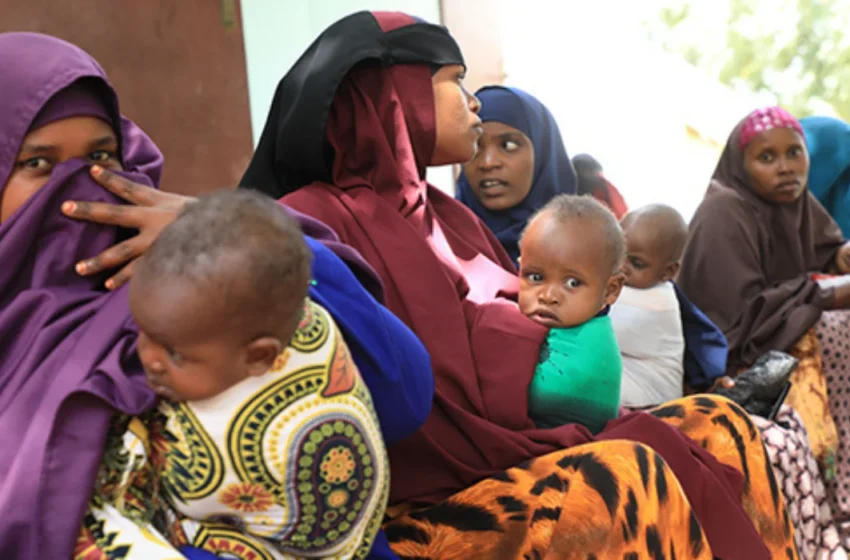
Gender Inequality’s Hidden Toll: 610 Million Children at Risk in Violent Homes
According to the data brief issued by UNICEF in November 2025, the crisis is so deeply rooted, with over 610 million children living in households where their mothers were victims of intimate partner violence in the last one year. It is one-fourth of all children in the world and highlights the fact that violence against women directly overlines the vulnerability of children. The results based on the revised global estimates of WHO and broader regional analyses are indicative of structural gender inequalities that define households.
The extent of the exposure raises systemic issues about failure to check intimate partner violence after decades of international promises. By 2025, when governments will be operating in the slow post-pandemic recovery and increasingly geopolitical turmoil, the statistics are indicating minimal development under schemes like the Sustainable Development Goals. Economic stress, displacement, and social protection systems that are weakened increase risks and makes the gender inequality hidden toll to be a critical issue in global governance.
Regional disparities and patterns of exposure
Oceania has the highest proportional exposure, where more than half of the total number of children, which are about 3 million children, live in families characterized by recent violence against their mothers. Sub-Saharan Africa comes after with a 32 percent exposure rate that has an impact on 187 million children. The continuous socioeconomic pressure, violent displacement, and the inability to break the social norms all collide to adapt violent aspects of relationships within families, restricting access to supportive services and legal resources.
Asia’s overwhelming numerical burden
Even prevalence is 29 percent with the highest absolute numbers in Central and Southern Asia of 201 million children. Eastern and South-Eastern Asia claim 21 percent, which is equal to 105 million children. The African North and Western Asia has 26 percent and 52 million children. The exposure tendency in Asia puts pressure on systemic national protection mechanisms because the rapid urbanization of Asian countries is concealing the rural cases of underreporting and creating service delivery disparities.
Hidden crises in high-income regions
Regions with high income have lower statistical prevalence but have their issues of underreporting and lack of visibility. Disclosures are often suppressed by societal stigma and process-based obstacles, thereby establishing differences between reported cases and actual experiences. According to researchers of UNICEF in 2025, these gaps are the ones that make the needs of interventions unseen and therefore, difficult to allocate resources and cross-regional comparisons.
Developmental consequences of sustained exposure
Children that experience violence against mothers bear psychological burdens that are frequently carried across to their adulthood. Long-term exposure also leads to the erosion of trust, the destabilization of the development of emotional experiences, and risks of repeating violent behaviors, even when the exposure is not directly harmful. UNICEF observes that cycles of violence are established at an early age and emotional conditioning has a pattern that lasts through the decades. The gender inequality hidden toll is more significant to society because it is intergenerational.
Health and educational decline
Evidence indicates that, by 2025, there will be increased rates of anxiety, depression, developmental delay and disrupted schooling of affected children. The expansion of learning disparities are associated with a dynamic family condition, which is a counter to achieving success in education goals in the country. Monitoring tools have now been adopted in various regions electronically and it is possible to track these results more accurately, but the funding of early intervention is still inadequate relative to the magnitude of the damage.
Economic and social repercussions
With countries struggling to recover their economies slowly, the aggregate cost of not achieving proper child development is low human capital. There is increased pressure on the health systems of the countries and poor education levels contribute to the future labor markets. The undisclosed economical aspect of household violence based on gender is also becoming a well-known component in the 2025 policy analytical approach, despite the discrepancies between awareness and ongoing financing.
Structural drivers behind widening inequalities
The continuity of such exposures is entrenched with discriminatory norms that undermine autonomy to women. In response to the violence in the household where millions of women and children live today, Catherine Russell, the UNICEF Executive Director explained that it has become a norm in the lives of the people. The well being of children is dependent on the safety and freedom of women. Patriarchal systems and social-cultural norms in most areas put domestic violence in the context of a personal issue, discouraging reporting and restricting institutional responsibility.
Weak legal protections and enforcement
Although legislation has been made in many countries, there has been poor implementation. Other areas do not have extensive domestic violence laws, and others either have barriers to enforcement because of stigma or insufficient resources. Also bringing down visibility is the underreporting and fragmented systems of data, which leave an absence of light between what is legally required and what is being actually provided. The outcome is a governance terrain incapable of completely challenging the gender inequality toll conceit that children go through.
Economic vulnerability and conflict
Risks are made worse by economic distress, conflict and displacement which raises the household stress and decreases access to support networks. Law institutions in weak states are not stable enough to implement the protection measures and the humanitarian context usually requires short-term measures to survive rather than long-term protective measures. These strains increase the exposure levels strengthening the 2025 data gaps among the world.
Integrating responses for women and children
UNICEF has encouraged comprehensive approaches that should be undertaken both to ensure the safety of women and protect children. Funding into women-led community organizations, survivor-based, and mental health care efforts will be used to cross over the silos of traditional programs. After 2025 globally committed ministerial commitments, parenting support programs and school-based prevention efforts are increasing in a number of regions.
Obstacles in implementation
The renewed momentum has been hampered by lack of funds to scale proven methods, especially because of limited capacity by nations. Areas like Oceania and sections of Africa in which its prevalence is the highest are allocated disproportionately low resources to need. Due to political sensitivities with regards to family norms, legislation is often slowed down and campaigns towards public awareness hampered. Also, there is a lag in data harmonization, making it difficult to cross-agency coordinate and monitor.
Technological innovations and ethical challenges
New technologies like AI-enhanced risk mapping have been tried out in certain situations in 2025. These technologies can be used to locate communities that have increased exposure to children to make interventions more effective. However, the issue of privacy, data protection, and algorithmic bias need a high level of control to prevent the repetition of the toxic trends in the digital world. The strike between the innovations and the ethical protection is becoming a more and more significant aspect of the current child protection strategy.
Global governance implications
The recent WHO and UNICEF figures boil down to one sobering fact, which is that gender violence does not impact on women alone but instead is a factor that disturbs the very stability of childhood among hundreds of millions of people. As there are predictions of more than 840 million women who are going to endure intimate partner violence in their lifetimes, the global development patterns will be significantly impacted. The absence of strong accountability systems, effective enforcement and entrenched socioeconomic dividers do not allow structural change to take place.
The gender inequality hidden cost recorded in 2025 indicates that domestic violence is the reflection of the wider imbalance of power, prospects, and institutional accessibility. With the international community increasing demands to invest more in prevention, the question is whether interventions can match the increasing instability through climate-induced displacement, economic instability, and disjointed governance. A closer look at the following generation of data and policy change can yield a better understanding of what types of protective systems develop actual resilience and whether global obligations can change the future generation result substantially.

