

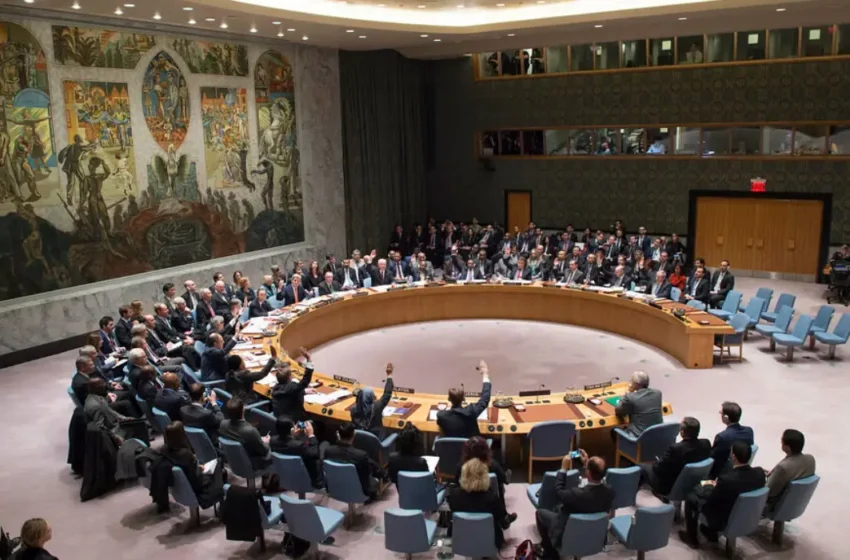
Veto Power and Global Peace: The Case for Security Council Reform
A veto power of the five permanent members of the UN Security Council is a driving force that will define world peace and conflict resolution in 2025. The United States, Russia, China, the United Kingdom and France, still enjoy unmatched influence over global decision making, a heritage of the post World War II geopolitical construct. This privilege is protected by Art. 27 of the UN Charter, which states that all the five powers must agree on substantive actions on global peace and security.
The veto is deep-rooted, despite its popular appeal by the people in the name of modernization. It is strengthened by historical trends: Russia and the Soviet Union have made 129 uses, the United States 89, 51 instances of the latter involving defense of Israel, and then the United Kingdom with 29, China with 19, and France with 16. In late 2024, the United States voted on Gaza ceasefire efforts, and this vote, which upheld the potency of this power as a veto to consensus and humanitarian intervention in current crises, was the latest veto.
Critics claim that the veto tends to make conflict more, rather than stop, pointing out that unilateral blockage makes quick intervention impossible and increases the level of suffering. Continuous crises like Ukraine, Syria and Gaza, point to the fact that the Council has been stalemated on the hottest issues concerning the lives of the civilians.
Historical Intent And Modern Discontent
The veto system became a concession of the winning powers during the World War II so that the major powers would not face each other directly. Giving the permanent members ultimate power, the UN aimed at ensuring the involvement of the strongest players in the world to ensure peace. The veto represented world peace, and no significant military action was to go ahead without great-power approval.
Changing Geopolitics And Rising Disillusionment
By 2025, the power structure of the world is no longer mirrored in the circumstances in which the veto was created. Third world economies, regional integration and the growing security associations claim that the system is old and structurally unequal. Lots of member states argue that the use of the veto weakens multilateral legitimacy and unfairly represents a mid-20 th -century self-interest rather than reflecting on the present geopolitical reality.
Humanitarian Stagnation And Accountability
Humanitarian activists over and over again stress the fact that veto stalemates have prevented action against genocide, war crimes, and mass displacement. The Syrian civil war, the humanitarian disaster in Yemen, and failed interventions in Sudan and Myanmar are some of the cases in point. This has brought about an increasing feeling that the strategic interests supersede human lives and therefore the moral authority of the Security Council is being undermined.
One of the senior UN diplomats has just noted that without reform, the Council would become a political museum symbolic, historic but not so relevant to the contemporary dynamics of conflict.
Reform Momentum And Competing Visions
A popular model that is on the rise in 2025 is voluntary suspension of the veto power in the case of mass atrocities. This proposal is backed by the Franco-Mexican initiative and the ACT Code of Conduct, in which they claim a responsibility not to veto. Though not mandatory, its supporters claim that it can be forced by political pressure, at least among those states that are eager to maintain the reputation of diplomats.
Collective Veto Requirement
There is another suggestion which would make it mandatory that two permanent members should use veto in order that the veto should take effect. Single-state obstruction would be minimized by this mechanism and negotiation encouraged, but critics suggest that it will weaken strategic deterrence and make such crises more complex involving nuclear-armed states.
Expanding Representation To Reflect Modern Power Balance
There are a lot of members of the UN who want to increase the number of members of the Security Council to incorporate the rising countries and geographically significant countries that are especially in Africa, Latin America, and Asia. Some of the proposals include the introduction of permanent seats, but without veto; alternatively, they propose long-term rotation of seats. Supported by the African Union with the help of the so-called Ezulwini Consensus, the African states emphasize the historic exclusion and insist on equitable representation.
There is also an ongoing argument on whether the extra permanent members should veto and this issue is a cause of division among the proponents of reform.
Geopolitical Obstacles And Diplomatic Realities
Reform has a structural problem in that the current permanent members have to vote on the reform and they do not want to water down their own influence. Competitions between the United States, China, and Russia render the topic even more problematic because all of them fear losing the strategic advantage or even strengthening the opposing forces in countries like India or Brazil.
UN Secretary-General António Guterres has already made several warnings regarding the posed danger to the legitimacy and stability of the Council due to the resistance of the privileged few, which may lead to the issue of survival under the contemporary crises.
Role Of Non-Permanent Members
The non-permanent members influence debates and provide regional views but tend to be limited in their position when its permanent members hold different views. Even though they provide forces and resources in the operations of peacekeeping, they have no consequence power over the decisions that condition peacekeeping mandates and sanctions regimes. Increasing frustrations drive them towards expanded democratization of the Council power.
Link Between Veto Patterns And Global Conflict Landscape
The growing scholarly and policy concern with the paralysis of the Security Council as a source of alternative conflict-management institutions, such as ad-hoc alliances, regional military operations, and unilateral interventions, is growing. The weaknesses of these approaches are that they may avoid going through the UN system, which is problematic to the principles of collective security and uniformity in international law.
Broader Implications For World Stability
The effects of veto induced stagnation go beyond paralyzed resolutions. They affect international confidence in international orders, humanitarian principles, imposition of sanctions and credible peace keeping. Cyber warfare and hybrid threats intensify as climate-related conflicts continue to increase, rendering the fundamental purpose of the UN less significant due to the inability to act in unison.
Many analysts are increasingly stating that the Council is running the risk of becoming a crisis management institution incapable of stopping crises and supporting international law unless reformed. Others warn that a change in the system of veto may upset the fragile balance avoiding direct great-power confrontation.
The United Nations is stuck between change and tradition, and it is one of the most significant strategic dilemmas of the organization in decades.
The next several years are likely to either see the development of global governance becoming more inclusive and answerable or continue working based on the models of the middle of the 20th century. With the heightening of geopolitical tensions and the increasing number of humanitarian crises, the international system faces a crossroad. The reform momentum that leads to structural change or strengthens the power of the elites is still a query that is used to frame the diplomatic discourse and international security dialogues well beyond the walls of the UN structures.

