

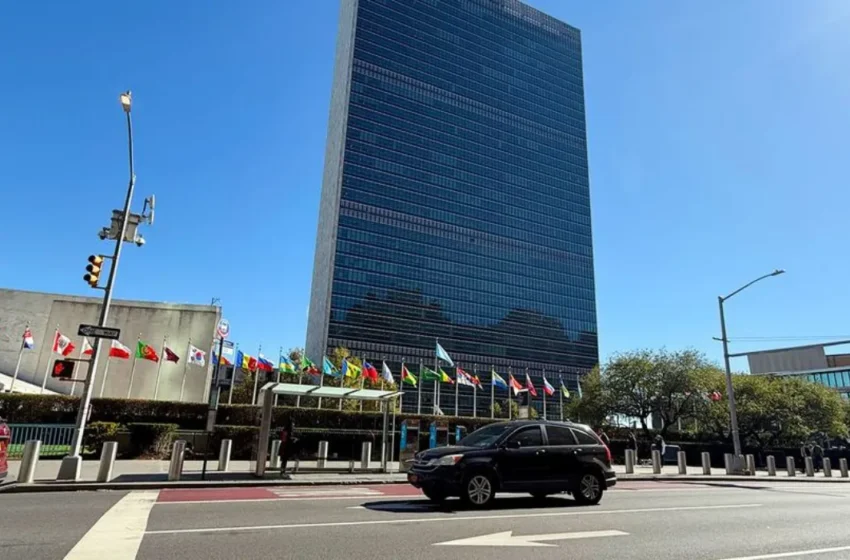
UN’s Race to Bankruptcy: What Member States’ Delinquent Payments Mean for Governance?
The United Nations is going through the worst fiscal crisis in its history. Towards the beginning of the 2025, Secretary-General Antonio Guterres referred to the reality as a race to bankruptcy, a structural breakdown in the compliance of member states as well as institutional funding. The annual budget of 2026 of the organization has been reduced to 3.238 billion which is a 15.1 percent decrease of the annual budget of 2025. The tightening of its beltline highlights the increased difficulty the UN faces to stay afloat in the wake of intensified financial turmoil.
This crisis is based on unpaid contributions. The arrears in the UN by December 2024 was about almost 760 million, which increased to more than 2.4 billion assessments outstanding by April 2025. These deficiencies have put a strain on liquidity and slowed down important disbursements to agencies in peacekeeping, humanitarian and development schemes. Added to the crisis is repayments in member states between $89 million and 300 million that further depletes the already small cash reserves of the UN.
The contribution adoption rate has fallen drastically. As it relates to the collection of 2025 assessments, the number was only 66.2% in September, compared to 78.1% last year. The financial analysts in the organization warn that, with the current downward trend, the UN might get to a loss of over $450 million by early 2026. This asymmetry in the organization of commitments and revenue makes existential the questions of the sustainability of the UN as a multilateral institution.
Structural Impacts And Staffing Challenges
The economic downturn has been compelling the UN to implement massive internal reductions. The final staffing will be 13,809 staff positions which will reduce to about 11,594 positions which is a 19% cut. Such reductions largely focus on administrative and logistical support operations, but not field-level programs, but the impacts are felt across all levels of operation.
Strain On Administrative Efficiency
With a reduction in the administrative personnel, other core services that provide the smooth running of missions and agencies are overstretched. The Secretariat that coordinates all activities of the global operations have serious capacity gaps. The unions and the staff councils caution that the contraction will cause an imbalance in the managerial side since the decision making will be left with the senior ranks as the staff in the lower levels are subjected to the burden of overworking.
Implications For Field Operations
Although there has been an attempt to protect the humanitarian and peacekeeping missions, shortfalls in finances have a direct impact on field deployment. Peacekeeping operations in Mali and Sudan had already experienced scale-backs in resources in 2025, and development projects in small island and least developed states had already been reported to have slowed the disbursement of projects. The drawback weakens the credibility of the UN in the long-term to be able to provide stability and assistance where it is most required.
These strains of operation demonstrate the paradox of the central problem of the crisis: the efforts aimed at making the operations more efficient will fail as long as the problem of the root cause, non-payment of members, is not addressed.
Member State Payment Behavior And Political Dynamics
Political realities can not be separated from the fiscal pressure on the UN. Major donors such as the United States, China and Russia have not paid in full their contribution towards the 2025. The United States, which traditionally contributes 22 percent of the regular budget of the UN, has cut assessed and voluntary contributions due to domestic budgetary demands and accountability issues. The slow payment by China is more indicative of the re-evaluation of its international engagement policy, whereas the non-payment of Russia is part of a trend of strains with Western-dominated institutions amidst continued geopolitical wrangles.
Shifting Priorities And Multilateral Disengagement
Dilution of payment discipline in over 90 member states is an indication of dwindling confidence on multilateralism. Most governments are in a struggle with inflationary pressures and national financial constraints and are focusing on domestic spending rather than international obligations. According to analysts, this trend reflects a wider geopolitical direction: states are progressively pursuing regional partnerships or bilateral arrangements at the expense of the global frameworks that support institutions such as the UN.
The late payments cause certainty that interferes with the budgeting periods. The departments that rely on timely funding like the humanitarian relief and peace operations are left to plan reactive planning, affecting the efficiency and accountability of such departments. The fact that the shortfall is chronic is also an indicator of a more underlying political malady, a lack of confidence in the UN in its ability to work out the resources in a fast changing international world.
Consequences For The UN And Global Governance
The economic turmoil has already compelled the UN to cut down a number of missions. The example of peacekeeping operations in Mali, Sudan, and Democratic Republic of the Congo that are on the verge of drawdown demonstrates the transfer of the lack of resources into decreased field presence. In humanitarian cases, organizations like UNHCR and WFP have complained of delays in providing funds in areas with conflicts, where millions rely on food and shelter aid.
Repercussions For Global Diplomacy
The crisis in the financial system of the UN undermines its influence as a diplomacy. This is because, as it reduces the main operations, member states are becoming more doubtful of whether it serves as an effective conflict-resolution forum. This image threatens to establish a vicious cycle, where the lack of credibility will result in less readiness to dues, which will undermine its institutional status. Guterres has cautioned that the daily operations of the UN, convening peace talks to the implementation of the Sustainable Development Goals (SDGs) may become paralyzed without a new dedication by member states.
The implication at large is a break up of the global governance system. Should the UN fail to serve as a channel of collective action, regional organizations can step in and create an uneven distribution of norms and not even application of international law.
Institutional Efficiency Initiatives
Guterres has increased his reform agenda with budgetary constraints, focusing on doing more with less. This includes integrating management systems, computerizing budgeting, and implementing performance-based funding systems. The Secretariat has also put forward suggestions of predictable finance structure in a bid to minimize the unpredictable nature of cash flow in fiscal years.
Calls For Structural Financial Reform
Analysts believe that the source of the crisis is the old and archaic funding models. The existing evaluation formula, which was developed decades ago, is not in tune with the realities of the modern economy. It might be more feasible to revise contributions made by member states to reflect in their GDP and ability to pay, to have a more sustainable and just system. Also, there is growing pressure among policy proponents on having an automatic payment system where national tax systems are tied to dues.
But these reforms are subject to political goodwill of the member states. The UN is still caught between the compulsory economy and the broadening of mandates without an agreement. Real-time disclosure of arrears and audits on spending has also been recommended as a way of restoring donor trust and overcoming perceptions of ineffectiveness.
The Broader Meaning Of The UN’s Fiscal Decline
The unfolding financial crisis is more than an accounting issue, it is a reflection of shifting power dynamics in international relations. As traditional funders retrench and emerging economies withhold payments, the UN’s ability to act as a neutral arbiter weakens. The financial strain serves as a tangible measure of declining multilateral solidarity at a time when global cooperation is most urgently needed.
This “race to bankruptcy” exposes the fragility of the postwar international system, raising profound questions about accountability, equity, and the future of global governance. The UN’s fiscal decline is not merely about solvency, it challenges the collective belief in a shared responsibility for peace and development.
Whether the organization emerges resilient or diminished will depend on how swiftly member states recognize that financing the UN is not an act of charity but a foundation of international stability. The coming years will reveal whether nations can revive their commitment to the principles of multilateralism or whether the UN’s financial unraveling signals a deeper, more permanent shift in the global order.

