

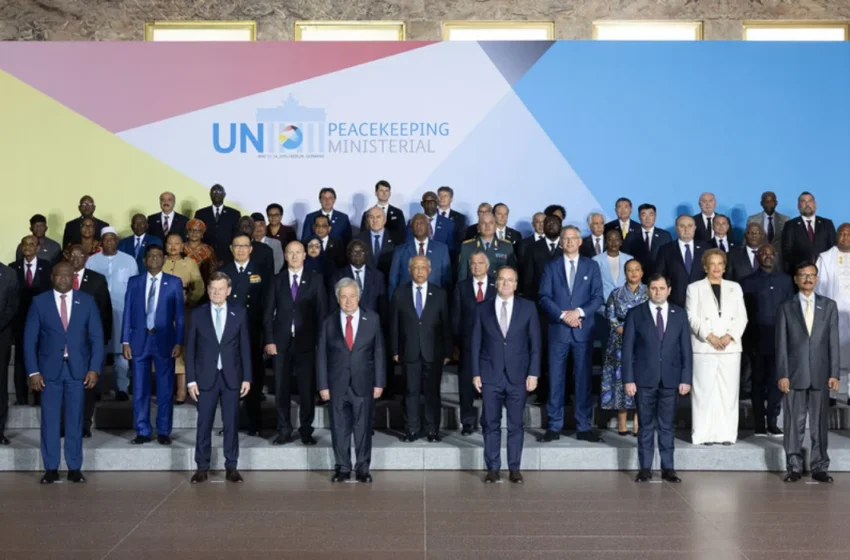
Funding peace in a fractured world: 2025–2026 UN peacekeeping budget challenges
The famine does not happen in a vacuum- it is going hand in hand with large-scale displacement, overcrowded shelters and sanitation. Almost all Gaza citizens are left homeless and live in makeshift conditions with minimal or no provisions to clean water or health care facilities. The interplay has created a severe situation in the health of citizens further escalating the vulnerability to hunger and illness death.
According to the nutritional data assessed by the IPC, 40 percent of pregnant and breastfeeding women are acutely malnourished in Gaza. That is very disastrous in a population group where health is critical to the survival of children and the strength of communities. The consequences of this kind of undernutrition will reverberate over the generations.
Negotiations Reflect Political Complexities
The pressure is causing Gaza’s already tenuous healthcare system to come apart. The hospitals are working without regular electricity where they lack fuel and medicines. Staff in the healthcare industry are under the pressure of increasing patients and decreasing room leading to the establishment of crude clinics to address rudimentary requirements. The vulnerability of children, aged individuals and the people with chronic diseases is increased due to secondary health risks that these people are exposed to now, as a result of long-lasting malnourishment and absence of treatment.
The humanitarian leaders and UN officials persistently underline that the famine needs to be ended by more than ad-hoc relief. There must be permanent ceasefires and politically negotiated humanitarian access. Crises like the one described by the World Food Programme and OCHA demand that the technical solutions are incapable of dealing with such a deeply political problem or lack thereof.
Financial Fragility Undermining Operational Effectiveness
Liquidity Challenges and Spending Delays
Delivery to displaced and other needy people is facing obstacles such as current hostilities and contradicting geopolitical concerns even as international calls to increase aid increase in both frequency and urgency. The process of ceasefire is always not clear cut with ceasefire negotiations always based on strategic considerations of larger powers and often have little to do with the current politics of ceasefire negotiations.
His stark assessment—“No money, no implementation”—encapsulates the fundamental tension plaguing contemporary peacekeeping: financial approval without timely funding renders missions vulnerable to disruption and underperformance.
Causes of Fiscal Uncertainty
The financial fragility facing peacekeeping stems from several structural issues. First of them is the continuous misadventure in payments of the member states. This trend has worsened in 2025 because of the slowdowns that have occurred throughout the world economically and increased nationalism that undermines multilateral funding. As the top contributor with 27 percent, the United States still has some internal disagreements over commitments abroad, and other big players, like China (19 percent) and Japan (8 percent) do as well.
Such a mismatch triggers strategic planning. Missions have to also contend with financial uncertainty that has been observed to slow down essential decisions to be made and risks to be mitigated.
Evolving Conflict Settings and Mission Adaptation Needs
From Traditional Peacekeeping to Complex Mandates
The missions of the UN today are no longer similar to those of the Cold War era. The contemporary conflicts entail shattered armed factions, internal inter-state violence, and weak state political institutions. The peacekeeping operations have expanded to include ceasefire supervision as well as state institution establishment, counter-terrorist activities organization, and civilian safety.
Technical skills, swift coordination, and long-term financing are necessitated in this expansion of the mission. However, the small decrease in the 20252026 budget indicates that resources are becoming an increasing limitation and missions must make due with less.
Demands for Structural Reform and Efficiency
In the lead-up to the budget’s adoption, multiple delegations emphasized the need for operational reforms. These were increased transparency, measurement of impact and improved matching of resources to mission. Member states are largely united on the significance of peacekeeping, but there is an increased questioning of how much value member states are getting with current models.
The work of streamlining administrative and logistical support with the suggestions of smarter deployment of people and technology making inroads but have been held back by the deep-rooted bureaucratic structures and political hesitation.
Geopolitical Tensions and the Role of Peacekeeping
Budget Votes as Political Messaging
Budget considerations are increasingly becoming politicized in the form of peacekeeping. Israel and its supporters fought not just the budget of UNIFIL, but rather tension that was related to the role of the mission around the areas dominated by Hezbollah. This defeat of the amendment highlights the wider consensus that the mission has been biased and not very efficient.
The budget fight may even have two purposes today, the government needs to approve operating expenses, and take to the air geo-political positions. Such dynamics threaten to undermine the neutral position that peacekeeping missions must uphold in order to go about their business in contested spaces.
Maintaining Relevance in a Divided World
In spite of these issues, the role of UN peacekeeping as an effective instrument of ensuring peace and security in the world has never been of more importance. As the peacekeepers are deployed or more precisely based in different continents with a presence of close to 70,000 people mostly dressed in the same uniform and civilian personnel, they are among the global bodies (international) to have been constituted by a global consent. Where there are no national institutions or they are insufficient in rural areas, their presence prevents violence, opens up people to humanitarian aid and assists longer term stabilization.
The 2025–2026 budget, while restrained, preserves this global capacity. However, sustaining relevance will require more than continued funding—it will demand greater responsiveness, enhanced training, and inclusive partnerships with regional organizations and civil society actors.
Strategic Imperatives for a Sustainable Future
Rising Demand, Shrinking Resources
The paradox confronting UN peacekeeping is stark: rising expectations amid shrinking resources. Member states increasingly look to the UN to manage crises from Sudan to the Central African Republic, yet financial and political support remains tenuous. Peacekeeping, often viewed as a shared burden, is now increasingly vulnerable to national retrenchment and political gridlock.
The tension between global need and donor fatigue places stress on mission leaders who must prioritize limited resources, often under urgent and insecure conditions.
Navigating Future Prospects and Responsibilities
The 2025–2026 UN peacekeeping budget stands at the intersection of financial prudence and geopolitical necessity. While modest reductions and political contention shaped its passage, the real test lies ahead—in how missions adapt, how member states honor financial commitments, and how evolving security threats are met with limited but crucial resources.
Peacekeeping is neither a panacea nor a relic; it is a living institution navigating a fractured international order. As conflicts grow more diffuse and institutional legitimacy is tested, the capacity to fund and reform peace operations becomes a measure of global resolve. Whether this resolve strengthens or weakens will shape not only the success of the UN’s peace missions but the broader future of multilateralism itself.

