

With Opposition Targeted, UN Condemns Uganda Clampdown on Dissent
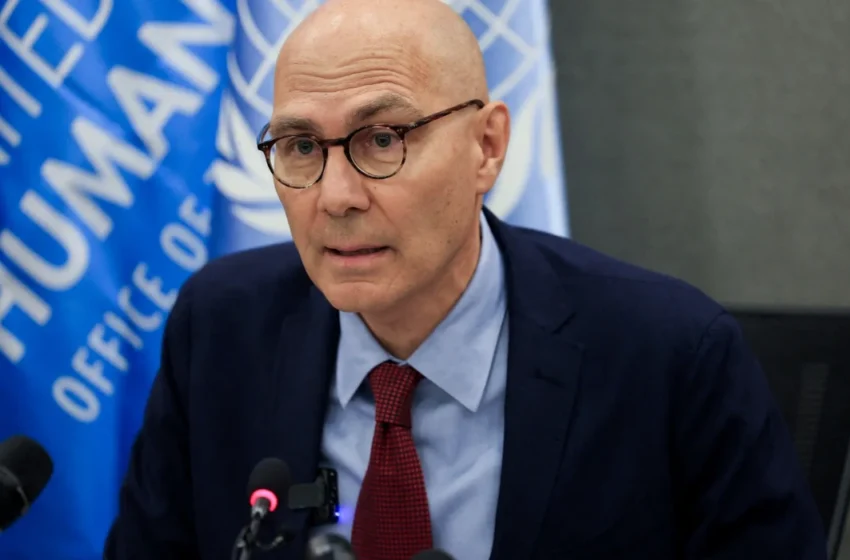
The United Nations has issued one of its most pointed rebukes of Uganda in recent years, condemning what it describes as a systematic and escalating crackdown on dissent, opposition figures, journalists and civil society organisations. The statement, delivered by UN High Commissioner for Human Rights Volker Türk on Thursday, July 30, 2026, frames the situation not as isolated security operations but as a structural erosion of civic space and the rule of law since the January 15, 2026 general elections.
“I am appalled that the authorities are increasingly targeting any form of dissent, and deepening restrictions on the fundamental freedoms of all those living in Uganda,”
Türk said, adding that
“those who dare to speak out are silenced.”
The UN’s language signals a shift from concern over specific incidents to alarm over a broader pattern of repression that rights groups say is entrenching impunity and polarising the country.
Post‑Election Repression: The Numbers Behind the Crisis
The UN Human Rights Office (OHCHR) bases its accusation on a certain set of statistics which, although is rather restrained in comparison to what many other human rights observers say, provides a fairly obvious pattern of violations. The UN Office of Human Rights reports that as many as 50 opposition activists and their supporters, as well as five human rights defenders and journalists, have been subjected to enforced disappearance, torture, ill-treatment, and arbitrary arrest or detention. As the UN reports, the abovementioned violations are being conducted through laws and practices that do not conform to international human rights standards. Apart from individual violations, the UN Office states that the authorities have suspended at least 10 prominent NGOs since January.
The cumulative effect, Türk argues, is a
“climate of fear that is increasing self‑censorship, further stifling public debate and deepening polarisation.”
For a country that has long been seen as a relative anchor of stability in East Africa, these indicators point to a dangerous contraction of the space in which citizens can organise, speak and hold power to account.
Military Overreach and the Erosion of Civilian Institutions
A central pillar of the UN’s criticism is the growing role of the military in areas that should be firmly under civilian control. Türk expressed particular concern about what he described as
“growing military involvement in duties normally handled by civilian institutions,”
including the arrest, detention and prosecution of civilians.
This is reflected in the documentation carried out by Human Rights Watch and others where military personnel raid residences, arrest critics, and hold them in unauthorized detention centers before passing them on to be prosecuted in what rights lawyers refer to as “bogus prosecutions.” Some of the high-profile cases involve the kidnapping and secret detention of Erias Lukwago, an influential lawyer working on behalf of opposition leader Kizza Besigye, and the detention of activist Miria Matembe following her criticism of the military commander.
The UN’s call to
“uphold the separation of powers and the rule of law by preventing military interference in civilian institutions”
is therefore not abstract; it responds to a visible militarisation of political repression
Legal Architecture of Repression: The Protection of Sovereignty Act
Although arrests and raids take most of the media attention, the United Nations also stresses the importance of the legal framework supporting and justifying repressions. An important part of this framework is the Protection of Sovereignty Act that came into force in May 2026. This law sets strict limitations on foreign financing and involvement in the activities of civil society organizations.
The penalties for violations can include imprisonment for up to 10 years. According to the rights groups, in practice, this law gives the government a powerful tool to brand activists, NGOs, as well as media outlets, as agents of foreign powers and criminalize their activities. Türk makes a direct connection between this act and shrinking of civic space, stating that it contributes to the creation of the chilling effect provoked by arbitrary arrests and military raids. The act is a logical step after the string of legislation passed since the elections in 2021, which OHCHR calls “laws entrenching repression and impunity,” including increased control over NGOs, suspensions of radio stations, and criminalizing the activities of bloggers and online critics using broadly defined crimes.
Voices from the Ground: Besigye, Lukwago and the Opposition
However, the UN’s appeal comes amidst high-profile cases that have been a focus point for the wider controversy. In a case involving the opposition leader Kizza Besigye, who was arrested in Kenya in November 2024 and is charged with treason, the opposition leader has recently fallen ill and been taken to intensive care, with his wife Winnie Byanyima explaining that
“he’s unconscious, cannot talk and does not respond to pain stimulus.”
While Besigye’s health condition has increased the pressure both domestically and internationally on Kampala government, the government continues claiming that Besigye’s trial is legal. Moreover, the attorney for Besigye, Erias Lukwago, was arrested in mid-June by armed soldiers and then charged with treason-related crimes when military officials have openly threatened him because of delivering the summons to the army chief. There are other political prisoners as well: for instance, the National Unity Platform deputy president, Muwanga Kivumbi, has also been arrested and charged with terrorism and security-related crimes in politically charged cases.
Government Stance: Security, Order and a Rejection of “Bizeemu”
In response to mounting criticism, President Yoweri Museveni has framed the intensified security operations as necessary measures to preserve public order and national security, insisting they are being conducted within the law. He has explicitly rejected comparisons to earlier periods of abuse, arguing that today’s suspects are eventually presented before courts, unlike in the past when many abductees
“would end up as a dead body in Namanve Forest or River Nile.”
Museveni told critics that
“those who have been putting out the slogan ‘Bizeemu’, that the bad things of the past are back, are wrong,”
maintaining that
“what the security forces have been doing recently is not a regression in the fight for freedom.”
This narrative seeks to draw a line between the current government’s actions and the worst excesses of earlier regimes, while portraying opposition and rights activism as destabilising. The UN and rights groups, however, counter that the presence of formal charges does not legitimise arbitrary arrests, enforced disappearances, torture or the use of military courts for civilians, all of which remain prohibited under Uganda’s Constitution and its international obligations.
Regional and International Implications
The statement by the UN carries more weight outside of Kampala as well. Uganda is a party to the African Charter on Human and Peoples’ Rights, International Covenant on Civil and Political Rights, and Convention Against Torture, all of which provide guarantees of freedom of speech, freedom of assembly, and protection against arbitrary detention and ill-treatment. It is important that the UN has specifically mentioned the fact that this is an infringement on international commitments to point out that this is not just a political struggle between the government and activists.
Regionally, this situation threatens to harm the reputation of Uganda within the East African Community and African Union, which have normative frameworks for democracy and good governance. Moreover, internationally this is a problematic time for Uganda as it tries to get new financial support and make use of natural resources, such as East African Crude Oil Pipeline. Türk calls on Kampala to
“use opportunities arising from its natural resources and renewed international financial support to address structural challenges while building an economy that protects human rights.”

