

UNHCR Warns of 2026 Repeat in Rohingya Migrant Deaths
The Rohingya Migrant Deaths trend by UNHCR indicates a continuous decline in one of the most perilous migration paths in the world and 2025 is set to record almost 900 deaths or missing persons at sea. This figure not only signifies a statistical high point but also a structural change in the functioning of displacement across the Bay of Bengal and the Andaman Sea. A single in every seven of the attempted crossings resulted in fatalities, and this path was the most fatal significant refugee sea route in the world.
The unique thing about this escalation is that it is not volatile but persistent. The Rohingya movement is indicative of long-term statelessness, regional containment policies, and repetitive maritime exploitation, unlike episodic crises based on the single conflict or sudden policy-related changes. According to UNHCR statistics, almost 200,000 individuals have tried the trip since 2012 and the number of victims is increasing, not decreasing, showing a system that fails to solve the problem but reinforces it.
Changing composition of migration flows
One significant change in recent years has been the growing number of women and children who are struggling to make sea crossings, and constitute over half of all those attempting. This shift indicates a shift in household-based decision-making whereby whole families choose to escape by sea even when they know that they are likely to die. The existence of children especially highlights how displacement has now transcended the personal survival tactics to mass migration in an extreme pressure.
UNHCR spokesperson Babar Baloch captured this dynamic when she said that no one would endanger their family to a risky boat when they know the possibilities of survival are truly slim when the feeling of desperation is not present. This fact indicates a layer of critical analysis: the resolution of moving is not based on an optimistic approach but a breakdown of options in both Myanmar and the refugee system of Bangladesh.
Escalation into early 2026 departures
Early signs in 2026 are that there will be continuity as opposed to a decline in maritime departures. Over 2,800 Rohingya had already started sea journeys by mid-April, which means that the factors that have triggered migration have not been removed, despite international awareness of 2025 deaths. This continuity supports the fears that mortality rates can recur or increase in case structural circumstances do not change.
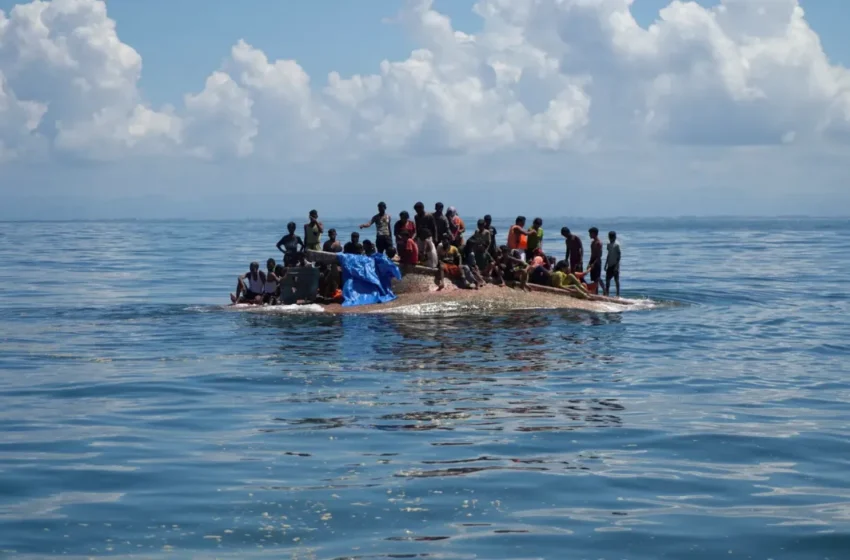
Further evidence that risk factors are still ingrained in the migration system is the number of shipwrecks in early 2026, with hundreds of people missing. They are not single calamities but a trend which is foreseeable due to overpopulated ships, weak enforcement, and the continuous need to find a way out.
Structural drivers in Myanmar and Bangladesh camps
The continued UNHCR Rohingya Migrant Deaths cannot be divorced out of the situations both in the Rakhine State of Myanmar and the refugee camps in Bangladesh. The combination of these environments creates a two pressure system that continuously produces out migration in spite of the known maritime dangers.
Conflict and exclusion in Rakhine State
In Myanmar, the new instability in Rakhine State has shown to increase the pressure of displacement with the existing challenges of statelessness and exclusion. The Rohingya people still have their citizenship rights, freedom of movement, and regular violence, which past UN human rights chief Zeid Ra-ad al-Hussein once termed as having elements of ethnic cleansing in the way they were organized.
The recent surge in conflict has made internal displacement even less of a viable alternative. With the growing armed conflicts, the civilian population is left with diminishing areas of security and cross-border migration emerges as one of the few options available to them as a survival measure though extremely risky.
Conditions in Cox’s Bazar refugee camps
In Bangladesh, the Rohingya refugees are left with more than one million people centered in Coxs Bazar, whose condition aggravated in 2025 with the decrease in aid and floods, as well as stress on infrastructure. Although they were originally intended to be temporary housing, these camps have developed into semi-permanent communities with few economic prospects and severe restrictions to movement.
The resultant atmosphere has heightened disappointment and long-term insecurity especially among the younger generations who have been brought up devoid of formal education opportunities and job opportunities. Such stasis is a direct cause of renewed migration efforts, as people find other options that are not limited to the realities of camp life even with the risks of sea travel being well-known.
Regional maritime routes and enforcement fragmentation
Migration geography has changed as well and the traffickers have adapted to pressure by enforcement by changing routes and taking advantage of lack of coordination in the regions. It has led to a disjointed maritime system with inconsistent safety standards and inconsistent enforcement.
Expansion of trafficking networks in the Andaman Sea
The trafficking networks which span the Bay of Bengal have come to use longer and more dangerous paths via the Andaman Sea. With increased land-based control methods in Bangladesh and neighboring countries, the smugglers have evolved to the use of overcrowded and poorly maintained vessels to carry as many passengers as possible with little regard to the expenses of operation.
This has greatly posed a risk to mortality since the vessels do not have the most basic equipment of navigation, fuel supplies or even safety. The consequence is a migration pathway of survival that is strongly reliant on weather conditions and luck instead of any systemized safety measure.
Regional policy fragmentation and response gaps
The countries like Indonesia, Malaysia, and Thailand have taken different strategies in receiving arriving Rohingya boats with some opting to rescue a few or some adopting deterrence and pushback policies. This patchwork of governance has left migrants with a situation of uncertainty on the repercussions of landing in one country or another.
UNHCR has made numerous appeals to coordinate disembarkation procedures with the understanding that rescue in the sea should be accompanied by predictable reception systems. Without this coordination, displacing populations will still be susceptible to secondary displacement or detention and undermine humanitarian results despite initial success in saving lives.
Institutional constraints and humanitarian funding pressure
The continued occurrence of UNHCR Rohingya Migrant Deaths can also be informed by the insufficient institutional resources and budgetary limitations especially in 2025 when the global humanitarian funds were being competed by other emergencies.
Aid shortfalls and operational strain
Lack of funds in 2025 decreased the ability of humanitarian organizations to ensure proper food, medical, and shelter provision in Bangladesh. These restrictions impact the stability of the camps directly and pressure on populations already in a weak position. Meanwhile, the restrictions imposed by Myanmar on conditions of returning still prevent long-term resolution options.
The two restrictions form a policy stalemate in which integration and repatriation fails to provide any viable alternative, and the only apparent way out is migration, despite its deadly nature.
Regional coordination challenges
Efforts through ASEAN and related regional frameworks remain largely non-binding, limiting their effectiveness in preventing maritime deaths. While discussions on shared responsibility continue, implementation varies widely across member states, particularly during peak migration periods.
UNHCR has emphasized that without enforceable coordination mechanisms, maritime deaths will remain structurally embedded in the system rather than episodic anomalies.
2026 outlook and unresolved structural risks
Early 2026 data suggests that maritime departures are continuing at a pace consistent with previous crisis years, raising concerns that fatality levels may again approach or exceed 2025 records. The persistence of departures despite awareness of mortality risks highlights the depth of displacement pressures driving movement.
The central challenge is that maritime deaths are no longer a deviation from normal migration patterns but a recurring feature of them. This transforms the issue from an emergency response problem into a structural governance failure spanning multiple states and institutions.
UNHCR’s warning that 2026 could repeat the previous year’s deadly pattern reflects a broader concern that without coordinated intervention, the Andaman Sea will continue to function as a corridor where desperation and risk are inseparable. The trajectory now depends less on seasonal variation and more on whether regional actors can convert fragmented responses into a sustained protection architecture capable of interrupting a decade-long cycle of maritime loss.

