

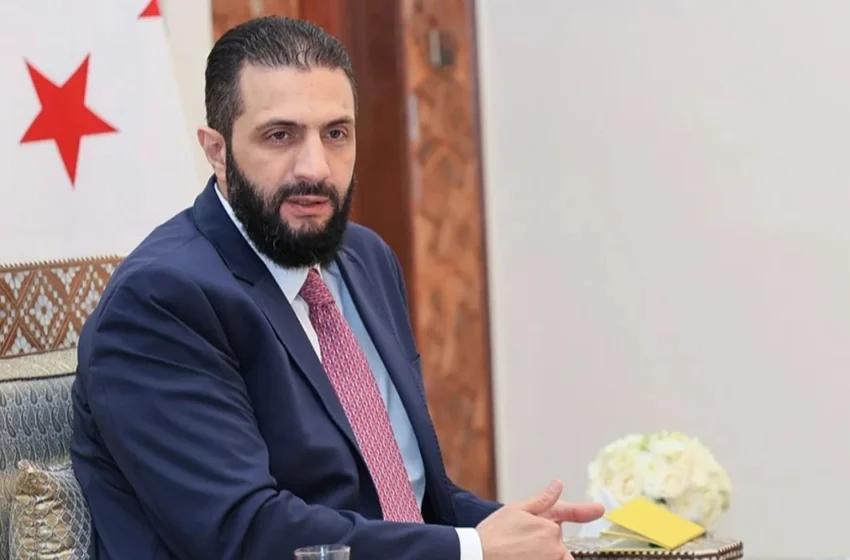
UN Sanctions Lift on HTS Signals Syria Normalization Risks
The UN Sanctions Lift on HTS represents one of the most consequential international policy reversals in Syria since the civil war began in 2011. The UN Security Council sanctions committee removed both Jabhat al-Nusra and Hayat Tahrir al-Sham from its ISIL and Al-Qaida sanctions list, ending asset freezes, travel bans, and arms embargoes first imposed in May 2014. The move followed the individual delisting of HTS leader Ahmad al-Shara in November 2025, signaling a phased recalibration rather than an abrupt shift.
This consensus decision, chaired by the United Kingdom, effectively terminated Chapter VII obligations requiring member states to enforce restrictive measures against the group. The timing reflects evolving political realities after HTS-led forces ousted Bashar al-Assad in December 2024, placing al-Shara formerly known as Abu Mohammed al-Julani at the center of Syria’s transitional authority.
The United States had already revoked its terrorist designation of HTS in July 2025 through executive action, citing changes in the group’s conduct and its role in countering Islamic State elements. The UN decision formalizes a trend toward pragmatic engagement with Syria’s new power structure.
Evolution from Al-Nusra to Governing Authority
The transformation of HTS from insurgent faction to governing actor underpins the rationale behind the UN Sanctions Lift on HTS. The organization originated in 2012 as Jabhat al-Nusra, Al-Qaida’s Syrian affiliate, and quickly became one of the most formidable rebel groups during the civil war’s early phase.
Break from Al-Qaida and Organizational Rebranding
In 2016, the group publicly severed ties with Al-Qaida and rebranded, later consolidating under the HTS umbrella in 2017. The restructuring was widely viewed as an attempt to reduce international isolation and position the movement as a localized actor rather than a transnational jihadist franchise.
Throughout 2024 and 2025, HTS expanded governance functions in Idlib and surrounding areas, overseeing taxation systems, judicial mechanisms, and civil administration. While critics questioned the durability of ideological moderation, international observers noted a measurable shift toward bureaucratic governance over insurgent militancy.
Diplomatic Outreach and International Signals
Ahmad al-Shara’s diplomatic outreach played a decisive role in reshaping perceptions. His address to the UN General Assembly in late 2025 emphasized sovereignty, reconstruction, and counterterrorism cooperation. Subsequent meetings with Western envoys, including engagements in Washington, reinforced the image of a leadership seeking legitimacy through institutional channels.
These developments influenced deliberations within the sanctions committee. While some states remained skeptical, the prevailing argument centered on incentivizing stabilization over perpetuating isolation.
Geopolitical Drivers Behind the UN Sanctions Lift on HTS
The decision was not purely symbolic; it reflects broader geopolitical recalibrations in the Middle East. The United States championed the delisting, arguing that Syria’s transitional authorities required economic latitude to govern effectively and prevent further fragmentation.
Washington’s Counterterrorism Reassessment
US policymakers characterized the July 2025 revocation as recognition of “battlefield realities.” Intelligence cooperation between HTS-controlled forces and Western agencies against Islamic State remnants reportedly improved during 2025, contributing to operational containment of extremist cells in eastern Syria.
Analysts at the International Crisis Group observed that the delisting bolsters al-Shara’s legitimacy “away from jihad,” suggesting that international recognition could reinforce pragmatic elements within the movement. However, the durability of that trajectory remains subject to internal factional cohesion.
China and Broader Security Concerns
China initially hesitated to support the UN Sanctions Lift on HTS, citing concerns about militants linked to the East Turkestan Islamic Movement. Beijing sought assurances regarding foreign fighters operating in Syrian territory, reflecting its domestic security priorities.
Diplomatic sources indicate that informal commitments regarding surveillance and extradition facilitated consensus. Russia and Iran, both former backers of the Assad government, ultimately acquiesced, prioritizing preservation of strategic footholds such as naval facilities and military access agreements over opposition to the delisting.
Normalization Opportunities and Embedded Risks
The immediate consequence of the UN Sanctions Lift on HTS is financial and institutional relief. Frozen assets, estimated in the tens of millions of dollars, are now accessible. Restrictions on travel and procurement have been lifted, enabling broader engagement with international institutions.
Yet normalization carries inherent risks. The reintroduction of financial flows could strengthen administrative capacity, but it may also empower hardline factions resistant to political compromise. Syria’s war-damaged economy requires reconstruction investment, and Gulf states pledged billions in 2025 contingent on political stabilization. The delisting accelerates these commitments but reduces leverage tied to sanctions compliance.
The arms embargo removal introduces additional complexity. While HTS leadership has publicly committed to defensive procurement, regional actors remain wary of weapons proliferation in a volatile security environment.
Regional Reactions Reflect Divergent Priorities
The UN Sanctions Lift on HTS has elicited varied responses across the region. Turkey welcomed the move, viewing it as validation of its long-standing buffer zone strategy in northern Syria. Ankara has coordinated with HTS authorities in managing border security and refugee flows, and normalization strengthens its influence over post-Assad reconstruction.
In contrast, Israel expressed concern that legitimizing a former jihadist entity could embolden hostile actors near the Golan Heights. Israeli officials referenced previous airstrikes on weapons depots in 2025 as evidence of continued vigilance, signaling that delisting does not equate to strategic trust.
Gulf states, including Saudi Arabia and the United Arab Emirates, accelerated reconstruction dialogues following the decision. Syria’s gradual reintegration into the Arab League in 2025 had already signaled regional appetite for normalization, contingent on stability benchmarks.
Jordan and Lebanon, burdened by refugee populations exceeding one million Syrians each, anticipate that economic revival may facilitate voluntary returns. However, humanitarian agencies caution that returns depend on sustained security guarantees rather than diplomatic symbolism alone.
Sanctions Architecture and Future Precedents
The UN Sanctions Lift on HTS raises broader questions about the adaptability of international counterterrorism frameworks. Sanctions regimes are traditionally designed for static threats, yet Syria’s political transformation blurs distinctions between non-state militancy and emergent governance.
Comparisons to Afghanistan’s Taliban in 2021 are instructive. While the Taliban remained sanctioned despite assuming state authority, Syria’s transitional leadership has moved further toward formal international engagement. This divergence underscores how geopolitical context and perceived strategic utility influence enforcement consistency.
Monitoring mechanisms remain in place, and the sanctions committee retains authority to reimpose measures if commitments are breached. However, enforcement depends on member state consensus, which may be harder to achieve once normalization deepens.
As Syria approaches planned elections in spring 2026 under a new constitutional framework drafted in 2025, the trajectory of HTS integration into formal state structures will test the durability of this diplomatic gamble. The UN Sanctions Lift on HTS offers a pathway toward reconstruction and institutional consolidation, yet it also narrows the margin for error. Whether this recalibration produces sustained governance reform or exposes unresolved ideological fractures will shape not only Syria’s recovery but also the credibility of global sanctions policy in conflicts where insurgents evolve into rulers.

