

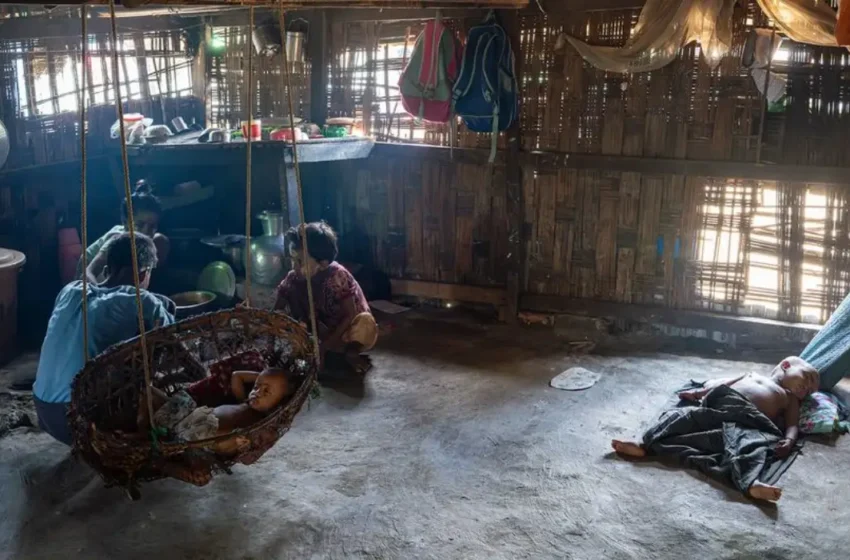
UN Finds Sustained Myanmar Military Campaign Against Civilians
Myanmar’s military has pursued a sustained campaign of violence against civilians, according to a new investigation by the United Nations’ Independent Investigative Mechanism for Myanmar (IIMM). The evidence describes repeated airstrikes on homes, schools, medical facilities, religious sites and displacement camps, alongside arbitrary arrests, torture, sexual violence and deaths in detention.
The findings, which were made public on August 11, 2026, are part of the annual report of the IIMM for the period July 2025 – June 2026. They offer one of the most comprehensive recent descriptions of the alleged international crimes that have been committed by Myanmar in its ongoing civil war. The significance of the report lies in the fact that it does not present the attacks as sporadic events or mishaps of the battlefront. On the contrary, the UN investigators suggest that the existing evidence supports the fact that there were recurring patterns of behavior of military formations, planes, detention centers and command structures. This comes as Myanmar’s military leaders try to present their planned elections that took place between December 2025 – January 2026 as an indication of the return to normalcy.
Airstrikes increasingly threaten civilians
The IIMM recorded attacks conducted using military aircraft, paramotors, motorised power gliders, gyrocopters and drones. It was stated that the military has been depending on air operations in order to cope with the armed opposition and loss of control over certain regions. The alleged targets of such attacks were civilian houses, schools, health facilities, churches and other places where displaced civilians were sheltering due to the ongoing hostilities. At times, the attacks took place in regions where civilians had sought shelter after escaping from other regions with ongoing hostilities. The investigators are looking into claims of the practice where the engines of military aircraft would be turned off before the attack was launched. That way, the aircraft could glide silently, giving no time for people below to escape once the bomb was dropped.
The UN said children were frequently among those affected. Airstrikes on schools and residential areas have killed civilians, destroyed property and disrupted education in communities already suffering from repeated displacement.
Nicholas Koumjian, head of the IIMM, said investigators were examining
“the command structure and how the orders would be given”
for the airstrikes. He said many attacks struck schools and hospitals, with children often among the victims.
The emphasis on command structures is central to the investigation. Establishing which aircraft carried out an attack is only one part of a potential war-crimes case. Investigators must also determine who planned the operation, who authorised it, what information commanders possessed and whether reasonable precautions were taken to protect civilians.
Death toll rose during election period
In addition, according to the separate UN human rights reporting, a minimum of 702 civilians died from August 2025 to January 2026. Out of these deaths, a minimum of 476 were as a result of military airstrikes. These statistics pertain to the period surrounding the military-run elections and are based on verified cases. According to the UN, these numbers do not reflect an exhaustive countrywide figure since there are many places in Myanmar which cannot be reached by aid workers, making it difficult for them to document deaths. In earlier UN reports, there was documentation of a minimum of 170 deaths of civilians in more than 400 military air strikes in the election period. Another assessment has indicated that a minimum of 982 civilians, including 287 children, died from military airstrikes in Myanmar in 2025.news. Notably, this escalation was not only in the air. Ground attacks, artillery strikes, raiding villages, arrests, and destroying people’s homes have continued in various regions.
The use of air power has also changed the character of the conflict. Unlike ground operations, airstrikes can reach communities far from the immediate front line. Civilians may be attacked even when no battle is taking place nearby, while aircraft and drones can strike with limited warning.
Torture and sexual violence in detention
The IIMM also reported evidence of serious abuses in military-run detention facilities. Investigators documented arbitrary detention, physical torture, sexualised torture, sexual violence and deaths in custody.
The alleged methods include beatings, electric shocks, strangulation and rape, according to evidence previously gathered by UN-mandated investigators. Survivors and witnesses have described detention facilities where prisoners were denied medical treatment, subjected to humiliating abuse and held without meaningful legal safeguards.
Sexual violence has reportedly affected women, girls, men, boys and people from sexual and gender minorities. Such crimes are often underreported because survivors face stigma, fear retaliation or lack access to medical and psychological support.
The detention findings are important because they suggest that abuse is not confined to chaotic combat situations. Torture in official or military-controlled facilities may indicate organised practices, particularly where similar methods are reported by survivors held in different locations.
If supported by further evidence, the pattern could form part of a case involving torture, imprisonment, persecution or other inhumane acts as crimes against humanity. Individual incidents may also constitute war crimes when linked to the armed conflict.
Evidence gathered from 1,600 sources
The IIMM said it had collected information from more than 1,600 sources and information providers. These included 756 accounts from witnesses and survivors, as well as photographs, videos, documents, satellite imagery, geospatial material and social-media posts.
The mechanism claimed that it had distributed 146 packages of evidence and analysis to national and international investigative, prosecution and judiciary institutions. The amount of evidence does not necessarily prove that a certain commander or group is guilty. But it enables investigators to check different versions, to determine where it occurred, what weapons or aircraft were used, the sequence of the events, and to find any possible connection between the events in the field and senior command structures. Images taken by satellites will be able to confirm if a village, school, or camp was destroyed at a certain time. Video recordings will allow to detect aircraft, explosions and military movements. Statements of witnesses will show what was going on before, during, and after the attack, while military papers may indicate what instructions were given. The IIMM is thus preparing the cases and not passing a judgment of courts.
Legal implications of the findings
International humanitarian law prohibits deliberate attacks on civilians and civilian objects. Schools, medical facilities, religious sites and homes are generally protected unless they are being used for military purposes. Even where a legitimate military target exists nearby, attacking forces must distinguish between military and civilian objects and take feasible precautions to reduce civilian harm.
An attack may constitute a war crime if civilians were deliberately targeted, if the attack was indiscriminate or if the expected civilian harm was clearly excessive in relation to the anticipated military advantage.
The reported abuses may also amount to crimes against humanity if they were committed as part of a widespread or systematic attack directed against a civilian population. Murder, imprisonment, torture, rape, persecution and other inhumane acts can fall within that category when the required legal elements are established.
The report does not itself convict Myanmar’s military leaders. The IIMM is not a court and has no power to arrest suspects. Its role is to collect, preserve and analyse evidence of the most serious international crimes committed in Myanmar since 2011.
The mechanism is also investigating alleged crimes by anti-military armed groups. This is important for legal consistency: international law applies to all parties in an armed conflict, regardless of whether a group claims to be fighting for democracy or self-defence. However, the existence of alleged abuses by opposition forces does not remove the military’s responsibility for crimes attributed to its own forces.
Election repression and political control
The violence recorded by the IIMM was part of a larger strategy designed to stifle criticism of the military government. People were arrested according to a law adopted in 2025 which made the criticising of the elections a crime. The critics could receive sentences of imprisonment for 20 years or even be sentenced to death for any behaviour which included online criticism of the government. In other words, the law turned political criticism into a crime.
This relates to the battlefield tactics of the military to their political strategies. Airstrikes and land operations damaged the community physically, and arrests and prosecutions tried to stop the public opposition. Therefore, the elections took place in the context of the population being dispersed, opponents of the government being imprisoned and independent media restricted. The efforts of the military to gain political legitimacy have not been convincing for the UN investigators and other human rights organizations. According to Reuters, Western governments and human rights organizations found the elections neither free nor fair.
Humanitarian crisis deepens
The attacks have contributed to one of the world’s most severe humanitarian crises. The UN estimated in July 2026 that nearly 3.8 million people were internally displaced across Myanmar and that more than 16 million people required humanitarian assistance.
Displacement camps have not provided reliable protection. Civilians who fled military operations have reportedly faced new attacks in temporary shelters, while access to food, clean water, healthcare and education has deteriorated.
Humanitarian agencies have also faced funding shortages and access restrictions. The UN’s 2026 humanitarian appeal was only partially funded, limiting the ability of aid organisations to support displaced families and survivors of violence.
The humanitarian consequences extend beyond immediate casualties. Children have lost access to schools, health facilities have been destroyed or closed, families have lost homes and livelihoods, and survivors of sexual violence often cannot obtain medical care or counselling.
Military has not issued detailed rebuttal
No substantive response has yet been made by Myanmar’s military authorities in response to the findings by IIMM, reports Reuters. No comment from the armed factions fighting against the junta has been made so far either. In the past, the military has often rejected accusations of committing atrocities and has repeatedly termed its actions as counter-terrorism operations against armed organizations. The authorities have also accused the resistance movement and ethnic armed organizations of targeting civilians and government facilities. The UN body has accepted that any violations committed by the opposition parties need to be investigated. However, the majority of the evidences collected pertain to violations committed by military and militia forces.
Koumjian said,
“Behind every piece of evidence we collect are people whose lives have been devastated by these crimes.”
He added that communities were living under the constant threat of violence and experiencing the
“profound and lasting impact” of what they had endured.
Accountability remains the central challenge
The new findings increase pressure on governments to pursue accountability, impose targeted sanctions and restrict the flow of weapons, aviation fuel and military equipment to Myanmar’s armed forces.
Yet collecting evidence is easier than bringing senior commanders before a court. Myanmar’s military remains in control of state institutions, while investigators have limited physical access to affected areas. Witnesses and survivors may face retaliation, and evidence can disappear as villages are destroyed or detention facilities are closed.
The IIMM’s work nevertheless creates an important legal record. By documenting specific attacks, identifying military units and examining command structures, it may help future prosecutors move beyond broad allegations and establish individual responsibility.

