

UN Chief’s South Sudan Tour: Aid Promises Fail 6.6 Million Starving
The South Sudan Tour of the UN Chief started when Emergency Relief Coordinator Tom Fletcher, went on a five-day assessment mission to one of the most fragile humanitarian theatres in the world. The appearance in Malakal, Upper Nile state indicated a head-on involvement with communities struggling with a complex of crises that were initiated by conflict, displacement, and climatic disasters. Time is of the essence, and humanitarian estimates show that 6.6 million individuals will be in need of aid in 2026, which is very significant compared to the 2025 estimates.
The trip took place amidst fresh conflicts in Jonglei state with the government and opposition-linked forces fighting over the last two years causing the displacement of around 280,000 individuals in the state since the end of the year 2025. The situation increases the existing weaknesses in a nation that is still grappling with the impact of civil war and shaky peace treaties. The meetings with the local authorities, aid workers, and Sudanese returnees were also a part of the itinerary of Fletcher, and it was due to the multidimensional character of the emergency in South Sudan.
Escalating Protection Risks for Civilians
Jonglei violence has rejuvenated traces of displacement history that can be recalled in the previous periods of instability. Whole communities have been displaced to isolated or vulnerable locations and this makes it difficult to reach them. According to humanitarian partners, insecurity has limited the movements along the main supply routes and slowed the supply of food and medical supplies during the period when the needs are at a peak.
The 2025 statistics prepared by the humanitarian organizations indicated that there is an increase of 30 percent in the number of incidents of conflicts recorded as compared to the previous year. It is the resurgence that weakens localized peace arrangements and exposes them to gender-based violence and child recruitment as well as property destruction. Recurrent displacement has destroyed coping mechanisms that were previously used by many households in times of previous crisis.
Aid Worker and Civilian Vulnerabilities
There is an increased intensity of operational risks. Field coordination reports showed that the incidents that affect humanitarian personnel increased by approximately 20 percent in 2025. Aid convoys are also victims of ambush and looters especially in warring rural areas that limits the scope of life-saving efforts.
During press conferences, Stephane Dujarric, the spokesperson of the UN Secretary-General made it clear that civilian and humanitarian personnel security is the key focus of the mission advocacy goals. Fletcher was a reiter of demands of safe humanitarian corridors, and in his speeches to the community, Fletcher said:, without guaranteed entry, money cannot become the help. The interaction between insecurity and underfunding thereby creates an obstacle of a structural character and not a transient interruption.
Funding Gaps and Response Capacity
The Humanitarian Response Plan 2026 in South Sudan tries to raise about 4.2 billion dollars to support 6.6 million individuals. By February 2026, just a quarter of the USDs to be secured were in line with the perennial shortcomings back in 2025 when only 32 percent of the funds requested were raised. This trend limits the sustainability of the program to such an extent that agencies have to focus more on the immediate food distributions instead of building resilience in the long term.
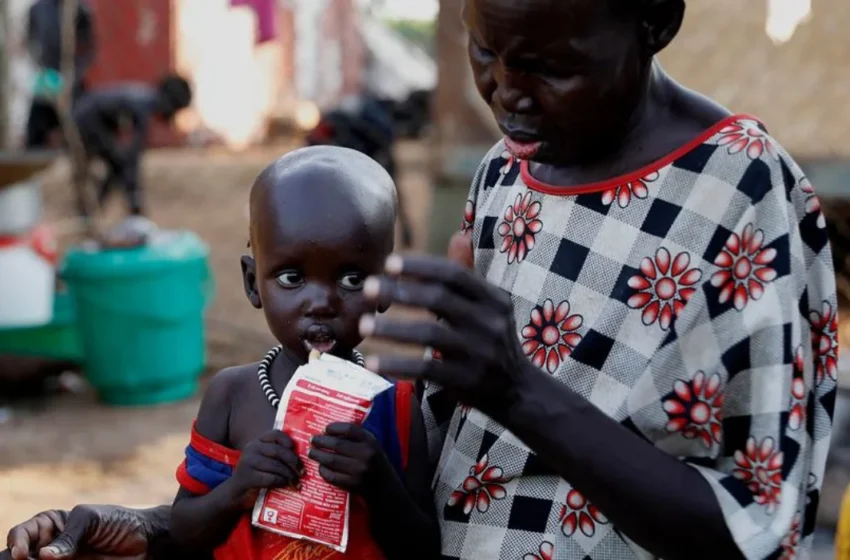
The effects of this gap are demonstrated through nutrition services. Humanitarian partners estimate there may be a risk of 500,000 children having acute malnutrition in case funding is not scaled up before the lean season increases. Since one-third of the population, constituting more than 2 million individuals, are already subjected to food insecurity levels of emergency, the lack of pipeline capacity increases the chances of localized famine-like scenarios.
International Attention Deficits
In the competition for donor focus in 2025 and early 2026, South Sudan faces numerous global crises such as extended conflicts in neighboring Sudan and wider Horn of Africa drought circumstances. UN regional appeals in 2010 achieved around 40 percent of the objectives, an indication of a growing gap between the world demands and the humanitarian funds available.
The appearance of Fletcher is partially set to counter this attention deficit. Field visits and top leadership meetings can be the stepping block towards revived diplomatic interactions but previous missions have indicated that visibility does not necessarily lead to continued funding. Structural underinvestment of fragile states is also a cycle which recurs in the international response.
Spillover from Sudan War Dynamics
The war in Sudan is still putting South Sudan under strain in terms of its infrastructures. An estimated 400,000 people have returned to South Sudan and approximately 2 million people have crossed into the country since 2023 alone, with only 2025. Malakal has emerged as a major reception center, and it is the home of approximately 100,000 returnees who have major problems with shelter, water, and sanitation.
The floods since October 2025 have displaced people further to the tune of 250,000, destroyed roads and isolated communities. The meeting of displacement caused by conflicts and the mobility caused by climate increases the competition in the scarce available resources, particularly grazing lands and water points. These pressures have been associated with inter-communal tensions in Jonglei where pastoralist conflicts have escalated as arable land continues to shrink.
Cross coordination has tried to harmonize cross-border aid at the regional level but bureaucracy and logistics remain an issue. The consultations by Fletcher indicated that there was a need to have an integrated approach to planning, which would consider the internal displacement as well as the inflow of refugees as the crisis does not respect national borders.
2025 Developments Shaping Current Realities
The humanitarian perspective of 2026 cannot be apart with the shocks in 2025. In the Province of the upper Nile and Jonglei, there was severe flooding that left close to 1 million people with large areas of agricultural production destroyed. Crop failures and livestock losses have diminished food reserves in households making them more dependent on external food aid.
At the same time, stockouts in health facilities of basic medicines were reported in approximately 40 percent of the monitored places. The weakness of a public health system was highlighted by the outbreaks of cholera and malaria. Women and children constitute about 65 percent of the displaced population; therefore, the vulnerable population is disproportionately represented by an inadequately mobile and economic agency population.
These humanitarian shocks of compounding highlight the shortcomings of reactive humanitarianism. Frequent funding periods and slow payments do not allow anticipatory action, e.g., pre-positioning of supplies before floods or scaling up of nutrition programs before the peak of seasonal hunger. The mission of Fletcher puts new emphasis on the issue of early intervention and its implementation depends on the responsiveness of donors.
Structural Drivers and Long-Term Implications
In addition to a short-term alleviation, the mission points at the structural issue inherent in the South Sudanese system of governance and economy. Oil earnings are not stable and there is uneven distribution of local administration in different states. The low infrastructure and road networks hinder market integration as well as facilitating logistics, which strengthen dependency circles.
According to humanitarian actors, local organizations provide almost 80 percent of frontline aid, but in many cases, they have little direct funding. The reinforcement of these local relations may make them more sustainable, yet it will demand consistency in the financial flows and sufficiency. According to discussions during the visit, calls were made to coordinate activities among ministers to deal with the root causes such as land wrangles and lack of climate adaptation.
The wider Horn of Africa picture is also a complication. As drought has afflicted up to 25 million in the area and Sudan has its own extreme humanitarian disintegration, resource distribution choices are given a geopolitical overture. The case of South Sudan is therefore an example of internal vulnerability as well as structural stresses in the international aid system.
The South Sudan Tour of UN Chief highlights the growing lack of connection between the perceived humanitarian requirements and the rate of global reaction. With the onset of the lean season and the steadily growing displacement numbers, the question is not determining the needs but rather matching the political will and budget allocation determining how to fulfill them. The presence or absence of such high-level engagement will lead to the creation or addition of another petition to the list of half-baked appeals that lack any investment into the lives of 6.6 million people who are grappling with uncertainty in the coming months.

