

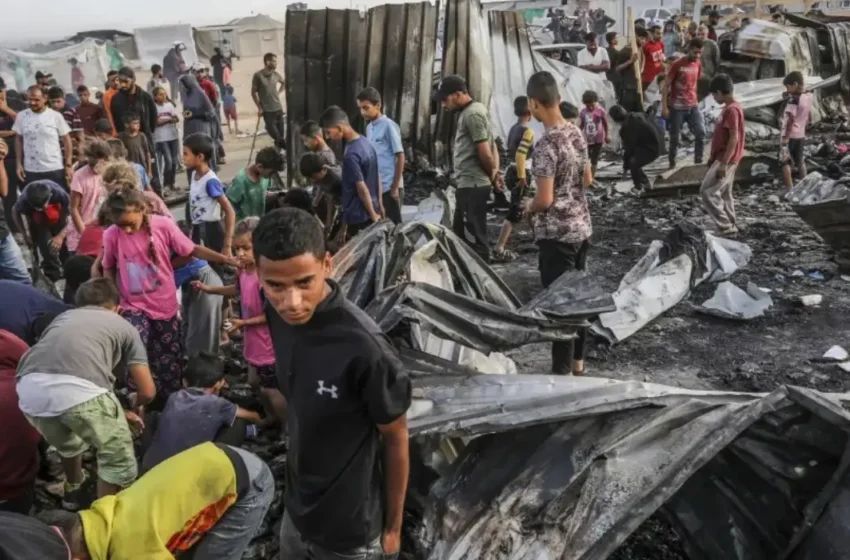
UN Chief Warns Insufficient Aid Access Undermines Gaza Recovery Efforts
UN Chief Warns Access to Aid is Substandard to Recovery Efforts in Gaza as then the conditions within the enclave are nowhere near the minimum humanitarian and reconstruction standards. The leader of the United Nations Development Programme, Achim Steiner mentioned that there have been marginal improvements in the delivery of aid, but the magnitude of delivering aid is not enough to make any meaningful recovery.
The humanitarian architecture of Gaza that was already in a tight spot in October 2023 due to hostilities has collapsed structurally. Having displaced about 1.9 million out of the 2.3 million population of Gaza, the aid convoys ranging between 50 to 100 trucks per day fall far short of the 500 trucks before the war as well as the 300 to 500 trucks per day estimated needs.
Convoy Limitations And Operational Gaps
According to the reports of humanitarian agencies, in January 2026, almost 93 percent of the aid coordination requests were rejected or postponed. The screening of security at Kerem Shalom and Rafah crossing points remain to be chokepoints to both increase the time of inspection and limit priority goods.
COGAT by the Israeli authorities asserts that inspections are necessary to avoid diversion of materials to be used in the military. Authorities have reported that at some point, 200 trucks have been made easy in a day. Nevertheless, aid agencies argue that the general average is much lesser and erratic which makes distribution planning and warehousing challenging.
Displacement And Food Insecurity
As noted by updates to the Integrated Food Security Phase Classification as of early 2026 in briefings, about 96 percent of the Gaza population is experiencing food insecurity at crisis levels. Northern regions are subjected to chances of famine.
The January and February 2026 winter storms knocked down great amounts of temporary shelters. As 92 percent of the housing is damaged or destroyed since October 2023, displaced families are moving many times over, which is putting a strain on relief networks.
Dual-Use Restrictions And Reconstruction Delays
One of the key elements of the caution that UN Chief Warns Insufficient Aid Access Undermines Gaza Recovery Efforts is the limitation of dual-use goods. Purchases like chlorine to treat water, steel pipes, generators and some construction materials are under increased scrutiny.
The international community is unable to shift from emergency relief to infrastructure rehabilitation, and this is due to scaling of inspection capacity and streamlining the approvals, according to Steiner. According to the estimates of the World Bank, the reconstruction of Gaza may take between 53 and 60 billion dollars during the decade, and the short-term requirements are estimated to be as high as 18 billion dollars.
Inspection Bottlenecks And Spoilage
The inspection delays according to the aid agencies can be up to three to five days per convoy. Perishable products are at the risk of being spoiled due to the extended clearance procedures especially where there are limited cold storage facilities.
The availability of water is still under a serious constraint of just around five liters per person per day as compared to the recommended minimum of 15 to 20 liters per person per day by the World Health Organization. The Cholera outbreaks that will be reported in 2025, which are caused by the polluted material supplied with water, highlight the societal health issues of limited material flows.
Infrastructure Paralysis
The destructive level makes access even more difficult. Since 2023 in October, more than 44,000 Palestinians are said to have been killed, and more than 100,000 reported injured due to the attacks by Israel. Officials of Israel claim more than 1,200 dead and more than 100 hostages held captive.
Twelve universities in Gaza have remained destroyed, cropland has been destroyed in almost 69 percent. Local food production has drastically declined due to agricultural losses as it has increased dependence on imports that are limited to inspection restrictions.
2025 Aid Dynamics And Temporary Surges
In the year 2025, the waves of aid delivery in international mediation were intermittent. Brokerages by Qatar and Egypt raised entry of trucks to approximately 500 per day during temporary ceasefire intervals. Nevertheless, these gains were not maintained after the aggression returned.
During 2025, the United States spent about 1.2 billion of humanitarian aid with security supervision measures. The European Union and various Arab countries gave common demands on enlarged access passages. However, 2026 promises have trailed behind what is expected to be needed, and the reasons given by donors are verification requirements and governance issues.
UN Agency Capacity Constraints
The United Nations Relief and Work Agency of Palestine Refugees in the Near East has reported that they have been able to fulfill only 20 to 30 percent of the needs that are estimated. Philippe Lazzarini, its Commissioner-General, characterized Gaza as unlivable in late 2025, saying it is indirectly related to civilian deaths by taking too long to process aid.
Licenses of medical evacuation are still irregular. In late 2025, based on claims, about half of the urgent medical transfer requests were refused or delayed, leaving patients with critical conditions without any specialized care outside Gaza.
Educational And Health System Collapse
Likewise, some 600,000 children have been in an effective suspension of the 2025-2026 academic year. Several school structures have been destroyed and displacement has broken the continuity of learning.
The healthcare capacity in the north of Wadi Gaza is in high demand as there are no fully operational hospitals there. Deficient fuel supply, broken infrastructure, and limited imports of equipment have not made it possible to provide full service restoration.
Governance, Security, And Political Impasse
The alert that UN Chief Warns Insufficient Aid Access Undermines Gaza Recovery Efforts cuts across the board to political concerns. The Israeli officials claim that they need to inspect to ensure that there is no smuggling of weapons and material diversion by Hamas. According to them, the conditions of security cannot come after a massive reconstruction.
The Hamas government responds that restrictions are collective punishment and the inspection regime is the extension of siege policies. In the meantime, regional negotiators, especially the ones in Egypt and Qatar have been promoting relaxed dual-use classifications through mechanisms monitored.
Reconstruction Governance Debate
There has always been a question of who would lead on reconstruction funds and materials. The international donors are after accountability systems that are not shielded by control of armed groups. Serious talks were held in late 2025 on the bilateral oversight system between Gulf states and European allies.
Arab countries repeated at regional meetings that humanitarian access should be uncoupled with political conditionality. Suggestions of establishing a common form of funding that is not subject to Israeli inspection regimes are still diplomatic.
International Legal Context
The international humanitarian law makes occupying powers to enable civilian populations to be relieved. Legal scholars state that restrictions on basic goods should last long, and this may be questioned by the new ways of accountability.
There is even additional geopolitical weight to this situation because the International Criminal Court keeps investigating the alleged violations in Palestinian territories. Even though the legal processes are slow, their possible consequences determine how diplomatic positions may be run in 2026.
Prospects For 2026 And Beyond
The ongoing negotiations of hostages into changing United States leadership have brought cautious optimism of little humanitarian openings. Observers cite that preceding ceasefire-related surges are proven to be logistically viable in cases where political conditions are in congruence.
However, prolonged recovery need not be a series of aids spikes. It requires predictable access, revitalized infrastructure corridors and long-term governance structures that will accommodate billions of dollars spent on reconstruction funding.
The core tension remains unresolved: balancing security oversight with humanitarian urgency. As displacement deepens and infrastructure degradation compounds, the timeline for meaningful recovery lengthens. Whether diplomatic recalibrations in 2026 can reconcile inspection regimes with the scale of civilian need will determine if Gaza transitions from protracted emergency toward stabilization, or remains suspended in a cycle where relief flows never reach reconstruction thresholds.

