

Sevilla Forum on Debt: A Pivotal Step Toward Financial Justice for Developing Nations
The Sevilla Forum on Debt comes when the pressure on developing economies in financial matters has become an uproar. The world is experiencing the global public debt of about $102 trillion which is still increasing in 2025 due to the weak tendencies of economic recovery. The emerging economies are already faced by the cost of borrowing and structural vulnerabilities, so new risks are being posed by market turbulence, changes in the prices of commodities and constant inflation pressures.
The developing nations continue to be the centre of this crisis and the total debt repayments are more than 31 trillion and the total annual service costs are more than 1.4 trillion. Fiscal distress has provoked reductions in health, education and infrastructure spending, limiting the human development patterns. As there are about 3.4 billion citizens of nations where it is greater to service the debt than invest in society, the stakes are tangible and direct. The establishment of the Sevilla Forum on Debt is indicative of a realization that the current international financial mechanisms cannot avail fair and effective bailouts to the troubled economies.
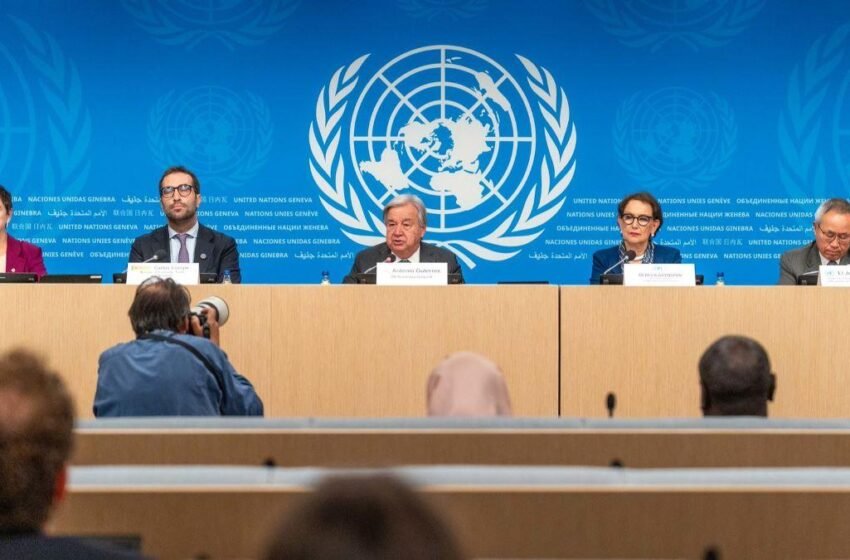
The urgency has been brought out by the introduction of the forum at the United Nations Conference on Trade and Development (UNCTAD16). The UN Secretary-General, António Guterres, noted that the existing system requires a global (not bilateral) conversation on debt and made the forum a venue of problem-solving and not a fragmented negotiating instrument. The environment in 2025, characterized by uncertainty in geopolitics and constrained credit markets, strengthens the need to reform the system.
Strategic Purpose And Structural Goals
The Sevilla Forum on Debt is directly connected with the Sevilla Commitment and the resolutions of Financing for Development passed at the beginning of the year. Its directive is dedicated to converting general political pronouncements into functioning structures. The forum aims at creating common standards of responsible lending and borrowing that will influence more predictable and fair international financing conduct. This focus goes to enhance transparency, equitable restructuring frameworks, and establishment of coordinated approaches between the creditors and the borrowers.
Reforming Debt Architecture
Among the fundamental aspirations of the forum is to revise the manner in which global debt is governed. The existing system is highly disjointed, is frequently sluggish, and is largely dependent on large financial actors. The goal of this forum, based on the promotion of a neutral platform that covers both debtor countries and creditor countries, coupled with the involvement of the private lenders and multilateral financial organizations, is to minimize the asymmetry of politics. Minister Carlos Cuerpo of Spain termed the move as a bridge to be in between the borrowers and creditors as a result of which economic realities must be aired in the developing states without imbalance of power.
Sustaining Political Momentum
Another important objective is sustaining the political attention outside the multilateral conference cycles. Guterres emphasized that political will has to be sustained to ensure transformation of principals into enforceable mechanisms. The structure of the forum is designed to follow-through on commitments, progress, and sustain the level of high engagement continuously, as opposed to sporadic attention by crisis events.
Operational Tools And Emerging Mechanisms
One of the key projects financed with the help of the forum is Debt Pause Clause Alliance. This device would enable nations that are in crisis like natural catastrophes, market shocks or pandemics to temporarily make a continuation of debt repayments. The pause clause helps to stabilize any economy in periods of extreme stress so that they do not have to resort to emergency borrowing or harsh austerity, which would otherwise cause an immediate fiscal collapse.
Debt-For-Climate And Social Development Swaps
The Global Hub for Debt Swaps is a similar approach to the strategies of attaching debt relief to sustainable development. Creditor nations can cut or rewrite debt under this model in return for investment in environmental resilience or social development projects in the host countries. This makes debt sustainability to be in tandem with climate adaptation activities particularly in the vulnerable areas which are vulnerable to climate-related disasters.
Inclusive Stakeholder Dialogue
The leaders of the forums emphasize the need to tap into the civil society, academic and financial institutions. UNCTAD Secretary-General Rebeca Grynspan observed that a wide involvement guarantees the solutions are based on the real-economy demand, and not kept to the high top-level policy-making. Inclusive dialogue is meant to focus on sustainable, human-centered financial restructuring since more than 60 developing states are spending over 10 percent of government revenues on interest alone.
Implementation Challenges And Political Dimensions
The success of the Sevilla Forum on Debt will be based on the collaboration of not only the multilateral lenders but also the individual creditors and local financial institutions. The involvement of the private sector is a very important and unpredictable element. Most debt crises intensify because of late intervention by private lenders that aim at shielding the financial stands. The forum aims at influencing the norms towards promoting synchronized restructuring, yet market-based resistance may act as a hindrance.
Balancing Domestic And International Priorities
The borrowing nations have to strike a balance between relief and home based reforms. Fiscal transparency, improvements of the practices of governance, and long-term structural reform programs often become effective in terms of debt restructuring. Political and logistic constraints of making rapid reform under tricky circumstances are experienced in many states, especially low-income economies. This makes it difficult to conform to international demands and local facts.
Risks Of Symbolic Action
The visions of the forum are wide, however, the results depend on a pragmatic implementation. Critics are in doubt whether new structures can bring breakthrough where the old structures have failed. The forum will end up becoming more of a suggestion box instead of a change agent without quantifiable actions like formalized systems of legal reforms on restructuring and binding instances of transparency. The timeframe of meaningful impact that aims at making a difference by the beginning of 2026 will evaluate the working capacity.
International Impact And Forward Outlook
The Sevillian Forum on Debt is an indication of a change in focus to more inclusive global financial reform accounts. The growing awareness of systemic shortcomings implies possible relocation to a more foreseeable restructuring setting. The initiative is an indication of the increased international agreement that development progress and climate resilience cannot be independent of debt sustainability.
Implications For Global Development Agenda
Cancellation and restructuring of debt is part of the realization of Sustainable Development Goals. In the 2025 development cycle fiscal reforms are to be combined with climate action, social welfare and economic resilience. With proper application, forum mechanisms can be used as templates of future debt governing solutions, especially to climate-sensitive economies and small island nations.
A Test Of Global Political Cooperation
It is a complicated task of reaching an agreement in the polarized world order, in terms of regions and other financial systems. Whether multilateral cooperation will be able to triumph over geopolitical disintegration and rival financial motives will be determined in the coming period. The impact of the initiative will be assessed not only based on the pronouncement of the promises, but based on whether the troubled economies have an actual liquidity relief and re-established fiscal space.
The Sevilla Forum on Debt is in a decisive place in world history, with the recognition of systemic failure and a possible path to a new equity in international financial relations. With the world entering further into the stage where climate demands, economic inequality, and capital volatility will be an overlapping concern, it is uncertain if this model will be able to create lasting structural change or later the global system will be in need of even more ambitious solutions in the coming days.

