

Revitalising United Nations in era of global power shifts
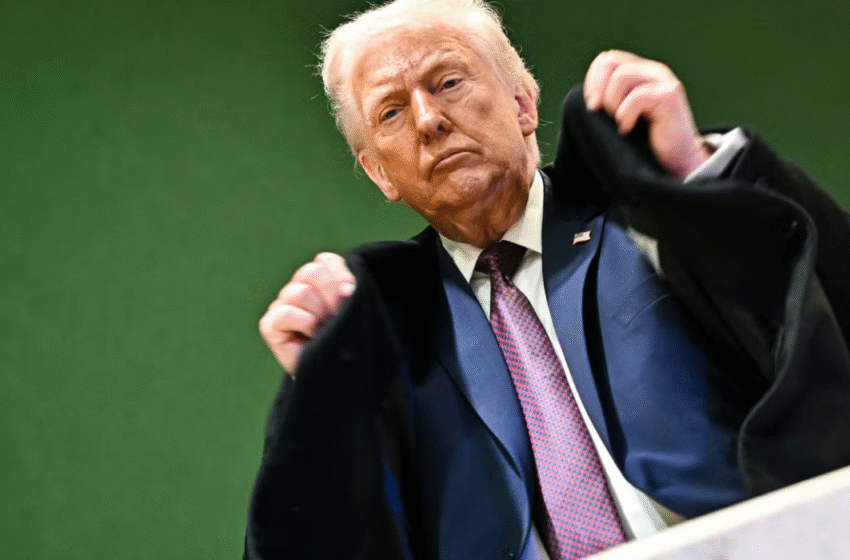
US President Donald Trump has constantly called the United Nations an outdated institution, and its ineffectiveness has been used as a reason for his unilateral policies on the international platform. However, instead of ignoring the institution, the need of the hour is to reform and strengthen it. The world is at a juncture where the norms of international law are disintegrating, and the stability of the world is at stake.
A World Order Under Strain
History tends to unfold in unpredictable waves, and the first few months of 2026 have been no exception. The United States’ kidnapping of Venezuela’s president and threats regarding the annexation of Greenland have highlighted the UN’s impotence in enforcing international law. Trump’s establishment of a so-called “Board of Peace,” a privately run body with centralized veto power, casts further doubt on the relevance of the UN system.
The world’s leaders are now accepting the fact that the international order after the Second World War has collapsed. Canadian Prime Minister Mark Carney, among other leaders, has acknowledged that the world that existed before no longer exists. This is a defining moment for the idea that rules and institutions can provide collective security.
The Return of Power Politics
Without the presence of global governance, the world could drift into a mercantilist order where might makes right. In this world, territorial expansion, political intimidation, and armed conflict may become the norm, undermining many decades of peace and stability. The prospect of future generations being swept up into conflicts is no longer a possibility, and the UN may become powerless to resist these trends.
The UN’s Historical Role and Achievements
Founded in the aftermath of the Second World War, the United Nations was conceptualized as a mechanism to prevent global disasters from recurring. It has been instrumental in preventing nuclear wars between superpowers, making decolonization possible, enhancing health statistics worldwide, promoting human rights, and combating poverty. The United Nations has also been instrumental in the unprecedented reduction of child and maternal mortality rates due to global efforts to combat poverty.
Yet the UN has never pretended to be perfect. As former Secretary General Dag Hammarskjöld so famously said,
“The UN was not created to carry man to paradise, but to save man from chaos.”
Unfortunately, in recent years, it has not protected the people of Gaza, Ukraine, Sudan, and other places from extreme suffering.
The Risk of Institutional Hollowing
If current trends persist, the UN could become an empty shell—an institution dominated by procedural debates without real authority or impact. Such a future would undermine the core ideals of multilateralism and international law, leaving global governance vulnerable to unilateral power plays.
A Missed Promise of Reform
The founders of the UN recognized that international institutions must adapt. US President Harry Truman recognized that the UN Charter would need to be adapted from time to time as world circumstances changed. Article 109 of the UN Charter specifically provides for a review conference to revise its structure, but this has never occurred in the 80-year history of the UN.
Every effort to revisit the Charter has been postponed, considered untimely or inconvenient. But it is difficult to make a case for postponement today, as the UN finds itself unable to carry out its founding mandate of maintaining international peace and security.
Reimagining Global Governance
As the current global order fractures, there is an opportunity to redesign the UN for contemporary challenges. Countries such as Brazil and South Africa, along with smaller states that feel marginalized by the existing system, have already endorsed the idea of a Charter review conference. Such a process could be initiated through a two-thirds vote in the General Assembly and support from nine Security Council members, without being subject to veto.
Reforms could address emerging issues such as artificial intelligence and climate governance, but three structural dysfunctions stand out as priorities.
The Veto Problem
The Security Council’s veto power often paralyses decision-making, prioritizing the geopolitical interests of its permanent members over global peace and security. A reformed system could make the Council more accountable to the General Assembly, where every nation has equal voting power.
Strengthening Enforcement Mechanisms
Another reform pathway would involve enhancing the enforceability of international law, potentially through expanded jurisdiction for international courts or stronger binding authority for General Assembly resolutions. Such measures could transform the UN from a largely advisory body into a more effective guarantor of global norms.
Balancing Sovereignty and Global Interdependence
The tension between national sovereignty and global interdependence remains one of the defining challenges of modern governance. A renewed UN framework could facilitate collaborative solutions involving governments, private sector actors, and civil society, fostering more agile and innovative responses to global crises.
The Case for Reform Amid Polarisation
Critics argue that revising the Charter during a period of intense geopolitical polarisation could produce undesirable outcomes. Yet recent events suggest that maintaining the status quo may pose an even greater risk. Others doubt whether multilateral reform can restrain major powers, but collective action among smaller and mid-sized states could build countervailing influence.
An Opportunity for Inclusive Global Leadership
Launching a Charter review process would allow countries representing most of the world’s population—many of which were still under colonial rule when the UN was founded—to help shape a governance system suited to the present era. This inclusive approach could produce a more equitable and resilient global framework.

