

Red Sea tensions and UN politics reveal deep divides in maritime security priorities
The recent move by the United Nations Security Council to continue monitoring attacks on ships in the Red Sea has caused a dramatic geopolitical debate, with Russia throwing a verbal barb at the United States in relation to its own naval activity in the Caribbean and Latin America. But even in what appears to be a rhetorical poke at the United States, there are a number of profound questions on priorities regarding security concerns, military campaign legitimacy, and global application of law.
What prompted the Security Council’s renewed focus on the Red Sea?
On January 14, 2026, the UN Security Council adopted a resolution that called upon UN Secretary General António Guterres to continue reporting each month on attacks against boats in the Red Sea carried out by the Iran-aligned Yemenian Houthi movement for the next six months, extending a reporting requirement initiated in early 2024. The measure, jointly penned by the US and Greece and adopted with 13 votes in favor (with a China and Russia abstention) indicates the level of concern over the world’s most critical maritime route remaining disrupted by these incidents.
The Houthis began targeting commercial shipping routes in 2023 in support of Hamas following the October 7, 2023, attack on Israel, thereby expanding their original objectives to include preventing ships that are connected to Israeli ports from passing. However, it has been noted that some of these ships lacked connection to Israelis, making it difficult to rationalize these assaults.
Why do Houthi attacks matter for the global economy?
The Red Sea, together with the Suez Canal, represents one of the busiest shipping lanes in the world, accounting for about one third of all container shipments. Oil and liquefied natural gas shipments are also important, with estimates suggesting that about 12% of world sea-borne oil and 8% of liquefied natural gas shipments move via this route. Directioning to go around Africa not only increases travel time, it increases shipping costs, thus raising world energy prices.
A number of ships have been severely damaged or have sunk as a result of these attacks. To give a few instances, MV Eternity C was attacked by Houthi drones and rocket-propelled grenades in July 2025, leading to loss of life and a ship loss. Other vessels, namely M/V Rubymar and M/V Sounion, have also been severely damaged. The Sounion spill has also raised a major environmental hazard because of the discharge of about 150,000 tons of crude oil into the Red Sea environment.
Russia’s gibe: diverting attention to the Caribbean
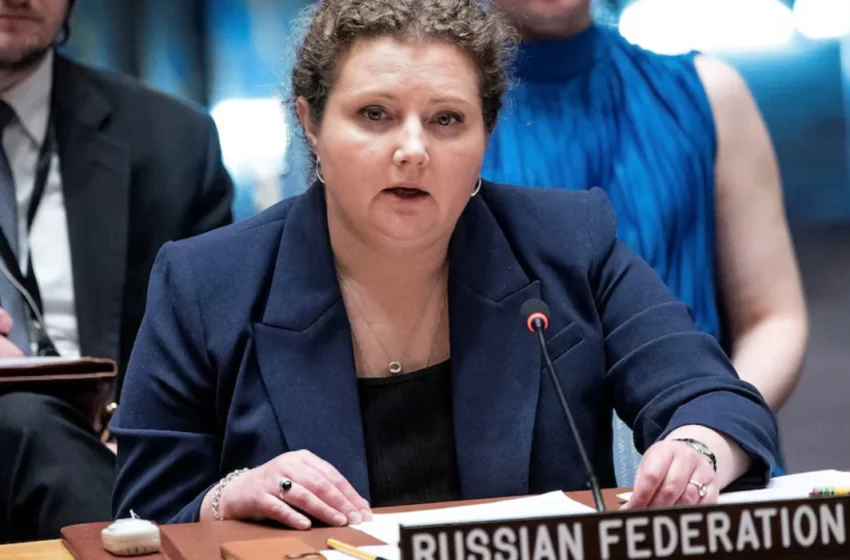
Russia’s deputy U.N. ambassador, Anna Evstigneeva, called from the Security Council chamber for the world body to shift its focus from the Red Sea to what is taking place in the Caribbean with regard to attacks on ships there. These came in a U.S. crackdown of at least 20 strikes conducted since September 2025 on what Washington termed “suspected drug traffickers” along the coast of Venezuela, killing at least 80 people with seizures of at least five tankers to cut down on Venezuelan oil exports.
Russian media argues that there is a U.S. double standard here: they are condemning Houthi missile strikes while themselves carrying out fatal strikes in a region not designated a war zone. Various observers have noted with concern that certain NGOs for human rights and certain lawyers have declared this U.S. policy of extrajudicial killing to contravene international law under the theory that purified smugglers have a right under international law to life that would be contravened by a policy of killing ones who have not been tried.
Disparate threat narratives and geopolitical gamesmanship
The contrast in how States approach maritime security reveals a broader double standard in international diplomacy. The U.S. and its allies frame the Houthis’ actions as a destabilizing “terrorist threat” endangering freedom of navigation and accountable under existing Security Council resolutions, like Resolution 2722 (2024), which condemned Houthi attacks on merchant vessels.
Meanwhile, the same or even more deadly maneuvers from the U.S. side over the Caribbean are packaged as counter‑smuggling enforcement, not threats to world peace, despite confirmations from reports that these actions do little to have any clear legal authorization under international law and more importantly, call serious questions on sovereignty in Venezuelan waters.
This inconsistency complicates the UN’s mission: The Russia and China abstentions on the Red Sea reporting resolution underlined deep East‑West divisions, with both capitals rejecting what they saw as politicisation of maritime security issues while pointing to Western military interventions elsewhere as equally worthy of scrutiny.
How have maritime attacks affected global shipping and regional security?
The impact of the Red Sea crisis has been tangible. Shipping traffic through the Suez Canal plummeted by more than 60% from levels seen before the attacks, forcing companies to divert to the Cape of Good Hope, significantly increasing transit times and costs. These disruptions ripple through global supply chains and have increased fuel consumption and carbon emissions due to longer voyages, with implications for the International Maritime Organization’s environmental commitments.
In response to sustained threats, international naval coalitions such as Operation Prosperity Guardian (U.S.‑led) and the EU’s Operation Aspides have been deployed to protect merchant vessels and combat the threat of drones, missiles, and fast‑attack boats used by the Houthis.
Although direct Houthi attacks have reportedly subsided in recent months, the Security Council’s extended reporting requirement underscores persistent concern that the threat could re‑emerge, particularly if regional conflicts intensify.

