

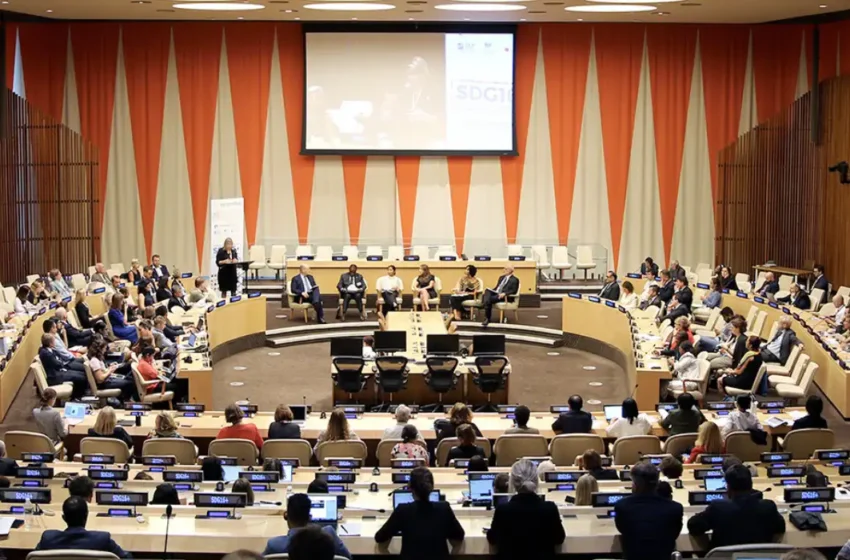
Multiple challenges: Financial operations of the United Nations Economic and Social Council
The United Nations Economic and Social Council (ECOSOC) functions as an essential coordinating body for worldwide economic, social, and development operations throughout the UN system. Many people over time have raised significant concerns about the UN Economic and Social Council’s effectiveness together with its financial arrangements. The article examines these criticisms in detail by focusing on institutional barriers alongside operational inadequacies and funding problems that prevent the ECOSOC from fulfilling its mission.
Member States’ inadequate financial contributions
The continual budget deficit due to member states failing to pay their financial obligations remains a top-level critique of ECOSOC financing.
A significant number of member states keep delaying or failing to pay their full contribution dues to the organization. The United States, which was one of the significant donors, owed $1.1 billion to the normal UN budget for 2023 and 2024, along with more than 50 nations failing to pay their obligations by 2024. Insufficient financial liquidity created serious problems for the ECOSOC, which compromised its ability to pay for essential operations.
Supervisory roles and program management functions of the ECOSOC become limited due to late payments, which must fund important initiatives including the implementation of the SDGs and humanitarian relief. UN investigative departments responsible for war zone human rights investigations in Sudan and Ukraine are forced to discontinue their hiring operations because of budgetary limits.
Excessive reliance on voluntary donations
The monetary funds for operations at the ECOSOC come primarily from donations by independent individuals as well as from the altruistic money of member countries. Land-based funding provides adaptable opportunities yet it brings forth various complications to deal with.
Global requirements do not determine voluntary donation levels because funding is often erratic and dependent on donor preferences. Development plans suffer from impaired long-term viability because of this unpredictable situation.
Its source of volunteers who depend on donor money leads critics to believe the organization faces excessive donor influence on its agenda. Wealthy countries, together with certain private donors, might prioritize their programs even though these projects are not essential for developing nations.
Ineffectiveness and bureaucratic difficulties
The ECOSOC has raised concerns because of its inadequate approach to handling projects and spending budgets.
A substantial percentage of UN funding goes towards administrative costs even though delivery of programs takes place indirectly. The inefficient structure diminishes the effectiveness of the ECOSOC’s activities, as critics observe.
The wide-reaching economic, social, environmental, and humanitarian scope of the ECOSOC undermines its ability to effectively coordinate the numerous commissions and organizations because it produces multiple agencies with different organizational structures. The absence of unity triggers both repetitive work efforts as well as unnecessary resource consumption.
Weaknesses in the structure of financial oversight
The functioning of the ECOSOC is impaired by two inherent problems in its financial system that inhibit its effectiveness.
- The World Economic and Social Organization possesses limited official power to enforce decisions on its member states, while the Security Council maintains mandatory binding authority. The organization lacks effective authority to force financial compliance or ensure compliance with international agreements because it depends completely on advisory and consultative functions.
- The ECOSOC faces criticism from its members because it has 54 representatives but this number inhibits decision effectiveness and prevents proper representation of all states. A large number of Global South nations assert that they receive minimal participation in discussions about global finance.
Sustainable Development Goals (SDGs) face significant financial obstacles
The estimated expenses required to achieve the Sustainable Development Goals surpass the financial resources that exist worldwide. The annual requirement of $51.5 billion stands as the minimum amount needed to provide aid through the UN-coordinated humanitarian response to effectively assist 230 million vulnerable people. No matter how many requests are made, the funds remain insufficient.
Development nations confront macroeconomic issues, which include excessive public debt and high inflation rates, as well as socioeconomic challenges that worsen through climate change impacts. A combination of economic elements prevents both financial donations and successful SDG-related project execution for these nations.
Political Unrest Impacting Monetary Contributions
The ECOSOC has to deal with financial disruptions that arise from member states’ geopolitical disputes:
International funding of certain activities through political disagreement has been attempted by multiple countries. The delegations representing China, Russia, and Cuba have made attempts to cut funding streams for human rights investigations regarding Sudan and Syria violations.
The ECOSOC suffers from reduced efficiency and impartial execution because several donor states base their donations on political or strategic needs, according to critics.
Insufficient Accountability and Transparency
The public remains unaware of how funding from the ECOSOC gets divided across various initiatives. The insufficient disclosure about resource distribution makes people worry about wrongful management together with possible stabilization of resources.
The discovery of corruption in oil programs such as the Oil-for-Food Program during the early 2000s has led to scrutiny regarding financial oversight across all UN agencies.
Demands for Change
Organizations have called for modifications to the ECOSOC’s financial operations due to recent accusations of deficiencies. The creation of multi-year funding pledges together with required contributions serve as proposed solutions to make donations more predictable for beneficiaries.
Strong auditing procedures installed for resource distribution purposes will create better oversight while simultaneously enhancing transparency and accountability practices. The proposal for enhanced representation includes either establishing a new Global Economic Council with equal representation or adjusting the membership numbers of the ECOSOC.
Future aspects of ECOSOC finance
Partnerships that strengthen development financing appear among the ECOSOC’s future financial objectives. The ECOSOC aims to bring governmental institutions closer to corporate entities and non-profit organizations to optimize development project resources and expertise. The ECOSOC Partnership Forum will act as an essential platform to unite the public with private financial support for sustainable development.
Through international cooperation, ECOSOC aims to eliminate obstacles that prevent private investors from supporting sustainable development, particularly in infrastructure advancement and clean energy development. The SDGs require a large financial investment and this collaboration scheme aims to contribute towards closing the gap.
Financial management effectiveness along with openness stand as vital priorities for the ECOSOC. The Council plans to improve its financial systems to reduce administrative expenses and increase resource allocation visibility. The organization plans to boost auditing processes and establish methods for having specific budgets flow to developmental needs. ECOSOC will maximize the effective use of its financial resources through development goal fulfillment by implementing these reforms.
The optimization of financial management for ECOSOC represents one of the prime organizational objectives along with enhanced transparency. The Council’s main priority entails financial system transformation for cost reduction and enhanced resource distribution visibility. The development efforts will receive better financial targeting through improved auditing standards and more precise fund distribution. The application of the recommended reforms will allow the ECOSOC to maximize its financial resources for global development objectives.
The financial strategies of the ECOSOC need revision to meet current world trends and challenges. The Council needs to use these developments to address potential hazards and disparities. Through its priorities, the Council will focus on funding initiatives that support environmental sustainability along with climate action because they drive essential progress toward long-term development goals. ECOSOC has the opportunity to create adaptable financial strategies by implementing upcoming possibilities and challenges.
Global economic and social issues require the essential presence of the United Nations Economic and Social Council. Multiple problems exist in its finance operations because of inadequate structure and excessive donor control, alongside funding problems and procedural inefficiencies.
The organization needs to address these challenges to better execute its mission, which promotes international interaction and sustainable development in a continuously evolving world.

