

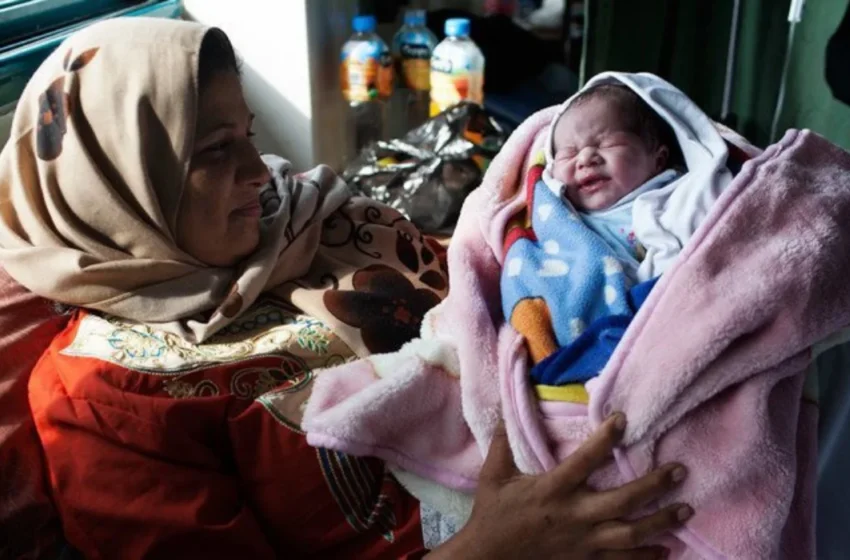
Gaza’s Maternal Health Collapse: Quantifying Two Years of UN-Reported Losses
Gaza maternal health breakdown has been witnessed as one of the worst humanitarian malfunctions registered by the United Nations in recent warfare. As late as 2025, UN agencies and human rights monitors reported that the reproductive health system had long since moved beyond failure following two years of back to back hostilities, displacement and access restrictions. Maternal and newborn outcomes, which were once the measures of fundamental healthcare stability, have turned into the indicators of systemic fall, the product of the overall destruction of infrastructure, loss of workforce, and long-term malnutrition.
UN reports of maternal health issues published in December 2025 frame maternal mortality as a component of the overall civilian cost with death during pregnancy and complications in newborns directly attributable to the pattern of warfare, the conditions of siege, and the limitations on access to humanitarian resources that tightened in October 2023.
Destruction Of Health Infrastructure And Services
It is estimated that by the end of 2025, nearly 94 percent of the Gaza hospitals were destroyed or damaged according to UN reporting. The most affected facilities included maternity wards, neonatal intensive care units and delivery rooms leaving only piecemeal and overcrowded options to pregnant women. The frequent attacks on large hospitals diminished the left capacity to triage of emergency, eradicating the usual prenatal and postnatal care.
This collapse was symbolized by the blowing up of the biggest fertility clinic in Gaza in December 2023. The UN officials subsequently reported that thousands of embryos and reproductive samples were lost and the effects of this loss will be felt over the long-term even beyond the immediate victims.
Loss Of Medical Personnel
Healthcare workers were lost which worsened the collapse of physical infrastructure. According to Palestinian health authorities, quoted by UN agencies, over 1,700 medical personnel had been slaughtered by September 2025. Obstetricians, Midwives and neonatal specialists were significantly hit and left the remaining facilities without professional staff to attend to complications like hemorrhagic, sepsis and preterm births.
UN field observers reported that facilities that had not been destroyed were usually staffed with untrained personnel and thus made use of sophisticated equipment impossible.
Maternal Mortality Trends Since 2023
Based on UN human rights documentation, maternal mortality in Gaza increased three times in late 2024 against the situation before the war. The treatment was not done on the women, and they had to suffer the pangs of labour without any treatment, loss of blood, and surgical procedures like cesarean sections. By the year 2025, pregnancy to the point of childbirth was a high-risk inducement even in pregnancy, which was deemed normal.
Medical volunteers also reported giving birth in corridors, tents and improvised shelters, all with aerial surveillance and without anesthesia or sterile supplies.
Impact Of Displacement And Living Conditions
The displacement of people on a large scale also increased maternal risks. Women in the informal camps or overcrowded shelters were pregnant and had no clean water, sanitation and privacy. According to UN population data, cycles of recurrent displacement interfered with continuity of care, which could not permit monitoring of pregnancy prenatally or high-risk pregnancy referral.
The agencies noted that women in late pregnancy were particularly disadvantaged as a result of displacement since many could not move safely to operating healthcare facilities.
Newborn Health And Survival Outcomes
The number of progenies dying in the first two years of birth increased drastically and the UN children agencies have noted that death rates of the children under the age of 24 hours has grown to 75 percent in the first two years by the middle of 2025. Early deliveries, birth asphyxia, and infections became the top causes, which were caused by maternal stress, undernutrition, and inaccessibility of neonatal care.
Low weight births were getting more frequent, which is evidence of maternal malnutrition as well as a disruption in the prenatal services.
Malnutrition And Its Effects
In mid and late-2025 in UNICEF screenings, the acute malnutrition prevalence rates were almost 40 percent among pregnant and breastfeeding women. The direct impact of this nutritional breakdown on the fetus was that of developing it with low birth weights and having long term developmental difficulties once the baby survived.
Thousands of pregnant women were being treated by humanitarian clinics every month with malnutrition, a condition virtually non-existent in Gaza prior to 2023.
Blockade Conditions And Medical Supply Shortages
UN human rights observers always attributed deterioration of maternal health to limitation of medical supplies and nutritional aid. Products that were deemed to be important to safe child birth such as antibiotics, surgical equipment, and prenatal supplements were often out of stock or delayed.
Health workers cited incidents where non-lethal injuries were turned out to be fatal in the absence of simple medicine, which also support the UN concerns of the breach of civilians protection.
Compounding Effects On Emergency Care
Lack of supply compelled hospitals to triage their services so that they could attend to trauma cases instead of maternity cases. Consequently, pregnancy-related complications used to be treated at advanced stages when they were fatal. According to UN agencies, this kind of triage setting was a symptom of a failed state of maternal health in Gaza by 2025.
Cumulative Humanitarian Impact On Women
In addition to the number of deaths, tens of thousands of women got injured during the war of conflict. UN statistics indicate that over 23000 women were injured during the period between 2023 and 2025 with many having to encounter health issues during pregnancy due to trauma and unhealed injuries.
The issue of psychological stress became one of the dominant contributors to pregnancy outcomes, and health workers reported an increase in preterm labor and miscarriage cases among displaced women.
Declining Birth Rates
The birth rates dropped drastically in the first half of 2025 by over 40 percent of the past years. Demographers attributed this decrease to insecurity, malnutrition, and elimination of reproductive health services and it indicated demographic and social consequences in the long run.
Legal And Policy Dimensions In 2025
The UN Office of the High Commissioner to Human Rights interpreted the maternal health breakdown in Gaza in the framework of the international humanitarian law, underlining the safety of medical facilities and other objects that could not be afforded to civilians. Reporting published in the late 2025 highlighted the need to make sure that maternal care is accessible even in the midst of hostility.
These tests were once again the focus of renewed interest with wider debate at the UN on accountability mechanisms and enforcement of humanitarian access.
Aid Access And International Response
Nevertheless, humanitarian organizations have said that they have had a hard time maintaining assistance even after various ceasefire deals in 2025. The indicators on maternal health were made a priority in determining whether relief efforts were sufficient or just temporary by the UN bodies.
The maternal and newborn data were increasingly mentioned in diplomatic negotiations as the insufficient protection of civilians instead of individual health statistics.
Broader Implications For Post-Conflict Recovery
The Gaza maternal health crisis is a good example to demonstrate how the reproductive system is used as an early warning of societal disintegration and recovery dilemma. The hostilities are expected to end; however, according to the UN estimates, years of long-term investment, staff re-employment, and nutritional recovery would be necessary to reconstruct maternal and neonatal care.
Gaza is experiencing quantified maternal losses as a global consideration moves through a series of crises in 2025, a critical question emerges in both policy-makers and humanitarian actors thinking: will future responses treat maternal health as a fundamental indicator of civilian protection, or as usual, these numbers will be registered only after it is too late in the game.

