

Evaluating the UN’s Impact on Climate Change Mitigation Efforts
The UN still remains at the forefront of world climate management using the three-decade structures. The Paris Agreement which is signed by 194 countries establishes the limit of 1.5degC temperature increase. It is enforced based on the UNFCCC that oversees the annual climate negotiation conferences that influence worldwide mitigation plans. These frameworks are now operating under unprecedented stress as disasters associated with climate gain intensity with the acute regularity, which is now almost regularly 10 minutes somewhere around the world.
Countries keep rebating Nationally Determined Contributions with over 80 percent of the countries having already submitted revised targets by mid-2025. Although it has made such progress, the existing commitments are still estimated to warm the planet by 2.5degC by 2100. The annual evaluations by the UNEP present this as a very dire lack that needs to be met by massive energy reductions and speedy energy changeovers. Mobilizing commitments is not the only issue facing the UN but also making them credible when the world economic growth is shrinking and there is a change in geopolitical priorities.
Growing role of scientific forecasting
The UN agencies are becoming more dependent on climate modelling instruments to legitimize and narrow down mitigation requirements. New temperature anomalies were noted in early 2025 according to emerging data by the World Meteorological Organization and this explains why increased reduction of emissions is necessary before the end of the decade.
Linking humanitarian trends to emissions
The humanitarian divisions of the UN provide daily reports of the effects of direct connections to climate pressures. Dislocation, food crisis and epidemic outbreaks demonstrate the short-term impacts of low mitigation, which justify the rationale behind the presentation of climate action as a protection imperative, as opposed to an environmental preference.
COP30 outcomes and expanded financing
The COP30 in Brazil was a historic occasion where the member states decided to allocate more money to climate finance, and by 2035, the amount would amount to 300 billion, which was higher than before. The damage and loss finance were over half a billion, which indicates recognition of overexposure of the vulnerable states. UN Secretary-General Antonio Guterres connected humanitarian protection to climate mitigation when he said that over 116 million beneficiaries were being assisted by the UN in 2024, which is likely to increase dramatically with increasingly high temperatures.
Renewable energy scale-up across regions
Capacity installations in major markets were fastened by UN-supported efforts. The addition of solar and wind energy all over the globe was 510 gigawatts in 2025, which is 25 percent of the level of 2024 as per IRENA. Various African and Asian governments followed the subsidy models that were recommended by the UN, extending access to clean energy technologies. These actions enhance the mitigation capacity in the long-run despite the uneven phase-outs in fossil fuels.
Integrating climate action with humanitarian planning
The 2025 funding requests were up to 47 billion, and they aimed to support 190 million beneficiaries who were victims of various crises. According to OCHA, over 305 million people had urgent needs, and most of the emergencies were triggered by climate-related disasters. The UN mitigation activities are more and more being seen to accompany the relief initiatives that include climate-smart agricultural initiatives in drought prone countries like Sudan where 30.4 million people are in need.
Key Metrics of UN Effectiveness
According to the 2025 UNEP Emissions Gap Report, the reduction of 7 percent in the methane emission as a result of oil and gas operations in 50 countries with UN-favored regulatory frameworks was recorded. The amount of carbon dioxide stabilized at 420 ppm with the support of increased electric vehicle sales of 18 million vehicles in Europe and China. Irrespective of these gains, aggregate world emissions were up 1.2 percent, which means industrial rebound.
Forestry and land restoration gains
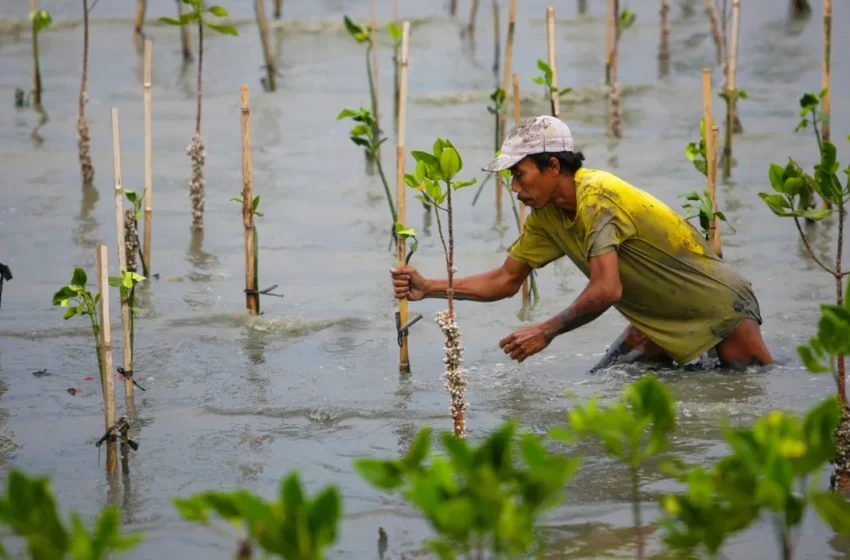
The absorption of 2.5 billion tons of CO2 equivalent in 2025 was made possible through the REDD+ program that was promoted by the UN. There was an increase in forest cover by 10 million hectares through the enhanced collaboration with the Indigenous communities in the Amazon and the Congo Basin. These actions are in support of the argument by the UN that land-based mitigation is needed to achieve mid-century targets.
Embedding climate resilience in public health
Vaccination campaigns organized by the UN that could save nearly 3 million lives a year are gradually integrating climate resilience measures as the vectors are spreading to new areas. By 2025, even close to half of the children in the world had been vaccinated, as supply chains were then adapted to heat extremes, floods, and transport disruptions associated with warming.
Geopolitical disruptions and diverted resources
The war in Ukraine, Sudan, and other places is still devouring huge amounts of the world humanitarian funds. As at September 2025, donors including the European Commission and United States have donated over 15 billion but the total appeals remain at 43 percent. During political crises, climate mitigation is compromised because diplomatic energy and funds take up other issues.
Economic pressures and donor fatigue
High inflations have minimized effective contributions and discouraged mitigation planning in the long run. In the case of Sudan, the government of that country attracted only 11 per cent of its target of 10.28 billion during the beginning of the year. UN assessors point out the growing donor fatigue due to overlapping emergencies between the Occupied Palestinian Territory and Yemen which are taxing financial resources.
Persistent inequity and limited technological access
The digital divide negatively affects the use of UN climate tools in sub-Saharan Africa where over 600 million individuals have no access to reliable electricity. Least developed countries end up paying 70 percent of the cost of climate disasters yet they end up getting less than 20 percent of the adaptation funding. Access to green technologies is still constrained by intellectual property slowing the global alignment towards mitigation.
Innovations Driving Forward Momentum
UN Global Pulse has increased its application of AI risk modeling, and it forecasts the extreme weather events in 2025 with 85 percent accuracy. The identification of more than 1, 200 climate vulnerability hotspots through a real-time mapping by UNOSAT informed over 2 billion dollars of investments. Satellite monitoring has significantly slowed down the illegal deforestation by 15 percent in Latin America, and this enhances the integrity of mitigation data.
Blockchain and verified carbon markets
Carbon credit schemes supported by blockchain which were launched by some of the UN members rebuilt trust in international offset markets. The system attracted almost 100 billion investments in the private sector, which supplemented the conventional public sources of funding. These processes are a significant advance to open climate funding.
Private sector and civil society collaboration
The UN Global Compact brought over 15,000 companies worldwide together, driving a 1 trillion of sustainable investments. Religious groups strengthened access to renewable expansion in rural localities, and solar packages were given to over 2 million off-grid families. These alliances indicate that the UN is shifting towards a distributed responsibility when its government funding becomes level.
The question of the ability of the world to enter into a plausible way to the 1.5degC threshold will be determined by how easily the UN 2025 frameworks are converted into action. As the effects of climate unfold in nearly 10-minute intervals around the globe, the sustainability of these mechanisms has been of repeated interest as carbon markets become more dynamic and innovative approaches to mitigation, led by younger people, transform the overall approach to the next decade.

