

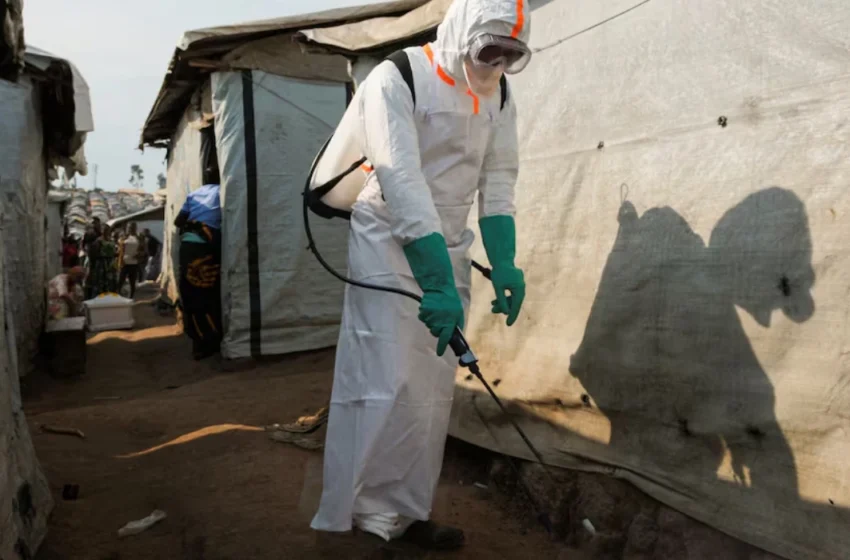
UN Ebola Warning: Africa Faces $3.6 Billion Risk
The recent warning issued by the United Nations has transformed the health crisis into an economic one. As per the UN, the current Ebola crisis in Africa could cause a loss of up to $3.6 billion in the region while simultaneously putting hundreds of thousands of jobs and millions of people in even deeper poverty. The scope of the figure has heightened the fear due to the fact that this particular health crisis is no longer being viewed simply as a health crisis.
This is being issued at a time when the epidemic is described as the biggest ever seen with regard to the Bundibugyo strain, making the response even more urgent. The infection has been noted in Central Africa regions such as the Democratic Republic of the Congo and Uganda, where over 1,100 cases and hundreds of fatalities have been registered. Given the absence of a tested vaccine or medication for the strain, the response to the epidemic has had to depend largely on containment, surveillance, rapid testing, community engagement, and mobilization of resources to areas affected.
Economic danger beyond the virus
It is noteworthy because the dollar figure involved is not limited to health care spending. The $3.6 billion expected to be lost through Ebola is a result of the more general disruption that can be created by the virus in terms of labor markets, transportation, trade, provision of public services, and family income levels. In a situation where economies have to work under difficult conditions, an even smaller outbreak of the disease could lead to fear-based actions like reduced travel and market activity, delayed border crossings, and negative investor sentiments.
That is why the UN Development Programme has pressed the argument that Ebola must be treated as a development emergency as much as a health one. The agency’s warning is centered on the idea that delayed action can transform a disease outbreak into a prolonged social and economic setback. The most vulnerable communities tend to be hit first and hardest, especially where livelihoods depend on informal work, cross-border movement, and daily income. In such an environment, even temporary restrictions can quickly push households into debt, food insecurity, and displacement.
The scale of the outbreak
The outbreak being discussed is not a theoretical risk; it is an active crisis already measured in substantial human toll. The reported case count has crossed 1,100 people in the DRC and Uganda, while deaths are already in the hundreds. Those numbers matter because Ebola is a disease where speed is critical. Once contact tracing weakens or cases go unreported, chains of transmission become harder to interrupt, especially in areas affected by insecurity or poor infrastructure.
This situation is even more complicated because of the understanding of officials that the actual number of infections could be greater than stated. Under-reporting of cases is typical for situations when an outbreak occurs in a region affected by war and conflicts or otherwise difficult to reach, as restrictions, fear, and mistrust can prevent people from reporting their condition. This implies that numbers stated in the headlines actually reflect only the tip of the iceberg, with ongoing spreading being out of sight.
Funding gap and response pressure
The question of money remains a crucial point in the ongoing discussion. According to Africa CDC, the amount of funds needed to fight Ebola has increased dramatically, from $518 million to $1.4 billion. This adjustment is vital since it reveals how quickly the real cost of combating the virus increases when human needs are considered in addition to health issues. Moreover, according to Africa CDC, there have been about $910 million committed by the partners, but only 13% of it has been dispersed yet.
That funding gap is not just an accounting issue. In outbreak response, timing is everything, and delayed disbursement can slow down laboratory testing, logistics, staffing, treatment centers, and community awareness campaigns. If those pieces arrive late, infection control becomes more expensive and less effective. The UN and Africa CDC are essentially warning that underfunding now may produce a much larger bill later, both in money and in lives.
From the initial estimation of $518 million required to the present estimation of $1.4 billion required indicates that the response to this crisis has changed from just the medical aspect of it. This is because humanitarian assistance has been incorporated into the strategy for dealing with the situation and this is an indication that the crisis being faced is not simply one dimensional but a complex one requiring attention to various other issues including health care, food aid, vulnerable people protection, and logistics among others.
Humanitarian and social fallout
The UNDP’s warning about nearly one million additional people being pushed into poverty is one of the strongest indicators that the outbreak could have long-term consequences. Poverty shocks of that size do not disappear when infection numbers decline. Instead, they often linger through lost income, school disruption, disrupted local markets, and weakened access to care for other diseases. In regions already facing fragile development indicators, Ebola can deepen inequality and set back progress by years.
There is also the element of the social, which does not get as much attention as statistics on death rates. Epidemics may erode faith in institutions, increase stigma surrounding survivors, and make families reluctant to report symptoms in time. In case the fear of quarantine is higher than that of the virus, then the task of public health officials becomes significantly more difficult. This is the reason why the community approach was highlighted by both UNDP and Africa CDC as an integral element of containment.
Why the Bundibugyo strain matters
It is relevant to include the Bundibugyo strain in the current discussion since it emphasizes the problem that the health response team is currently facing. Due to the absence of a vaccine and effective medicine to treat the Ebola virus, the entire strategy of the health response team is based on discipline rather than medical intervention.
The strain’s role in what is described as the largest outbreak of its kind also shapes the risk assessment. Outbreaks gain severity not just from case numbers but from the conditions in which they spread. If a disease moves through areas with conflict, poor health infrastructure, weak transport, and limited laboratory coverage, it can quickly outrun available response capacity. That is why the current outbreak is being watched so closely by regional agencies and international partners alike.
The UN’s warning in context
The UN message in its essence is very clear – Ebola cannot be understood only as an emergency health situation. The UN is sounding alarm in the sense that failure to respond would lead to even greater developmental problem in the continent concerning job creation, poverty and economic development. The significance of such a frame is very important as it would bring political and economic actors into play rather than just the health ministry.
“If we do not, this health emergency risks becoming a much deeper and prolonged development crisis across the region and potentially the continent,”
said Damien Mama, UNDP’s resident representative in the DRC. The statement captures the essence of the warning: Ebola can become a multiplier of existing fragility if action lags. By placing the risk in development terms, the UN is making the case that prevention is cheaper, faster, and far less damaging than a delayed crisis response.
Africa CDC’s own message follows the same logic.
“The funding now needed reflects not only health response operations but also humanitarian needs,”
Jean Kaseya said in describing the revised financial requirement. That statement signals that the response can no longer be treated as a basic medical campaign. It is now a broader rescue effort that must support people whose lives and incomes are being disrupted in real time.
Lessons from previous Ebola crises
The present warning also has lessons from the past. In the case of the Ebola virus epidemic of West Africa of 2014, the World Bank warned about potential economic losses running into billions of dollars based on how fast the epidemic was contained and how far it spread. The importance of the above-mentioned example is that it reveals how a public health emergency might lead to substantial economic costs even if the scale of infection stays geographically localized.
This is the reason behind the estimation of $3.6 billion that is currently being taken seriously rather than being called an exaggeration. In outbreak economics, the greatest damage does not come from the virus alone but from the way the society responds to the virus. There is decreased mobility and weakened logistics and thinning markets, while governments find themselves compelled to divert funds to outbreak management.
The next stage of the crisis depends on whether money, logistics, and public compliance align quickly enough to stop further spread. If the remaining funding gap is closed and resources are deployed efficiently, the outbreak may be contained before it produces the worst-case economic scenario. But if underfunding continues, and if transmission spreads beyond the current hotspots, the projected cost could become more plausible with each passing week.
For now, the figures are a warning rather than an outcome. The UN’s estimate, Africa CDC’s revised funding needs, and the case and death counts all point in the same direction: this outbreak is already expensive, and it could become far more costly if the response slows. The real measure of success will not be whether the world notices the crisis, but whether it acts quickly enough to prevent the forecast from becoming reality.

