

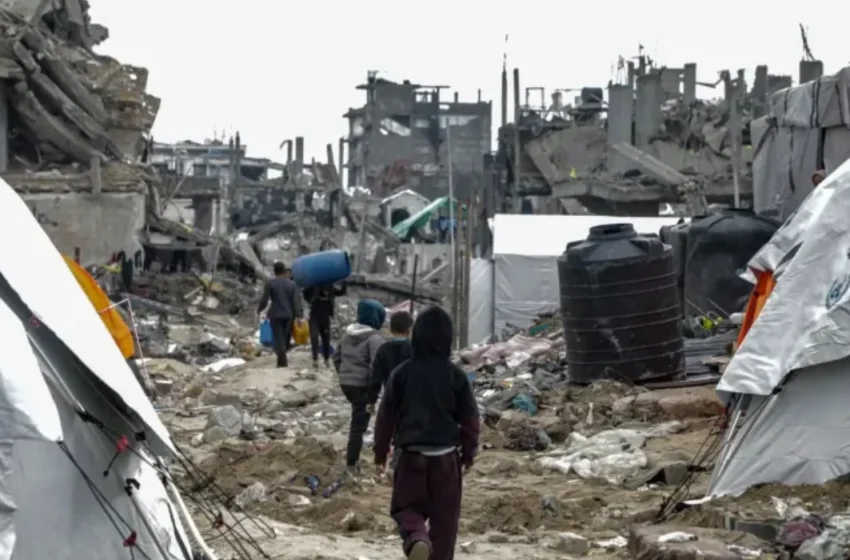
UNICEF Warns: Israel Kills ‘A Child a Day’ on Average in Gaza Despite Ceasefire
The ceasefire in Gaza aimed at protecting the civilian population from violence has not succeeded in protecting one of the most vulnerable groups, children. According to UNICEF, which stands for the United Nations Children’s Fund, Israel kills “a child a day” on average in Gaza, even in light of the ceasefire. This shocking figure points to an increasing humanitarian crisis marked by ceasefires being undermined through attacks, aid blockages, and service failure.
However, the above warning from the UN organization is not an independent observation; rather, it is a consequence of the death, injuries, and displacement recorded for many months. UNICEF has persistently made known that death of children during ceasefire times is an extremely serious breach of international humanitarian laws.
UNICEF’s Core Findings and Official Statements
The Daily Average of Child Deaths
According to the latest UNICEF statistics, a minimum of 67 Palestinian children have died during the ceasefire period in Gaza. Briefings have put the average figure slightly higher at around two children a day. Regardless of whether the figures change depending on the reporting period and what ceasefire is considered, the core point always remains the same – children are dying during ceasefires.
“Every child killed or injured is a family, a future, and a community lost; all parties must protect children and enable lifesaving aid,”
said UNICEF spokesperson in a November 2025 briefing. This statement encapsulates the agency’s urgent call for accountability and action.
Injuries and Displacement Among Children
Other than the death toll, UNICEF notes that hundreds of children have sustained injuries, some of whom will bear permanent scars. Displacement has continued to occur, where families had to leave shelters that were meant to be a source of safety. Most of the children who died had been displaced and were living in crowded camps.
“The breakdown of the ceasefire and resumption of intense bombardments and ground operations in the Gaza Strip has reportedly left at least 322 children dead and 609 injured,”
UNICEF stated in a March 2025 press release. This underscores the cyclical nature of violence and the fragility of any truce.
The Humanitarian Crisis Beyond Death Counts
Health System Collapse
The health care system in Gaza is on the verge of collapse. The hospitals work with inadequate electricity, drugs, and operating rooms. According to UNICEF, medical evacuation of wounded children often gets delayed or denied.
“Gaza’s health system remains severely strained, with limited capacity to treat injuries and a risk of medical evacuations being insufficient,”
UNICEF highlighted in a joint briefing with UN OCHA. This strain is not merely a logistical issue but a humanitarian emergency.
Aid Blockades and Supply Shortages
UNICEF has always pointed out that the obstacles to the delivery of aid are one of the major causes of children’s suffering. The provision of food, water, and medicine is often obstructed, thus depriving people of their basic necessities. It means that there is a combination of conflict and shortage.
“While a ceasefire provides a lifeline for children, they remain at grave risk due to ongoing violence and the blocking of essential supplies,”
a UNICEF spokesperson said during a Geneva briefing. This statement reflects the agency’s frustration with the gap between ceasefire promises and reality.
International Law and Accountability
Violations of Humanitarian Law
Child deaths and injuries are characterized by UNICEF as preventable results of continuous hostilities, where it is necessary for ceasefires to mean something. All sides are obliged, according to international humanitarian law, to protect the civilian population, particularly the children.
“Every child deserves to grow up in safety, and ceasefires must mean more than just pauses in fighting—they must ensure protection and access,”
UNICEF asserted in a statement. This call for accountability is central to the agency’s advocacy.
Calls for Verified Ceasefires
UNICEF and UN agencies have repeatedly noted a gap between formal ceasefire arrangements and on-the-ground realities. Violence and disruption continue, underscoring the need for verified, lasting protection of civilians.
“Ceasefires must be verified and honored with real protections for civilians, especially children,”
UNICEF urged in a November 2025 briefing. This reflects the agency’s focus on ensuring that truces are not just symbolic but functional.
Regional and Global Reactions
Diplomatic Pressure and Advocacy
UNICEF’s concerns have led the world’s political leaders and human rights agencies to demand urgent action. There is increasing diplomatic pressure on Israel to act in accordance with international law and protect civilians. Advocacy groups, meanwhile, are demanding that the UN Security Council intervene and take responsibility.
“The international community must hold all parties accountable for violations that endanger children,”
a human rights advocate stated at a UN forum. This sentiment echoes UNICEF’s broader push for global responsibility.
Media and Public Awareness
UNICEF’s comments have received a lot of media coverage that has heightened awareness about the situation. The “a child a day” headline about deaths in Gaza has generated much anger and a call to action. Campaigns are being conducted on social media with data from UNICEF.
The Broader Context of Gaza’s Crisis
Historical Violence and Ceasefire Failures
There have been numerous violent episodes and failed ceasefires in Gaza in the past twenty years. Every time when there was a ceasefire agreement, it was violated again due to further attacks, which put civilian life, especially children’s lives, in jeopardy. The statistics provided by UNICEF prove this point of view.
“Gaza has experienced multiple cycles of violence and failed ceasefires over the past two decades,”
UNICEF noted in a background briefing. This historical context is critical to understanding the current crisis.
Displacement and Urban Destruction
Many people in Gaza, including children, have experienced displacement, disruption in accessing healthcare facilities, and lack of necessities. In addition, urban destruction has worsened the situation by destroying houses, schools, and other facilities.
“Tens to hundreds of children have been injured, and large segments of Gaza’s population—including children—have faced displacement,”
UNICEF reported. This displacement is not temporary but a permanent feature of the crisis.
UNICEF’s Stance and Advocacy Priorities
Protection of Children as a Core Principle
UNICEF’s stance is humanitarian and rights-based, centering on the protection of civilians, particularly children. The agency stresses that ceasefires must ensure real protections and access to aid, rather than serving as symbolic pauses.
“UNICEF’s stance is humanitarian and rights-based: it centers on the protection of civilians, particularly children, and on ensuring aid delivery and medical care,”
UNICEF explained in a policy brief. This principle guides all of the agency’s advocacy.
Access to Aid and Medical Care
UNICEF highlights impediments to aid deliveries and medical evacuations as key drivers of child harm. The agency urges rapid and unhindered assistance, emphasizing that delays in aid are tantamount to denying life-saving support.
“UNICEF highlights impediments to aid deliveries and medical evacuations as key drivers of child harm,”
UNICEF stated in a joint briefing. This focus on access is central to the agency’s mission.
Compliance with International Law
UNICEF’s rhetoric consistently points to obligations under international humanitarian law and calls on all parties to abide by those obligations to shield civilians, especially children. The agency sees compliance as non-negotiable.
“UNICEF’s rhetoric consistently points to obligations under international humanitarian law and calls on all parties to abide by those obligations,”
UNICEF emphasized in a statement. This is a core tenet of the agency’s advocacy.
The Reality Behind Ceasefire Promises
Ceasefire vs. On-the-Ground Violence
The gap between ceasefire promises and on-the-ground realities is stark. Despite formal agreements, violence continues, and civilians, especially children, remain exposed. UNICEF and UN agencies have repeatedly noted this discrepancy, urging for verified and lasting protection.
“UNICEF and UN agencies have repeatedly noted a gap between formal ceasefire arrangements and on-the-ground realities,”
UNICEF stated. This reality undermines the credibility of ceasefires.
The Need for Verified Ceasefires
UNICEF calls for verified ceasefires that ensure real protections for civilians. The agency stresses that ceasefires must be functional, not just symbolic, and that accountability is essential.
“Ceasefires must be verified and honored with real protections for civilians, especially children,”
UNICEF urged. This is a critical demand for meaningful change.
A Call for Action and Accountability
The UNICEF warning that “Israel kills a child a day” on average during the ceasefire in Gaza is a shocking illustration of the continued humanitarian situation there. It is not just the death of children but the injury, displacement, and blockage of humanitarian aid that show the system failures, which need to be addressed immediately. The appeals of the organization for the protection, access, and compliance with the international law are not requests but moral necessities. The world needs to act and help these children or else more of them will continue to die in Gaza.
“Every child killed or injured is a family, a future, and a community lost; all parties must protect children and enable lifesaving aid,”
UNICEF said. This statement is the heart of the agency’s message and the foundation for global action.

