

Kyrgyzstan Seeks Non-Permanent UN Security Council Seat: A Strategic Bid for Global Influence
In a decisive move to elevate its global diplomatic footprint, Kyrgyzstan has formally sought a non-permanent seat on the United Nations Security Council (UNSC) for the 2027–2028 term. This ambitious bid, first announced at the 79th UN General Assembly in September 2024, represents more than a routine pursuit of international office—it is a calculated strategy to position Central Asia’s mountainous republic as a responsible, reform-oriented actor in global peace and security architecture.
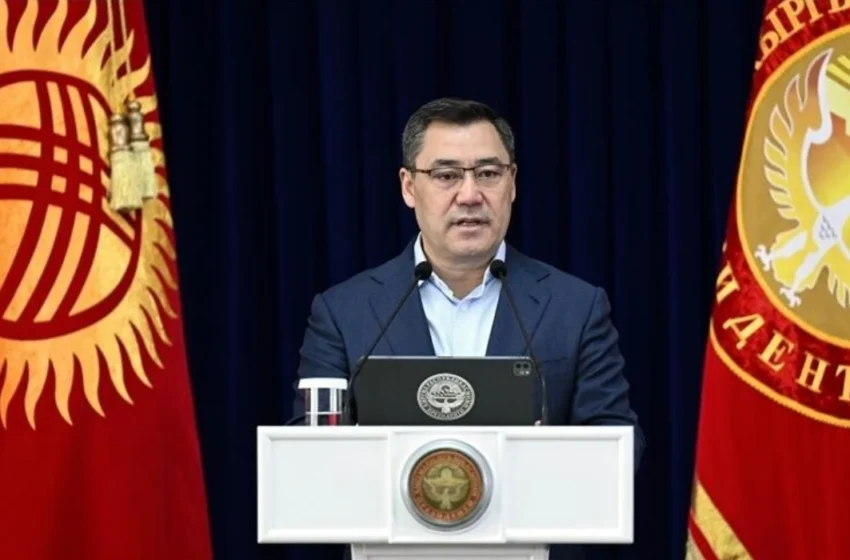
This is of immense importance as geopolitical divisions continue to deepen and demands for UNSC reform gain momentum. By positioning itself as a mediator among regional alliances and an advocate of preventive diplomacy, Kyrgyzstan seeks to become a beacon of hope for developing countries and a bridge builder among competing factions. “Our goal is to be part of efforts to make the Security Council more efficient, transparent, and representative,” said President Japarov at the 2024 UNGA session.
African Union Mission to the UN in a post on X said:
“#TheAfricanGroupUN received the briefing by the Special Envoy of the President of the Kyrgyz Republic, Mr. Edil Baisalov, on the candidacy of Kyrgyz for non-permanent membership of the Security Council for the term 2027-2028.”
The Strategic Rationale Behind the Bid
This pursuit of Kyrgyzstan is not just symbolic. It is because this country has always presented itself as a promoter of multilateralism, conflict prevention, and development-oriented governance. This candidacy rests on four main pillars: preventive diplomacy, regional representation, disarmament, and development.
According to President Japarov, the current composition of the UNSC lacks representation as it is out-of-date, especially in Africa and other developing countries.
“The Security Council must reflect the realities of the 21st century, not the geopolitics of the past,”
he declared, calling for structural reforms that expand participation beyond the traditional powers.
This stance aligns with broader Global South demands for a more equitable international order. Kyrgyzstan, as a small but active UN member since 1992, argues that its experience in mediating internal disputes, hosting regional dialogues, and supporting peacekeeping missions abroad qualifies it for a Council seat.
Campaign Milestones and Diplomatic Outreach
Since announcing its candidacy, Kyrgyzstan has launched an intensive diplomatic campaign. In April 2025, the government formally submitted its candidacy to the UN, triggering a series of high-level briefings, regional summits, and outreach events in New York.kabar+1
Key milestones include:
- A joint Central Asian appeal in December 2025, where leaders from Kazakhstan, Uzbekistan, Tajikistan, and Turkmenistan publicly endorsed Kyrgyzstan’s bid, calling for regional solidarity.
- A high-profile reception in New York hosted by Kyrgyz diplomats to present the country’s platform to UN member states.
- Public statements by Foreign Ministry officials reiterating Kyrgyzstan’s commitment to disarmament, climate-security linkages, and support for small island developing states.
The campaign has been marked by a deliberate effort to avoid regional rivalry. Instead, Kyrgyzstan has framed its bid as a shared Central Asian opportunity.
“This is not just Kyrgyzstan’s seat—it is the region’s chance to speak with one voice on global security,”
noted a senior Kyrgyz diplomat during a 2025 press briefing in Islamabad.
Regional Dynamics and Global Relevance
The application by Kyrgyzstan also shows a changing trend in the foreign policy of Central Asia. Traditionally concentrating on bilateral relations with Russia, China, and neighboring countries, Central Asia is turning to multilateral organizations as a way to strengthen its international influence.
Support by Central Asian leaders for the bid is quite significant. In December 2025, a common statement made by leaders at a regional summit expressed their desire for “united support” for Kyrgyzstan’s application due to the mutual interests of all Central Asian states.
The support from the region is vital because the elections in the UNSC are held through a secret ballot in the UN General Assembly and require a two-thirds majority (129 votes). For a country like Kyrgyzstan, gaining the support of the region is just the beginning; it must also seek global support from Africa, Latin America, and the Asia-Pacific bloc.
Kyrgyzstan will rely on its image as a neutral, landlocked, mountainous country without any colonial history and a proven track record in peacekeeping. Kyrgyzstan has contributed military personnel to UN peacekeeping missions in Lebanon, Sudan, and Mali, and has hosted several security conferences in the region.
Core Policy Positions and Stances
Kyrgyzstan’s candidacy platform is built on clear, actionable policy positions. These include:
Preventive Diplomacy and Conflict Mediation
Kyrgyzstan advocates for early intervention in potential conflicts, emphasizing dialogue over military force. The country has leveraged its experience in mediating internal ethnic tensions and cross-border disputes to argue that
“prevention is cheaper than reaction”.
Disarmament and Non-Proliferation
The government has reaffirmed its commitment to disarmament, particularly regarding small arms and weapons of mass destruction.
“Reducing arms spending is not just a moral imperative—it is a security necessity,”
stated Kyrgyz Foreign Minister in a 2025 UN briefing.
Development and Vulnerable States
Kyrgyzstan highlights the intersection of security and development, arguing that poverty, climate change, and inequality are root causes of instability. It calls for UNSC attention to least developed countries, mountain states, and small island developing states.
Council Reform and Transparency
Reform remains a central theme. Kyrgyzstan supports expanding both permanent and non-permanent membership, with a focus on transparency in decision-making and reduced veto abuse.
“The Council must be more than a club of great powers,”
Japarov asserted.
Challenges and Criticisms
While rhetorically supported, Kyrgyzstan faces a number of challenges. The United Nations Security Council non-permanent seat for the Asia-Pacific region is heavily contested because several states compete for few seats. Countries competing with Kyrgyzstan in this regard include Indonesia, South Korea, and sometimes Pakistan or Malaysia, depending on the rotation period.
It is alleged that Kyrgyzstan lacks the geo-political clout, economic power, and military might of other competing nations. Some regional experts doubt whether a small landlocked country can significantly contribute to deliberations of the Security Council on issues such as intervention or peacekeeping.
Furthermore, the issue of political stability and governance within Kyrgyzstan has been called into question. While the government has stressed its democratic achievements and anti-corruption measures, the opposition and international human rights organizations have cited concerns regarding the freedom of media and judiciary. However, proponents of Kyrgyzstan argue that such criticism fails to recognize the foreign policy consistency of the nation.
“Size does not determine impact—principle and consistency do,”
a Kyrgyz ambassador noted during a 2025 UN panel.
What a Seat Would Mean for Kyrgyzstan
A victory for Kyrgyzstan would mean that it is getting access to decision-making processes on global security issues, which it has never had before. The country will be sitting at the table where decisions about sanctions, peacekeeping operations, and humanitarian missions regarding the crises in Ukraine, Gaza, Sudan, and the Sahel are discussed.
From the perspective of domestic policy, such membership would bring significant prestige to Kyrgyzstan as an international player. Attracting investments, aid, and partnerships in the sphere of security from other countries would become easier. Overall, Kyrgyzstan’s accession to the Security Council could be considered a move towards more inclusiveness in global politics. This would show that even a small state could participate in discussions on security matters.
The Road Ahead: Election Timeline and Next Steps
The election for the 2027–2028 non-permanent seat is scheduled for the 81st UN General Assembly in October 2026. Kyrgyzstan must secure 129 votes from the 193-member Assembly, requiring sustained diplomacy through the first half of 2026.
Key tasks include:
- Intensifying outreach to African, Latin American, and Asia-Pacific states.
- Delivering policy briefs and country presentations at UN regional groups.
- Leveraging regional alliances to consolidate the Central Asian vote.
- Addressing any political concerns raised by skeptics through transparent engagement.
The campaign will likely intensify in the months leading to the election, with Kyrgyz diplomats holding bilateral meetings, hosting side events, and issuing public statements to maintain momentum.
A Moment of Truth for Central Asian Diplomacy
For Kyrgyzstan, the quest for a temporary seat in the UNSC is not only about realizing a national dream; it represents a trial run for Central Asia as a whole to prove its worthiness as a player in international affairs.
As President Japarov put it,
“We are not asking for a seat to be heard. We are asking for a seat to act—on peace, on development, on justice.”
The world watches to see whether a small, mountainous republic can reshape the contours of global power, one vote at a time.

